About this article
For centuries, the spiritual landscape of India has served as a beacon of profound wisdom, drawing seekers from every corner of the globe toward pathways of inner peace and transformation. Among those most deeply touched by these ancient teachings are the people of French-speaking communities, where the messages of Indian spiritual masters have found extraordinarily receptive hearts and minds.
These remarkable gurus, spanning from ancient sages to contemporary mystics, have transcended all geographical and cultural boundaries. Their universal teachings of self-awareness, compassion, mindfulness, and holistic well-being continue to resonate powerfully across France, Belgium, Quebec, and beyond, fostering not only personal transformation but also a deeper appreciation for India's rich philosophical traditions.
In this exploration, we delve into the lives and enduring legacies of 15 eminent Indian spiritual gurus whose teachings continue to profoundly impact French-speaking communities. Through their wisdom, millions have discovered pathways to peace, inner growth, and a more harmonious way of living. Let us discover together how their timeless guidance has shaped spiritual journeys and enriched cultural understanding throughout the Francophone world.
Mata Amritanandamayi "Amma" - The Universal Mother's Embrace
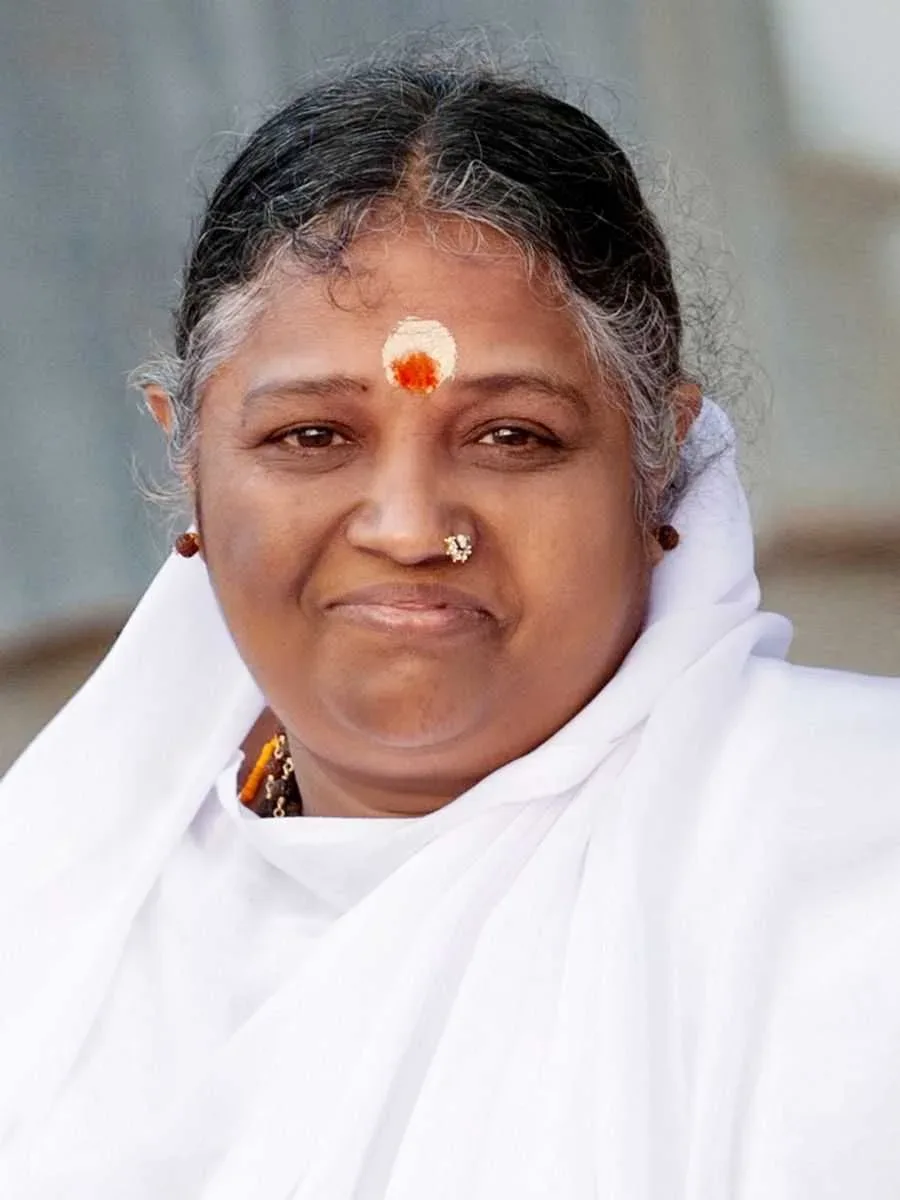
Born as Sudhamani Idamannel on September 27, 1953, in the small fishing village of Parayakadavu, Kerala, Amma's story begins in circumstances of profound simplicity. The third child in a poor Malayali fisherman family, she faced early financial hardship that would have deterred many. However, from a remarkably young age, she displayed an extraordinary compassion that transcended her difficult circumstances.
Despite opposition from her own family, young Sudhamani felt compelled to embrace people as a means of comforting their sorrow. This innate calling would eventually blossom into her global recognition as "Amma," meaning "Mother," renowned worldwide for her unique offering of loving embraces (darshan) through which she conveys universal love and comfort to millions.
Core Teachings: The Path of Universal Love
Amma's spiritual teachings are deeply rooted in Hindu traditions, beautifully integrating three fundamental paths: devotion (bhakti), knowledge (jñana), and selfless action (karma). Her philosophy centers on meditation, selfless service (seva), compassion, forgiveness, and the realization of eternal, blissful consciousness (jivanmukti).
However, what makes Amma's approach particularly compelling is her emphasis on universal love and oneness that transcends religious boundaries. She promotes interfaith harmony and practical spirituality that can be seamlessly integrated into daily life, making her teachings accessible to people of all backgrounds and beliefs.
Profound Impact in French-Speaking Countries
Amma's connection with French-speaking communities runs deep and continues to flourish. She has made multiple visits to Europe, including France, where she conducts numerous public programs and satsangs that consistently draw large, devoted audiences. Her teachings have been warmly embraced by French-speaking devotees, leading to the establishment of dedicated ashrams and retreat centers throughout France.
A shining example of this influence is the Centre Amma du Plessis, located near Chartres. This center, which opened around 2002 under the guidance of Brahmacharini Dipamrita Chaitanya, has become celebrated for its active spiritual programs and exceptionally welcoming community. It serves as the headquarters for ETW-France (Embracing the World, Amma's NGO), organizing year-round spiritual and service activities.
Furthermore, Amrita Books Kerala has published many of Amma's works in French, significantly improving their accessibility to Francophone readers. Her European tours consistently include stops in France, featuring cultural programs and large public gatherings in cities such as Toulon. The French Embassy to India has formally acknowledged Amma's humanitarian and spiritual efforts, demonstrating official recognition and support from French dignitaries.
A Legacy of Continuing Love and Service
Amma's enduring legacy continues to thrive through her global movement, with at least two French ashrams actively supporting her programs and retreats. The Centre Amma du Plessis remains a vibrant hub for both spiritual and service activities, where French devotees demonstrate their commitment through active participation in volunteer work, meditation, and spiritual practices.
The digital age has further expanded her reach. Online French-language resources, including the Centre Amma du Plessis website, along with French content on YouTube and podcasts, continue to make her teachings and event information readily available to the Francophone community. Her message of universal love, selfless service, and spiritual realization continues to resonate deeply with French-speaking seekers, nurturing a close-knit community focused on meditation, seva, and spiritual upliftment.
Maharishi Mahesh Yogi - Pioneer of Transcendental Meditation
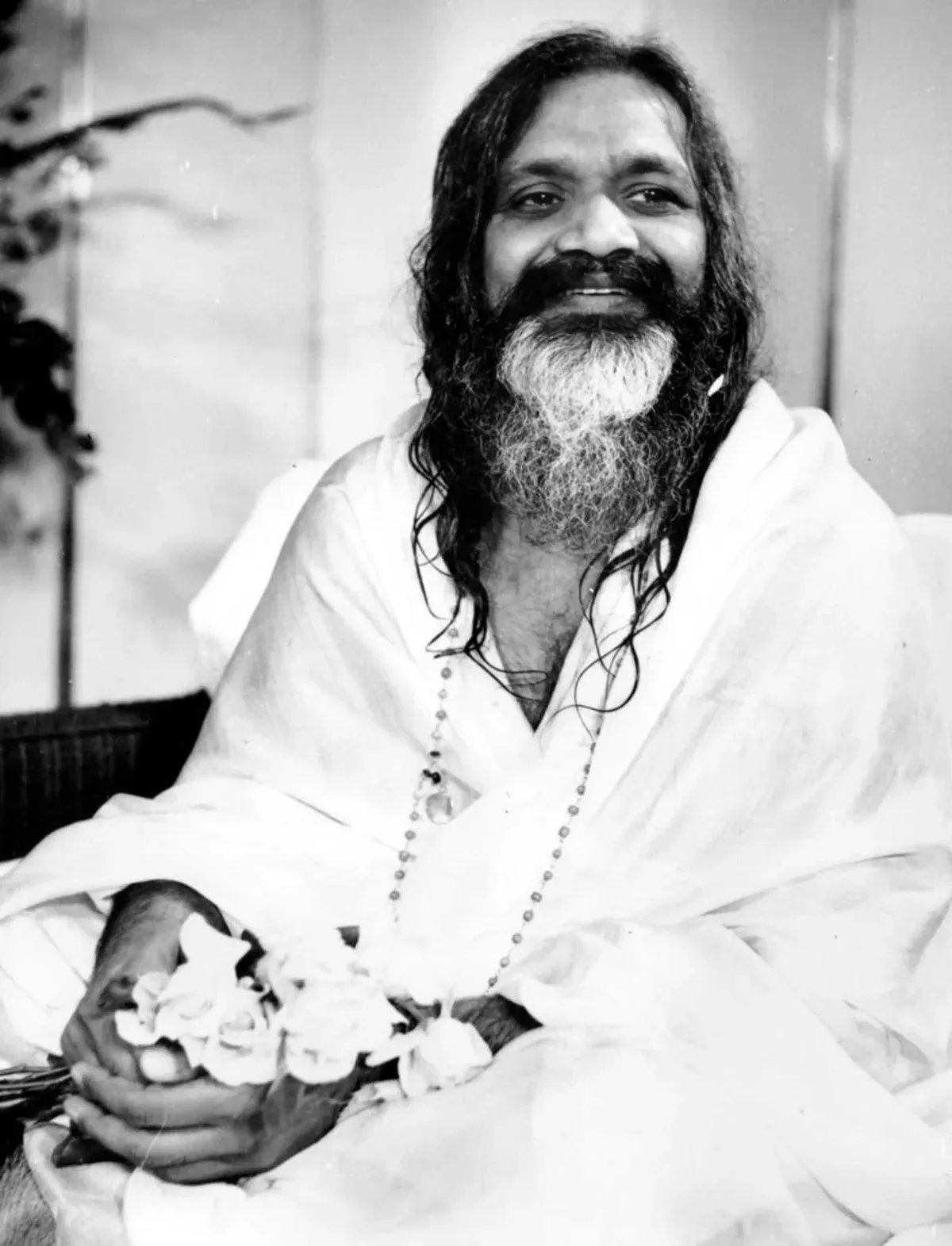
The journey of Maharishi Mahesh Yogi began as Mahesh Prasad Varma (also recorded as Mahesh Srivastava or Mahesh Verma Shrivastava). While his exact birthdate remains uncertain, sources cite either January 12, 1917, or January 12, 1918, with his birthplace generally given as Raipur or Rajim in the Central Provinces of British India (present-day Chhattisgarh).
Coming from an upper-caste Kayastha Hindu family, he pursued secular education, earning a degree in physics at Allahabad University in 1942. However, his true calling lay elsewhere. He became a devoted disciple and secretary to Swami Brahmananda Saraswati (Guru Dev), a Shankaracharya in the Himalayas. This spiritual apprenticeship would eventually lead him to global prominence as the creator and founder of the Transcendental Meditation (TM) technique, which he introduced to the world in 1955.
Core Teachings: The Science of Consciousness
Maharishi Mahesh Yogi's seminal contribution to the world was the Transcendental Meditation technique, a simple yet profoundly effective mantra-based meditation practice. TM aims to help practitioners achieve inner peace, consciousness expansion, and significant stress reduction through a systematic approach that requires no belief system or lifestyle changes.
His philosophy draws deeply from Vedic knowledge, emphasizing consciousness, direct experience, and the unifying principles of natural law. What made his approach revolutionary was his passionate belief that meditation could lead to both personal enlightenment and profound societal harmony. He proposed that meditation could naturally cultivate correct behavior without the need for prescriptive moral rules, a concept that resonated strongly with Western audiences seeking practical spirituality.
In addition to basic TM, he developed advanced programs like the TM-Sidhi technique to deepen meditative effects and expand human potential even further.
Revolutionary Impact in French-Speaking Countries
Maharishi's influence on French-speaking communities began with his global tours starting in 1958, as he methodically disseminated TM across India, the United States, Europe, and beyond. During this period of explosive global expansion, his movement swiftly established a significant and lasting presence in France and other French-speaking countries.
By the 1960s and 1970s, French-speaking followers were actively engaging with his teachings through local TM centers and events. TM centers and courses became widely available throughout France, Belgium, and Quebec, making the practice highly accessible to Francophones seeking stress relief and spiritual growth.
A particularly important development was the establishment of the Maharishi European Research University (MERU) in Seelisberg, Switzerland. Situated near French-speaking regions, this institution served as a vital hub for European TM practitioners, offering advanced courses and retreats.
A Continuing Legacy of Inner Peace
Today, TM organizations continue to operate teaching centers across French-speaking regions, serving as essential hubs for practice and instruction. Regular retreats, courses, and meditation camps are consistently held in French-speaking countries, maintaining the vibrant community that Maharishi established decades ago.
Numerous books and lectures by Maharishi Mahesh Yogi have been translated into French, including classic TM manuals and scientific studies documenting TM's benefits. These resources ensure his teachings remain widely accessible to the Francophone community. The French TM community actively engages with his teachings through translated recordings, books, and local workshops.
His global endorsement by culturally significant figures like The Beatles considerably boosted international interest, including extensive Francophone media exposure that continues today. Conservative estimates suggest several thousands to tens of thousands of Francophones are active TM practitioners. Official global TM websites feature comprehensive French pages, and French YouTube channels and podcasts continue to provide TM teachings, ensuring his legacy remains vibrant and accessible.
Neem Karoli Baba - The Saint of Unconditional Love
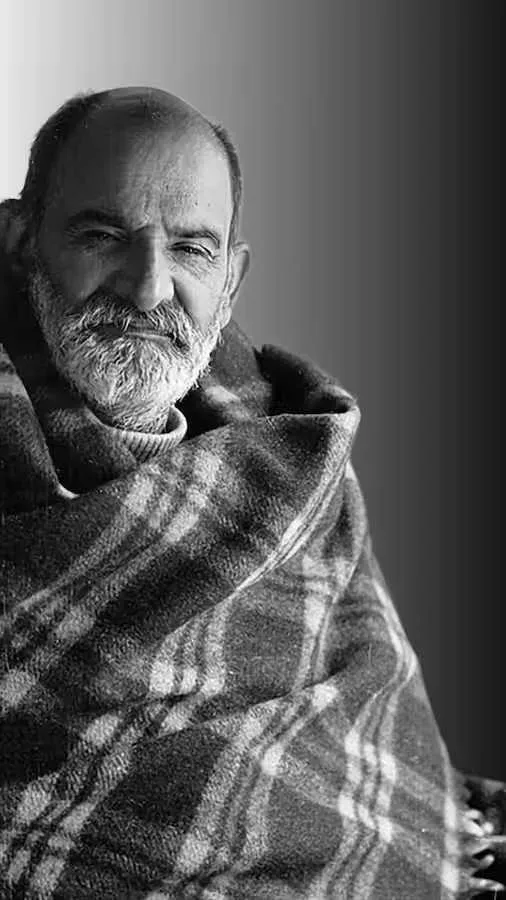
The extraordinary story of Neem Karoli Baba began with his birth as Lakshman Narayan Sharma around 1900 in Akbarpur village, Firozabad district, Uttar Pradesh, India. Born into a wealthy Brahmin family, his early life followed conventional patterns. At age 11, he entered an arranged marriage, but soon after, the calling of the spiritual path proved irresistible.
He left home to become a wandering sadhu (religious hermit), though he later returned to family life before ultimately renouncing worldly concerns once again for a dedicated spiritual path. His transition from householder to saint exemplified the profound spiritual transformation possible for anyone genuinely seeking truth. He passed away on September 11, 1973, in a hospital in Vrindavan, Uttar Pradesh, leaving behind a legacy that would touch hearts worldwide.
Core Teachings: Love Everyone, Serve Everyone
Neem Karoli Baba, affectionately known as "Maharaj-ji," became beloved for his profound simplicity, unwavering unconditional love, and the miraculous experiences attributed to him. His central teaching was beautifully encapsulated in the phrase "Love Everyone. Serve Everyone," emphasizing selfless service (seva) as the most direct and potent path to experiencing the divine.
He strongly encouraged the chanting of God's name, especially "Ram Ram," considering it a powerful spiritual practice accessible to anyone, regardless of education or social status. Maharaj-ji advocated for unwavering faith in divine will and living a life infused with truth, humility, and compassion.
What made his teaching style unique was that his spiritual guidance was conveyed more through the living example of his life and personal interactions than through formal discourses or elaborate philosophical explanations. This approach made his wisdom immediately accessible and practically applicable.
Touching French Hearts Across Oceans
While Neem Karoli Baba lived and taught primarily in India, his profound spiritual impact has reached French-speaking followers through the heartfelt narratives of his devotees and carefully translated works. Stories and personal accounts of his miraculous experiences have spread internationally, including to France and other Francophone regions, captivating many sincere seekers.
French devotees have expressed deep personal connections with Maharaj-ji, often nurtured through chanting practices and spiritual disciplines inspired by his teachings. Although he did not directly establish traditional ashrams outside India, his teachings have powerfully inspired satsang groups and informal spiritual gatherings throughout French-speaking countries.
The Ashram Brindavon in Germany, being geographically close to French-speaking regions, serves as a significant spiritual hub for Maharaj-ji's followers across Europe. Additionally, informal home-based weekly gatherings are known to occur in Canada and other French-speaking communities, sustaining his spiritual lineage with warmth and devotion.
An Enduring Legacy of Miraculous Love
Several impactful books and collections of stories about Neem Karoli Baba and his teachings have been translated into French. Most notably, the highly influential "Be Here Now" by Ram Dass, which introduced Maharaj-ji to the Western world, has been made available in French translation. These works widely circulate among French-speaking followers, actively disseminating his enduring message of love and service.
French-speaking devotees regularly organize meditation retreats, satsangs, and devotional events that draw deeply from Neem Karoli Baba's teachings. His significant global influence, largely propelled by Western disciples like Ram Dass, has indirectly yet profoundly enriched French spiritual communities.
Personal accounts from French devotees frequently highlight transformative spiritual experiences, feelings of miraculous assistance, and the profound peace discovered through chanting and selfless service. Online French-language resources, including dedicated websites and YouTube channels, continue to provide access to his teachings, stories, and devotional music, ensuring his enduring inspiration for a dedicated, though modest, Francophone following.
Osho (Shree Rajneesh) - The Revolutionary Mystic
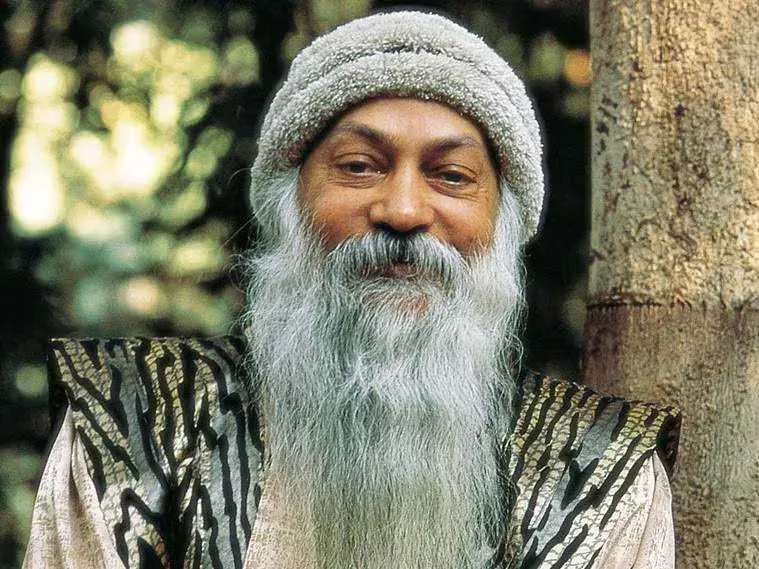
Born as Chandra Mohan Jain on December 11, 1931, in Kuchwada Village, Raisen District, Bhopal State (now Madhya Pradesh), India, Osho emerged from humble beginnings as the eldest of eleven children in a Jain cloth merchant family. From his earliest days, he displayed a rebellious and inquisitive nature that would later characterize his revolutionary approach to spirituality.
Even as a child, he consistently questioned traditional religious and societal norms, demonstrating an independent spirit that refused to accept conventional wisdom without personal investigation. He pursued studies in philosophy and meditation from a young age, developing a unique approach that would eventually blend ancient spiritual practices with modern scientific thought. His journey continued until his passing on January 19, 1990, in Pune, Maharashtra, India, leaving behind a legacy that continues to challenge and inspire seekers worldwide.
Core Teachings: Transformation Through Awareness
Osho's core philosophy revolved around inner transformation, meditation, and the profound importance of living fully in the present moment. He advocated for liberation through heightened self-awareness, urging individuals to transcend societal limitations and ego-based thinking that prevent authentic living.
He gained worldwide recognition for developing dynamic meditation techniques that innovatively incorporate movement, breathing, and mindfulness to facilitate catharsis and inner stillness. These methods were specifically designed for the modern person, acknowledging that traditional sitting meditations might not be suitable for contemporary minds filled with stress and activity.
His teachings promoted a cosmic vision of oneness and the interconnectedness of all existence. He fearlessly challenged conventional morality and religious dogma, encouraging personal freedom and a joyful celebration of life. His insights comprehensively integrated spiritual, psychological, and philosophical dimensions, making his approach uniquely holistic and relevant to modern seekers.
Captivating French Spiritual Seekers
Osho conducted extensive global tours during the 1980s, including significant visits to Europe with notable stops in both France and Switzerland. French-speaking followers were drawn to his teachings as early as the 1970s and 1980s, primarily through his translated books and powerful discourses that challenged conventional thinking.
French sannyasin communities and meditation centers began forming, particularly following Osho's influential period in Poona (Pune). The movement gained significant momentum through dedicated followers who established local communities and practice groups.
French websites and platforms, such as Meditationfrance, have been actively providing French-language access to his teachings since around 2000, making his revolutionary approach to spirituality widely available. Retreat centers and satsangs are well-established across France, Belgium, and French-speaking Switzerland.
A notable venue is The Osho Meditation Centre in Foix, France, which offers comprehensive programs including retreats, meditation sessions, and organic vegetarian meals. Regular retreats and workshops centered on Osho's dynamic meditation techniques are consistently organized throughout Belgium and France.
A Living Legacy of Dynamic Meditation
A vast number of Osho's works have been meticulously translated into French, including complete series on Zen, meditation, and various aspects of spirituality. These are widely distributed through official Osho shops and websites, ensuring accessibility to French-speaking seekers.
French sannyasins like Shantidharm and Khirad have been instrumental in managing influential French-language Osho platforms, creating bridges between his teachings and French-speaking communities. The French-speaking Osho following is estimated to number in the thousands, with active engagement in meditation practices, retreats, and vibrant online communities.
The pervasive reach of social media and digital platforms has further expanded his influence, particularly among French-speaking youth and spiritual seekers drawn to his unconventional approach. Ongoing anniversaries and new French-language publications reflect continued interest in his revolutionary work.
Official French Osho websites and shops, along with platforms like Meditationfrance and French YouTube channels, continue to provide extensive resources. These ensure his enduring influence on a vibrant French-speaking spiritual community focused on meditation and radical self-awareness.
H.W.L. "Papaji" Poonja - Master of Direct Self-Inquiry
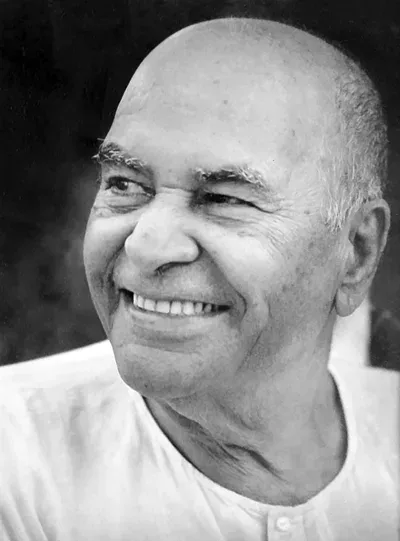
The remarkable journey of Hariwansh Lal Poonja began on October 13, 1910, in Gujranwala, Punjab, British India (now in Pakistan). Born into a Saraswat Brahmin family, he had distinguished spiritual lineage, his mother was the sister of the well-known Vedanta teacher Swami Rama Tirtha.
Papaji's spiritual journey began remarkably early when he experienced a profound spiritual state at the tender age of eight. During his youth, he was deeply devoted to Krishna, yet initially led a conventional life, marrying, raising children, and serving in the British army before embarking on a fervent spiritual quest.
His spiritual search reached its culmination when he met his guru, Sri Ramana Maharshi, in 1944, an encounter that irrevocably set his spiritual path and would influence countless seekers in the decades to follow. He continued sharing his wisdom until his passing on September 6, 1997, in Lucknow, India, leaving behind a powerful legacy of direct spiritual transmission.
Core Teachings: The Direct Path to Freedom
Papaji emerged as a pivotal figure in Neo-Advaita, emphasizing the direct and immediate realization of the Self without prolonged spiritual practices. His teaching centered on self-enquiry (vichar), profoundly inspired by his guru Ramana Maharshi, but distinguished by a unique emphasis on instantaneous awakening.
He powerfully advocated that Self-realization is an immediate and liberating experience available to anyone genuinely ready to receive it. While acknowledging that karmic tendencies may continue after realization, he taught that they do not fundamentally affect the realized Self, which remains eternally free and unbounded.
Papaji purposefully discouraged reliance on extended spiritual practices or rituals, instead urging seekers to "do it once and do it properly," meaning to fully and immediately recognize their true nature. His core message emphasized the profound importance of quietness, pure presence, and the direct recognition of one's inherent true nature beyond all conceptual understanding.
Special Connection with French Seekers
Papaji established particularly notable connections with French seekers, especially through Swami Abhishiktananda (Henri Le Saux), a distinguished French monk who lived and studied extensively with Papaji in India. This relationship created a bridge between French spirituality and Papaji's direct teaching approach.
French followers initially encountered Papaji's teachings in the 1950s and 1960s, partly through Swami Abhishiktananda's intellectual and spiritual circle, which included many prominent French spiritual seekers. Papaji conducted tours across parts of Europe, including France, in the early and mid-1970s, where he held transformative satsangs and enjoyed extended stays in France, Spain, and Switzerland.
French-speaking devotees actively engage with his teachings through accessible satsangs and retreats. While Papaji himself did not establish traditional ashrams, his profound legacy continues through vibrant satsang groups and spiritual centers in France, Belgium, and French Canada, all deeply inspired by his direct transmission of wisdom.
A Continuing Transmission of Truth
The Avadhuta Foundation and various related groups work diligently to preserve and actively promote Papaji's teachings through online resources and organized retreats. Retreat centers throughout France regularly conduct meditation courses and satsangs rooted in Papaji's direct path teachings.
Collections of Papaji's talks and satsang transcripts have been meticulously translated into French. Significant videos and documentaries, including the well-known "Call Off The Search" film, are subtitled or dubbed in French, ensuring wide accessibility to French-speaking seekers.
Regular retreats and satsangs inspired by Papaji consistently take place in French-speaking regions, often led by teachers who received direct transmission from him. Swami Abhishiktananda stands out as the most prominent French-born disciple associated with Papaji, and numerous current French-speaking spiritual teachers and community members continue spreading his teachings.
French followers frequently report transformative and often instantaneous realization experiences through Papaji's direct teaching style, emphasizing profound peace and the dissolution of egoic fears. The Avadhuta Foundation website offers extensive archives accessible to Francophones, and French-subtitled videos of Papaji's satsangs are available on YouTube, ensuring his teachings remain vibrant and accessible to a dedicated Francophone following.
Paramahansa Yogananda - Bridge Between East and West
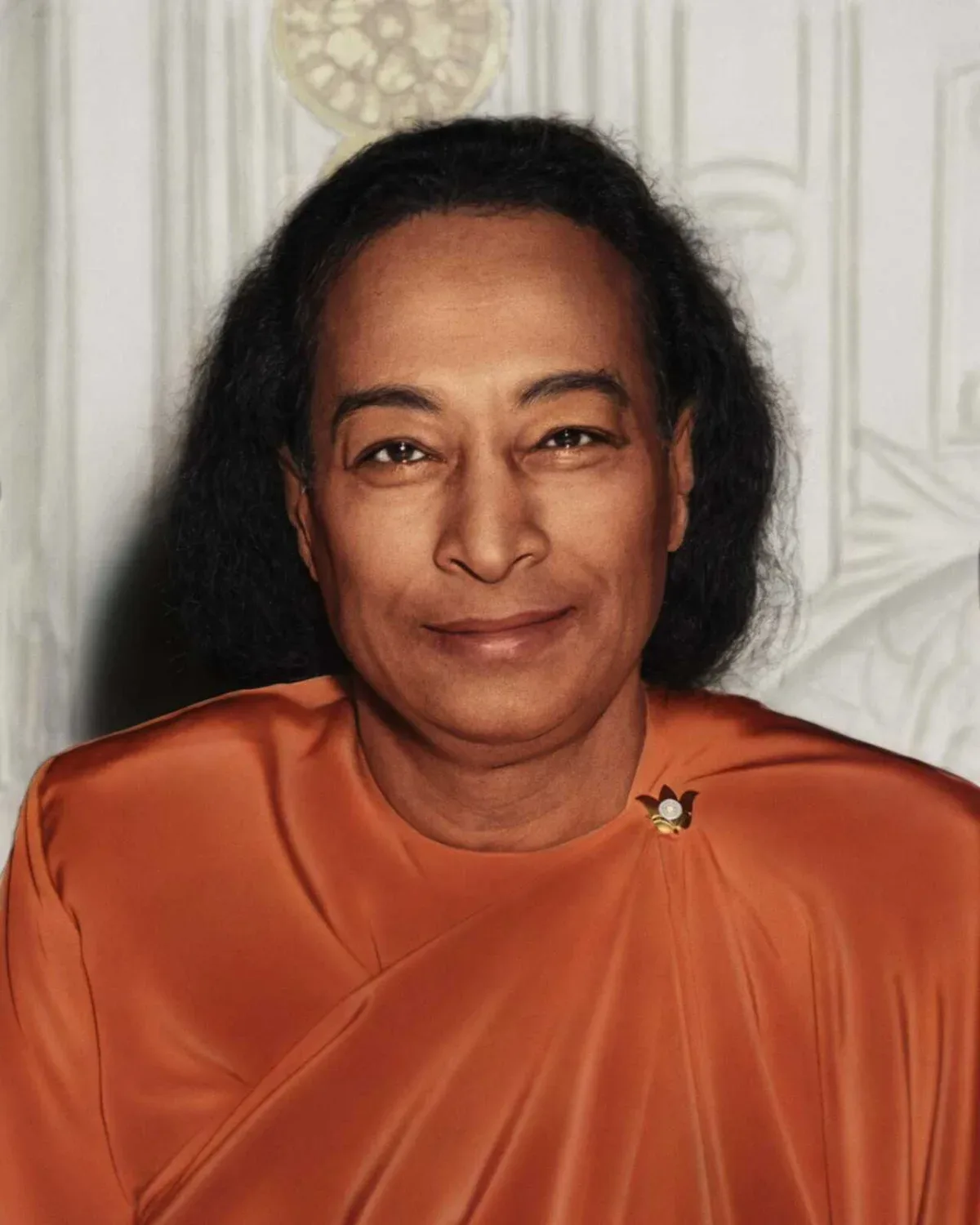
The inspiring story of Paramahansa Yogananda began with his birth as Mukunda Lal Ghosh on January 5, 1893, in Gorakhpur, Uttar Pradesh, India. He emerged from a devout, prosperous Bengali Hindu family with strong spiritual inclinations that would profoundly shape his destiny. Both his parents were disciples of Lahiri Mahasaya, a key figure in modern Kriya Yoga, creating a spiritually rich environment for his upbringing.
From childhood, he displayed remarkable spiritual awareness that set him apart from his peers. At age 17, he began receiving rigorous spiritual training from his guru, Swami Sri Yukteswar Giri, who would prepare him for his life's mission. After taking formal monastic vows, he adopted the name Yogananda, which beautifully signifies "bliss through divine union." He rose to global prominence as a seminal figure in bringing ancient Indian yogic spirituality to the West, particularly through his systematic introduction of Kriya Yoga.
Core Teachings: Universal Spirituality Through Yoga
Paramahansa Yogananda's paramount contribution to world spirituality was his introduction of Kriya Yoga, a powerful and highly effective meditation technique for direct spiritual realization. This ancient practice, refined through his lineage, offers practitioners a scientific approach to spiritual awakening.
He established what he called Integral Yoga teachings, which uniquely combined the profound essence of Eastern yogic spirituality with universal truths found in Christianity and other world religions. This approach made his teachings accessible to Western minds while maintaining their authentic spiritual power.
His teachings emphasized self-realization, diligent meditation, balanced living, universal harmony, and the fundamental unity of all religions. He demonstrated that different spiritual paths could complement rather than conflict with each other. His revered guru lineage traces back through Swami Sri Yukteswar Giri and Lahiri Mahasaya to the immortal Mahavatar Babaji, connecting modern practitioners to an ancient stream of wisdom.
Reaching French-Speaking Hearts Worldwide
While Yogananda primarily lived and worked in India and the United States, his transformative teachings have successfully reached French-speaking seekers through extensive translations, dedicated centers, and organized events that continue to flourish today.
French-speaking spiritual groups such as Ananda Francophone actively organize retreats and satsangs based on his work, significantly facilitating French access to his profound spiritual wisdom. His teachings and enduring legacy profoundly influence meditation communities across France, Belgium, and Quebec, where practitioners gather regularly to study and practice his methods.
The Self-Realization Fellowship (SRF), which Yogananda founded, maintains international centers, some of which specifically cater to French speakers, including a significant presence in Paris. Ananda Sangha and other affiliated groups regularly organize French-language programs and retreats, with particularly notable activities concentrated in Provence, France, where the spiritual atmosphere resonates deeply with his teachings.
An Enduring Legacy of Spiritual Literature
Yogananda's timeless classic, "Autobiography of a Yogi," has been extensively translated into French and remains a central pillar of his widespread popularity among Francophones. This remarkable book continues to inspire new generations of spiritual seekers with its blend of ancient wisdom and practical guidance.
Other significant works, teachings, and lectures are readily available in French through the SRF and associated publishers. French translations of his spiritual lessons, detailed meditation instructions, and insightful essays continue effectively spreading his profound teachings throughout the Francophone world.
French-speaking communities consistently hold regular meditation retreats, satsangs, and spiritual festivals inspired by Yogananda's teachings. Ananda Francophone hosts annual festivals near Provence that draw participants from across the French-speaking world, creating vibrant spiritual communities.
French-speaking presenters, translators, and dedicated spiritual teachers have been instrumental in disseminating Yogananda's teachings throughout the Francophone world. The Francophone following is considerable and growing, with online French classes, satsangs, and spiritual communities centered around Yogananda's teachings experiencing steady expansion.
The official Self-Realization Fellowship website, Ananda Europe, and Ananda Francophone provide comprehensive French materials and information. Active French YouTube channels and podcasts ensure his enduring spiritual legacy continues to reach new audiences seeking the perfect balance of ancient wisdom and practical spirituality.
Ramana Maharshi - The Silent Sage of Arunachala
A Spontaneous Awakening in Youth
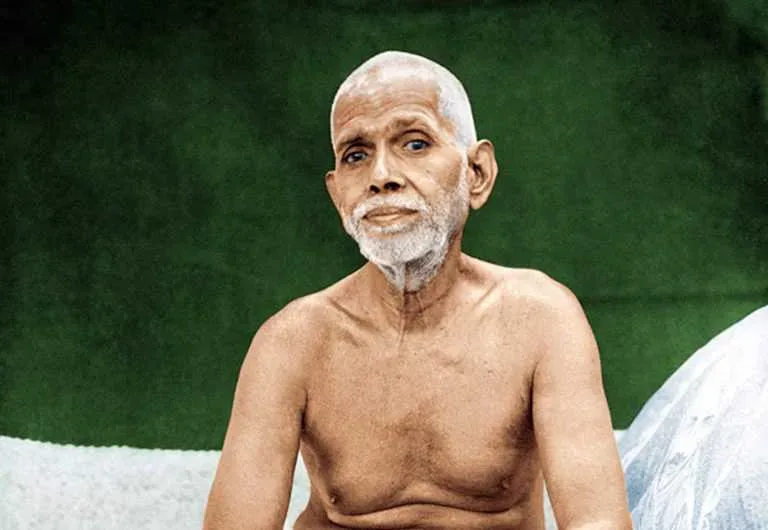
The extraordinary spiritual journey of Ramana Maharshi began with his birth as Venkataraman Iyer on December 30, 1879, in Tiruchuzhi village near Aruppukkottai, Tamil Nadu, India. He emerged from an orthodox Hindu Brahmin family of the Smarta tradition, deeply rooted in religious practices including the worship of Shiva, Vishnu, Ganesha, Surya, and Shakti. His father, Sundaram Iyer, worked as a court pleader, providing the family with modest comfort.
What makes Ramana's story truly remarkable is his spontaneous self-realization at the young age of 16, an awakening that occurred without formal spiritual training or prolonged seeking. This profound experience led him to leave his family home and settle at the holy mountain of Arunachala, where he would spend the remainder of his life until his passing on April 14, 1950, in Tiruvannamalai, Tamil Nadu.
Core Teachings: The Direct Path of Self-Inquiry
Ramana Maharshi's teachings are fundamentally centered on the philosophy of Advaita Vedanta (non-dualism), emphasizing the direct experience of Self-realization through rigorous self-inquiry rather than complex philosophical study or elaborate rituals.
His most famous and direct method is self-enquiry, or atma-vichara, achieved by persistently asking "Who am I?" This simple yet profound question helps seekers transcend the illusions of the ego and realize the true Self as infinite, non-personal awareness that is always present and available.
Ramana consistently taught that the ego and individual self are ultimately illusions, and that the Self is the only ever-present, fundamental reality. While his primary emphasis was on self-inquiry, he also recognized and endorsed the path of Bhakti (devotion and surrender) as a valid alternative or complement for those naturally inclined toward devotional practices.
His distinctive approach is characterized by extraordinary simplicity, profound silence, and complete reliance on direct experience rather than intellectual understanding or scriptural authority. Many visitors to his ashram reported profound spiritual experiences simply by sitting in his silent presence.
French Seekers Drawn to Silence
French spiritual seekers have been drawn to Ramana Maharshi's profound teachings since the early 20th century, initially influenced by Western visitors who made pilgrimages to his ashram and shared their transformative experiences through writings and personal accounts.
Notably, French visitors undertook meaningful pilgrimages to his ashram during his lifetime, and a significant volume of French-language books and translations of his teachings have been widely circulated throughout Francophone countries, making his wisdom accessible to French-speaking seekers.
Vibrant satsang groups led by French-speaking devotees exist today, actively maintaining engagement with his teachings through regular gatherings, study groups, and meditation sessions. While Ramana Maharshi himself founded only the Sri Ramanasramam ashram in Tiruvannamalai, India, numerous satsang groups and meditation centers in French-speaking countries draw deep inspiration from his wisdom.
Specific examples include French satsang organizers such as Martine Le Peutrec in Paris and active groups throughout Switzerland. These dedicated communities regularly conduct meditation sessions, satsangs, and celebrations commemorating Ramana Maharshi's birth and other significant dates in the spiritual calendar.
A Living Transmission of Silent Wisdom
French-language editions of Ramana's core teachings, including "L'Enseignement de Sri Ramana Maharshi" and "Le Chemin du Soi," are widely available to French readers. Collections of his talks, poems, and dialogues have been meticulously translated into French, preserving the essence of his direct transmission.
Influential books by authors like Paul Brunton played a significant role in popularizing Ramana Maharshi throughout the West, including among Francophone spiritual communities. These works continue to serve as bridges between his profound silence and contemporary seekers.
Annual satsangs and celebrations of Ramana Maharshi's Jayanti (birth anniversary) consistently occur in France, including regular events in Paris and other major cities. Retreats and meditation workshops inspired by his teachings are frequently organized by French-speaking spiritual groups, often emphasizing the practice of self-inquiry.
While no widely known French celebrities are prominent public endorsers, key French spiritual teachers and long-time devotees, such as Martine Le Peutrec, have been central in disseminating his work throughout Francophone regions. The Francophone following is dedicated, though relatively modest in size, with active satsang groups, meditation centers, and online communities across France, Belgium, Quebec, and parts of Switzerland.
The official Ramanasramam website and French YouTube channels continue providing essential resources, ensuring his profound teachings of self-enquiry and silent realization resonate deeply and endure with French spiritual seekers drawn to the direct path.
Sathya Sai Baba - Teacher of Universal Values
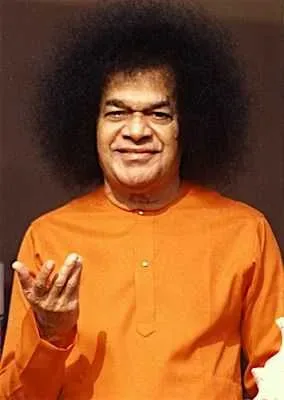
The remarkable life of Sathya Sai Baba began with his birth as Ratnakaram Sathyanarayana Raju on November 23, 1926, in Puttaparthi, Madras Presidency, British India (now in Andhra Pradesh, India). Born into a traditional Hindu family, his mother was Meesaraganda Easwaramma, and from his earliest years, he exhibited extraordinary compassion and spiritual awareness that set him apart from other children.
During his youth, he declared himself the reincarnation of Sai Baba of Shirdi, a claim that would define his spiritual mission and attract millions of devotees from around the world. He became a globally revered spiritual guru, known not only for his extensive humanitarian projects but also for the alleged miraculous powers that consistently amazed visitors to his ashram.
Core Teachings: The Unity of All Religions
Sathya Sai Baba's central message powerfully emphasized the unity of all religions, teaching that different faiths ultimately lead to the same divine goal. This inclusive approach made his teachings accessible to people of diverse religious backgrounds seeking spiritual truth beyond sectarian boundaries.
He strongly advocated for the cultivation and practice of five core human values that form the foundation of spiritual life:
- [object Object]
- [object Object]
- [object Object]
- [object Object]
- [object Object]
His teachings seamlessly integrated traditional Hindu principles, including Bhakti yoga and Advaita Vedanta, with a strong focus on selfless service (seva) and meditation as essential pathways for spiritual liberation. He consistently aimed to promote moral and spiritual upliftment through the practical application of these universal values in daily life.
Establishing Strong Francophone Communities
Sathya Sai Baba's profound teachings spread globally during the 1960s and 1970s, establishing a significant and enduring presence in French-speaking regions. French-speaking followers actively participate in Sathya Sai Baba centers and events across Europe, particularly in countries like France and Switzerland where organized communities thrive.
From the early days of Western interest in his teachings, the movement has maintained a robust Francophone presence, supported by carefully translated materials and vibrant local community activities that bring together seekers from all walks of life.
Sathya Sai Centers are well-established in French-speaking Switzerland, including the Geneva Sathya Sai Centre, and throughout France. These centers offer regular prayer meetings, meditation sessions, study circles, and extensive voluntary service (seva) activities, often conducted entirely in French to serve local communities effectively.
These centers serve as vital community hubs for French-speaking devotees, hosting activities such as bhajans (devotional singing), meditation sessions, and spiritual discussions, frequently with French interpretation to ensure accessibility for all participants.
A Legacy of Service and Devotion
A significant number of Sathya Sai Baba's discourses and books have been carefully translated into French, including key publications encompassing collective discourses, spiritual essays, and inspiring stories focused on meditation, morality, and Hindu scriptures. The ashram's monthly magazine and collected works are also available in French editions.
Regular meditation retreats, spiritual festivals, and community service activities are consistently held by French-speaking Sai centers throughout the year. While Sathya Sai Baba did not personally lead major public events in French regions, ongoing local celebrations and programs continue to vibrantly sustain his legacy among Francophones.
The Francophone following remains substantial, with active Sathya Sai Baba groups thriving in Europe's French-speaking regions. These communities demonstrate remarkable dedication to both spiritual practice and community service, embodying the practical application of his teachings.
French followers consistently report profound spiritual experiences and personal transformation through Sai Baba's teachings, selfless service (seva), and communal worship practices. The emphasis on service particularly resonates with French communities, leading to numerous charitable projects and social initiatives.
Official Sathya Sai international and regional websites offer comprehensive French-language pages, alongside active French YouTube channels and podcasts. These digital resources ensure his teachings, devotional music (bhajans), and spiritual talks remain widely accessible in French, fostering continued spiritual growth and service among French-speaking seekers worldwide.
Sri Aurobindo - Visionary of Human Evolution
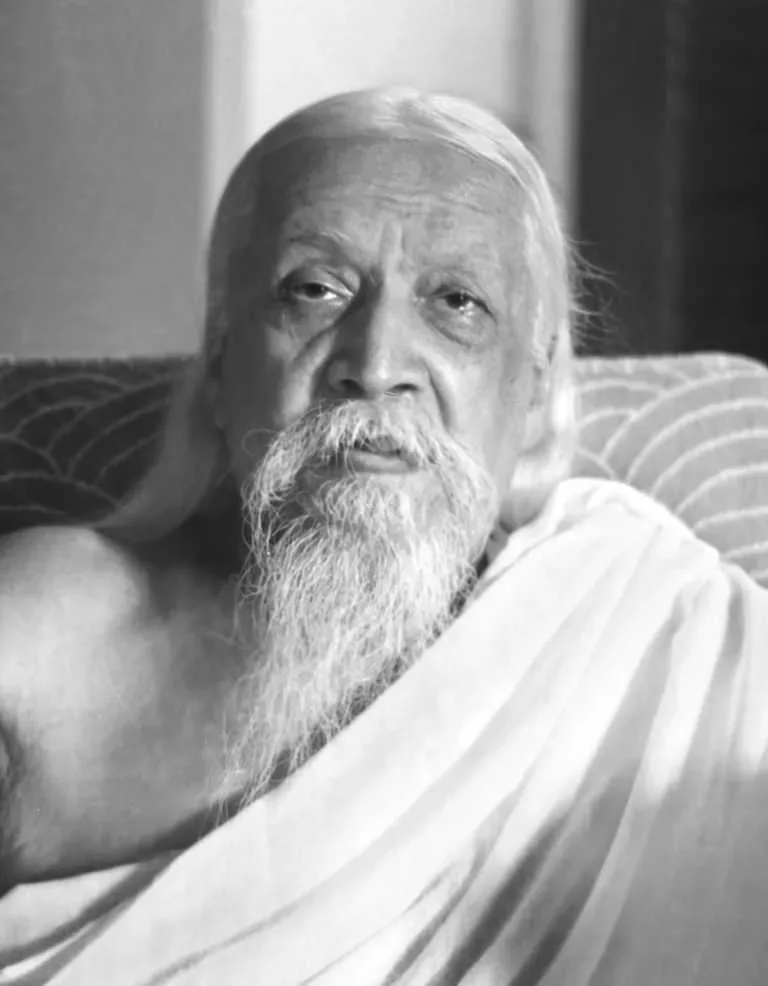
Sri Aurobindo's extraordinary journey began with his birth as Aurobindo Ghose on August 15, 1872, in Calcutta (now Kolkata), Bengal Presidency, British India. He emerged from a Bengali Kayastha family with connections to the progressive Brahmo Samaj movement, and his father worked as a civil surgeon, providing the family with educational opportunities.
At the remarkably young age of seven, he was taken to England for his education, where he studied at the prestigious St. Paul's School and later King's College, Cambridge. This extensive Western education would later prove invaluable in his ability to bridge Eastern and Western thought. After returning to India, he initially worked in the Baroda Service and became deeply involved in nationalist politics, fighting for India's independence before ultimately dedicating himself completely to spiritual practice and philosophical inquiry.
Core Teachings: Integral Yoga and Spiritual Evolution
Sri Aurobindo emerged as the visionary founder of Integral Yoga, a profound spiritual discipline that uniquely synthesizes different traditional paths. His approach masterfully combines knowledge (jnana), devotion (bhakti), selfless works (karma), and intense inward aspiration into a comprehensive spiritual practice suitable for modern life.
A cornerstone of his revolutionary philosophy was spiritual evolution, envisioning the growth of human consciousness beyond the current limitations of mind and life force to a higher, supramental level of existence. Unlike traditional paths that sought escape from the world, he viewed life itself as yoga, a divine endeavor to transform human nature into divine life on Earth.
His major literary and philosophical works include the monumental "The Life Divine," "The Synthesis of Yoga," and the epic spiritual poem "Savitri," each representing decades of spiritual insight and practical guidance. Integral Yoga's ultimate goal transcends individual liberation, aiming instead for the radical transformation of the individual's entire nature and consciousness toward a state of spiritual perfection that could eventually transform all of humanity.
Special French Connection Through Pondicherry
Sri Aurobindo's relationship with French-speaking communities is particularly unique and profound. He resided in Pondicherry, a former French colony, from 1910 until his passing in 1950, choosing this location partly for its French cultural atmosphere and relative freedom from British colonial interference.
He possessed deep fluency in French and held the language in high regard for its clarity and precision in expressing philosophical concepts. The Ashram in Pondicherry prominently displays strong French influence and continues to offer instruction in the French language, making it accessible to French-speaking visitors and residents.
His pivotal spiritual collaborator, "The Mother" (Mira Alfassa), was herself French-born, playing an instrumental role in establishing and advancing his spiritual work. Her French origin created a natural bridge between Sri Aurobindo's teachings and French-speaking seekers worldwide.
Due to Pondicherry's historical French colonial roots and The Mother's French heritage, French seekers were among the earliest international followers of Sri Aurobindo's revolutionary teachings. The Sri Aurobindo Ashram in Pondicherry continues to serve as the principal center, drawing French-speaking devotees from around the globe, and the ashram itself publishes extensively in French.
An Extensive French Literary Legacy
A vast array of writings by both Sri Aurobindo and The Mother have been meticulously translated into French, creating one of the most comprehensive spiritual libraries available to French readers. The Ashram Press (SABDA) has published over 150 titles in French, including French editions of foundational works like "Letters on Yoga," "The Life Divine," and the complete "Savitri."
These extensive resources provide invaluable support for French-speaking students engaging deeply with his complex yet practical teachings. The quality and depth of these translations ensure that French readers can access the full richness of his philosophical insights and spiritual guidance.
Affiliated study groups and centers actively operate across France, Belgium, and Quebec, primarily promoting his profound philosophy and the practice of Integral Yoga. Regular retreats, study groups, and thematic events inspired by Sri Aurobindo's teachings are consistently held in French-speaking regions, often focusing on specific aspects of his integral approach.
Prominent French disciples include esteemed scholars and authors such as Prithwindra Mukherjee, who has written notable biographies of Sri Aurobindo in French, helping to make his life and teachings more accessible to French audiences. The Mother's French heritage made her a crucial spiritual figure in bridging Eastern and Western consciousness.
The French-speaking following remains significant and intellectually engaged, with French continuing as one of the primary languages of study and dissemination within both the Ashram and Auroville communities. Official Sri Aurobindo Ashram websites and dedicated French YouTube channels ensure his profound evolutionary vision continues to inspire French-speaking seekers worldwide.
Sri Sri Ravi Shankar - Global Ambassador of Peace
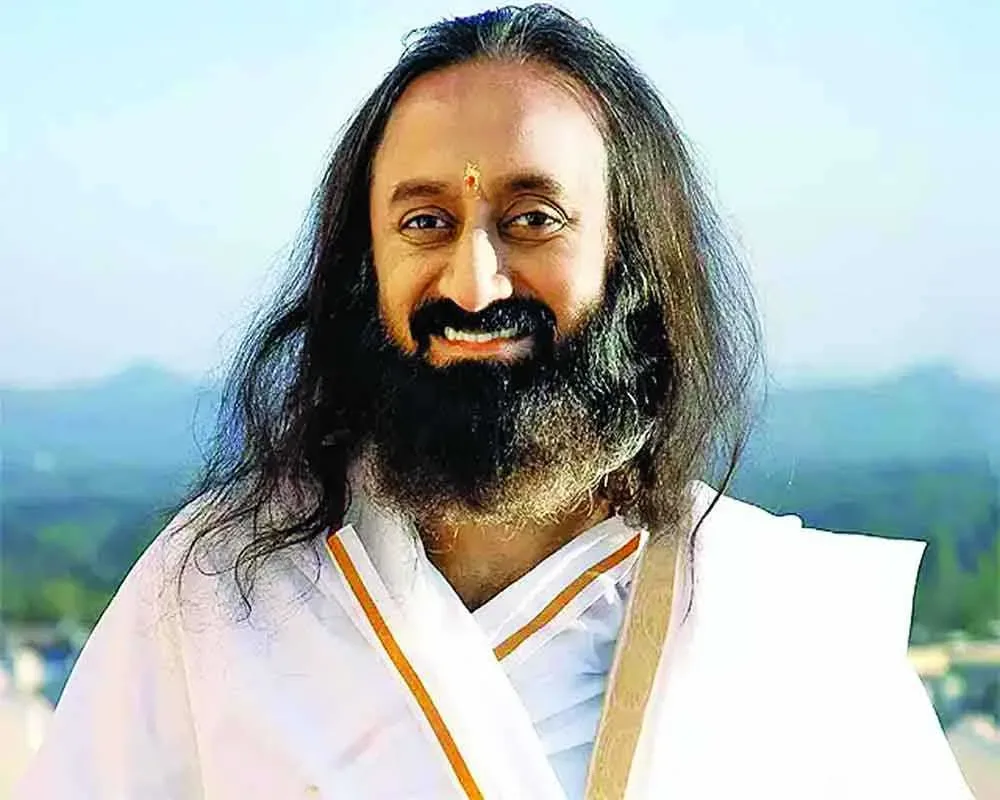
The inspiring journey of Sri Sri Ravi Shankar began with his birth as "Ravi Shankar" on May 13, 1956, in Papanasam, Tamil Nadu, India. Growing up in a spiritually inclined family, he exhibited an early and profound interest in meditation and spirituality that would shape his entire life's mission.
He initially pursued secular education, earning a degree in physics at St. Joseph's College, Bangalore, graduating in 1973. However, his true calling lay in the spiritual realm. During the mid-1970s, he served as an apprentice under Maharishi Mahesh Yogi, where he learned and taught Transcendental Meditation, gaining valuable experience in bringing meditation to Western audiences.
This foundation led him to establish the Art of Living Foundation in 1981, a non-profit organization dedicated to fostering individual and societal peace through practical spiritual techniques and humanitarian service.
Core Teachings: Breath, Wisdom, and Global Harmony
Sri Sri Ravi Shankar serves as the visionary founder of the Art of Living Foundation, established in 1981 with the mission of creating a stress-free, violence-free society. His approach centers on practical, breath-based meditation techniques that are accessible to people of all backgrounds and beliefs.
His most significant contribution is the Sudarshan Kriya, a powerful rhythmic breathing technique he developed in 1982 after a period of intense silence and profound spiritual inspiration. This practice has been scientifically studied and shown to reduce stress, anxiety, and depression while promoting overall well-being.
His foundational philosophy draws from the ancient Sanskrit principle "Vasudhaiva Kutumbakam," meaning "the world is one family." This perspective infuses all his teachings with a spirit of unity and global consciousness that transcends national and religious boundaries.
He deeply emphasizes love, wisdom, cultivating inner peace, conflict resolution, and promoting interfaith harmony. His teachings seamlessly integrate ancient Vedic wisdom with modern, practical methods for stress reduction and large-scale social transformation, making spirituality relevant and applicable to contemporary challenges.
Dynamic Presence in French-Speaking Regions
The Art of Living Foundation has maintained an active and highly impactful presence in France, Belgium, and Quebec for several decades, building strong communities of practitioners dedicated to both personal growth and social service.
A particularly significant moment of recognition came in October 2016 when Sri Sri Ravi Shankar addressed the French Parliament in Paris, highlighting his crucial role in peacebuilding and fostering social integration within France. This official recognition demonstrated the respect his work has garnered at the highest levels of French society.
French-speaking Canadians have played a particularly significant role in expanding the Art of Living movement across North America, creating vibrant communities that serve as models for other regions. Art of Living centers and retreat facilities are well-established and widely accessible throughout French-speaking regions.
The International Art of Living Center in Canada, located in the scenic Mauricie region, serves as a major retreat hub offering comprehensive programs including meditation instruction, yoga classes, organic gardens, and holistic wellness programs. These centers consistently offer courses in meditation, breathwork, yoga, and Ayurveda, frequently conducted in French to serve local communities effectively.
Continuing Impact Through Service and Wisdom
Sri Sri Ravi Shankar's teachings are widely available in various accessible formats, including books, recorded talks, and guided meditations, all carefully translated into French to serve the Francophone community. Projects like "Talking Bhagavad Gita" include comprehensive French language support with guided meditation sessions.
French editions of his discourses and other publications are regularly made available through the Art of Living Trust and Sri Sri Publications, ensuring his teachings remain current and accessible. Regular meditation retreats and advanced courses are consistently held in French-speaking countries, including large annual events at major centers and special programs in cities like Paris.
The Art of Living Retreat Centre in Quebec hosts signature retreats that attract participants from across Francophone communities, creating opportunities for deep spiritual practice and community building. The Art of Living France has received official recognition from French authorities for its positive social impact, notably including successful work with youth in troubled suburbs, demonstrating the practical application of spiritual principles.
The Francophone following is sizable and highly active, encompassing dozens of centers and thousands of dedicated practitioners who embody his teachings through both personal practice and community service. French social media platforms and YouTube channels regularly share content from Sri Sri Ravi Shankar, further extending his reach to new generations of seekers.
French practitioners consistently report transformative experiences through meditation and breathwork that effectively reduce stress and significantly improve their quality of life, often leading to positive changes in their relationships and professional lives. Official French websites of the Art of Living provide comprehensive information on events, courses, and publications, ensuring his teachings continue to profoundly impact thousands of seekers.
Swami Chinmayananda - Master of Vedantic Wisdom
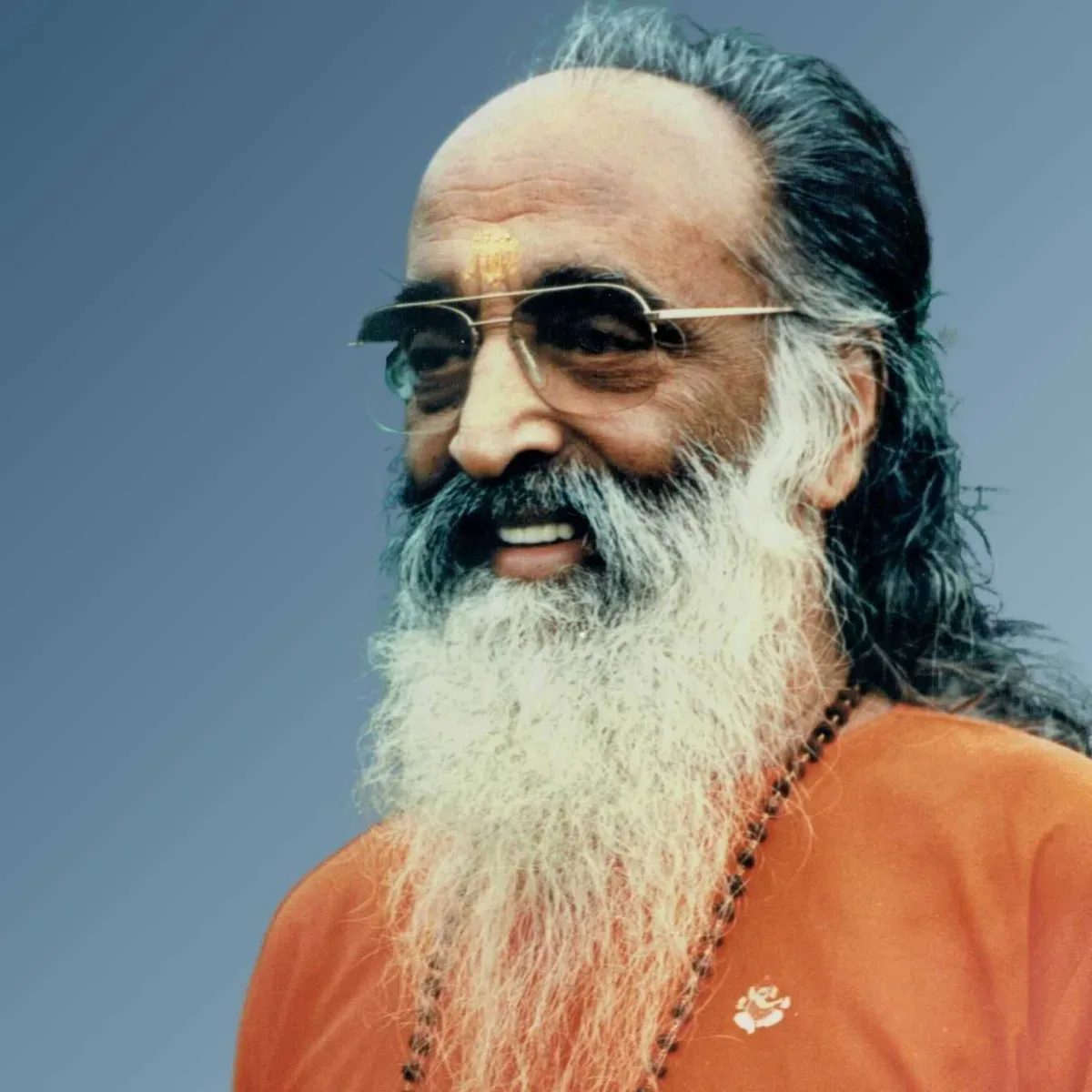
The remarkable transformation of Swami Chinmayananda began with his birth as Balakrishna Menon (affectionately called Balan) on May 8, 1916, in Ernakulam, Kerala, India. He emerged from an aristocratic, devout Hindu family with a strong religious and cultural background that provided him with a solid foundation in traditional values.
He received a comprehensive education that would serve him well in his future mission, studying science, political science, law, and English literature at Lucknow University. This broad educational background enabled him to communicate complex spiritual concepts to diverse audiences with remarkable clarity and precision.
Initially, his path seemed to lead away from spirituality. He worked as a journalist and actively participated in the Indian independence movement, using his writing skills to advocate for social and political change. However, his life took a profound turn when he dedicated himself fully to spiritual life, eventually rising to prominence as a leading authority on the Vedanta system of Indian philosophy.
Core Teachings: Making Ancient Wisdom Accessible
Swami Chinmayananda distinguished himself as a formidable authority on the Vedanta system of Indian philosophy, with particular mastery of Advaita Vedanta as originally expounded by Adi Shankaracharya. His unique gift lay in making these profound but complex teachings accessible to modern seekers regardless of their background.
His teachings emphasized self-realization, inner transformation, and the crucial importance of balancing intellectual understanding (the "head") with emotional devotion (the "heart"). This integrated approach prevented spiritual practice from becoming either purely academic or merely emotional, instead creating a comprehensive path to wisdom.
He advocated for spiritual practice through multiple paths: knowledge (jnana yoga), selfless work (karma yoga), and meditation, allowing students to find the approach that best suited their temperament and circumstances. He founded the Chinmaya Mission with the clear objective of making Vedantic wisdom practically applicable for modern seekers, irrespective of their age, nationality, or background.
His prolific writings include numerous insightful commentaries on the Upanishads, the Bhagavad Gita, and other foundational scriptures, systematically teaching Vedantic philosophy to audiences worldwide through a perfect blend of traditional wisdom and contemporary relevance.
Encounter Amma, Walk Narayana Guru’s Legacy, and Stand at Kanyakumari Where Vivekananda Meditated — The Living Masters Southern Tip route travels from Trivandrum through Kanyakumari, Swami Sivananda’s birthplace at Pattamadai, the sacred Tamirabarani River, Amritapuri Ashram, and Varkala over ten days. Kochi start and end also available. Designed specifically for international spiritual travelers.
Establishing Deep French Roots
Swami Chinmayananda's profound influence led to the formation of Chinmaya Mission France in 1992, which has been actively supported by dedicated French devotees who recognized the universal value of his teachings. His connection with French-speaking communities was both personal and institutional.
He made a particularly significant visit to Paris in June 1993, just months before his passing, specifically to connect culturally and spiritually with his French followers. This visit represented the culmination of years of growing interest in his teachings among French spiritual seekers.
In France, his teachings continue to be carried forward by his dedicated disciples, most notably Swamini Umananda, who not only translates his extensive works but also conducts regular classes in French, making the philosophy accessible to French speakers who might otherwise struggle with Sanskrit terminology or English translations.
French ashrams, satsangs, study groups, and regular lecture series consistently promote Vedanta deeply inspired by his life and teachings. Chinmaya Mission France, with its main base at the Chinmaya Shakti center in Paris, along with a center on Reunion Island (a French overseas territory), actively organizes comprehensive spiritual programs, study classes, retreats, and community service activities specifically designed for French speakers.
A Living Legacy of Wisdom
Many of Swami Chinmayananda's seminal works have been lovingly translated into French through the dedicated efforts of Swamini Umananda and other qualified translators. Key French publications include his penetrating commentaries on the Bhagavad Gita, practical guides like "Meditation and Life" and "Self Unfoldment," as well as detailed commentaries on various Upanishads and other essential Vedantic texts.
These translations are readily available from Chinmaya Mission France and through online platforms, ensuring that French-speaking seekers have access to the full range of his teachings. Regular spiritual retreats, comprehensive seminars, and detailed Vedanta lecture series are consistently held by Chinmaya Mission France and its affiliated groups.
Swami Tejomayananda, the former Global Head of Chinmaya Mission, has also led several impactful spiritual retreats and profound discourse sessions in France, continuing the tradition of direct teaching that Swami Chinmayananda established.
Swamini Umananda represents a pivotal bridge between traditions, having trained directly under Swami Chinmayananda and now leading Chinmaya Mission France with remarkable dedication. Her work ensures that his teachings remain vibrant and accessible to contemporary French seekers.
The Francophone following is significant and intellectually engaged, with active participation in regular spiritual classes, intensive retreats, and dynamic online forums. The official Chinmaya Mission France website (http://chinmayafrance.fr) and French YouTube channels continue to provide accessible learning resources, ensuring his transformative teachings remain vibrant and impactful for new generations of French-speaking spiritual seekers.
Swami Dayananda Saraswati - Reformer and Vedic Scholar
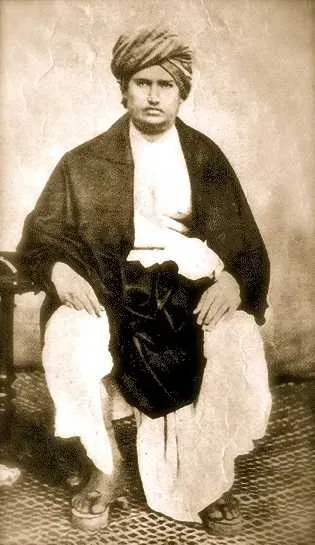
The transformative journey of Swami Dayananda Saraswati began with his birth as Mool Shankar Tiwari (Trivedi) on February 12, 1824, in Tankara, Gujarat, India. Born into an orthodox Indian Hindu Brahmin family, his early spiritual questioning and unwillingness to accept religious practices without understanding their deeper meaning led him to leave his comfortable home at age 22 in search of profound religious truth.
He spent approximately 25 years as a wandering ascetic, dedicating himself completely to practicing yoga and studying ancient scriptures with remarkable intensity and devotion. His spiritual quest eventually led him to become a disciple of Virajanand Saraswati, who profoundly influenced his understanding of the Vedas and their practical application.
He rose to historical prominence as a pioneering social and religious reformer who founded the influential Arya Samaj in 1875, advocating passionately for a return to what he considered the pure, original Vedic principles that had been obscured by centuries of ritualism and social distortion.
Core Teachings: Rational Spirituality and Social Reform
Swami Dayananda Saraswati founded the dynamic Arya Samaj in 1875, creating a reform movement that called for a revival of and strict adherence to pure Vedic principles. His approach was revolutionary in its combination of deep spirituality with practical social reform.
He emphatically emphasized monotheism, advocating for the worship of one formless, universal God while rigorously rejecting what he saw as the superstitious practices of idol worship, empty ritualism, and meaningless ceremonies that had accumulated over centuries.
He championed the infallible authority of the Vedas as the ultimate foundation of dharma (righteous conduct), but interpreted them through the lens of reason and practical application rather than blind faith. His teachings stressed rationality, justice, the paramount importance of education (including revolutionary support for women's education), moral living, comprehensive social reform, and universalism.
He actively promoted transformative ideas that were radical for his time, including social equality, strong opposition to caste discrimination, the complete eradication of child marriage, and the protection of cows as symbols of gentleness and service. He was a prolific writer whose most influential work, "Satyarth Prakash" (The True Exposition), continues to inspire reformers today.
Influence Through Translation and Study
His profound teachings and the comprehensive philosophy of the Arya Samaj have been meticulously translated and thoughtfully introduced to French-speaking audiences through dedicated scholars and spiritual seekers. His influence in France, Belgium, and Quebec is primarily noted through these carefully prepared translations and the continued teaching efforts of his committed successors.
French publications and dynamic satsang groups actively continue to disseminate his powerful ideas, often focusing on his rational approach to spirituality and his emphasis on social justice. Organized retreats and study programs based on his extensive philosophical work have been held, often in collaboration with contemporary teachers who carry forward his intellectual and spiritual lineage.
While he did not establish large ashrams directly in French-speaking regions during his lifetime, there exist Vedanta centers and serious study groups deeply inspired by the Arya Samaj principles and Swami Dayananda Saraswati's revolutionary teachings. The global outreach of his reformist philosophy includes events and satsangs sometimes led by spiritual teachers associated with the Arya Samaj tradition or the broader Vedanta movement linked to his enduring legacy.
A Continuing Legacy of Reform and Wisdom
French biographies and informative educational materials about his life, such as "Swami Dayanand Saraswati – Sa vie et sa profession de foi," are available to French readers seeking to understand his contribution to spiritual and social reform. Careful translations of his major works, including "Satyarth Prakash" and various insightful commentaries on the Vedas and Bhagavad Gita, are accessible to Francophones through specialized publishers.
A French edition of the Bhagavad Gita with commentary by Swami Dayananda Saraswati is also available through publishers specializing in authentic Indian philosophy and spiritual literature. Occasional retreats and educational events specifically devoted to Vedantic teachings inspired by his work and the principles of the Arya Samaj are held in French-speaking regions.
A modest but enduring and intellectually serious following exists among French-speaking seekers, particularly among those drawn to Vedanta and Hindu philosophy who appreciate his rational approach to spirituality. This community engages actively through social media platforms, dedicated satsang groups, and spiritual forums focused on the practical application of Vedantic principles.
French biographies and texts are readily available online and through publishers specializing in Vedanta and authentic Indian philosophy. Websites like Arsha Vidya Pitham and discovervedanta.com provide access to teachings in his tradition, with some content available in French or easily accessible to Francophones, ensuring his legacy as both a spiritual reformer and Vedantic scholar continues to inspire contemporary seekers.
Swami Sivananda - The Divine Life in Action
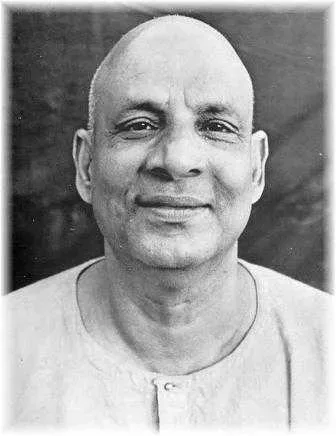
The inspiring transformation of Swami Sivananda began with his birth as Kuppuswami on September 8, 1887, in Pattamadai, Tirunelveli district, Tamil Nadu, India. Born into a Brahmin family where his father served as a revenue officer devoted to Shiva, he grew up with both spiritual values and practical worldliness.
He initially pursued medicine and worked as a dedicated physician in British Malaya for approximately 10 years, where he notably provided free medical treatment to poor patients regardless of their ability to pay. This early expression of selfless service would later become a cornerstone of his spiritual teaching.
His life took a profound spiritual turn when he returned to India in 1924 to dedicate his existence entirely to spiritual pursuits. He was formally initiated into the sacred Sannyasa order under Vishvananda Saraswati in the holy city of Rishikesh, beginning a new chapter that would impact millions of lives. He continued his work until his passing on July 14, 1963, leaving behind a legacy of practical spirituality and comprehensive spiritual education.
Core Teachings: The Integration of All Yogas
Swami Sivananda championed a revolutionary approach to spiritual practice by integrating all four main yogas, promoting a holistic path to spiritual attainment that could be followed while living an ordinary life and fulfilling one's worldly duties and responsibilities.
His integrated approach encompasses four essential paths:
- [object Object]
- [object Object]
- [object Object]
- [object Object]
He authored an astounding collection of over 200 books on yoga, Vedanta, and practical spirituality, making complex spiritual concepts accessible to people of all educational backgrounds and life circumstances. His central teaching emphasized that God is inherently present within all beings, and everything in existence represents a manifestation of divine consciousness.
His approach made spiritual life practical and attainable for both renunciates living in ashrams and householders managing family and career responsibilities, demonstrating that spiritual awakening is available to everyone regardless of their life situation.
Building Strong European Communities
Sivananda's comprehensive teachings spread rapidly across the globe, and French-speaking seekers have actively engaged with his work through numerous carefully translated books and the establishment of dedicated practice centers that continue to thrive today.
The Divine Life Society and its affiliated organizations have significantly facilitated French access to his teachings through systematic translation projects and the establishment of local communities. His notable disciple, Swami Vishnudevananda, played a crucial role in spreading authentic Sivananda Yoga internationally, directly establishing centers in French-speaking countries and training qualified teachers.
A particularly significant milestone was the establishment of the first Sivananda Yoga Ashram in Europe in 2000, located in Neuville-aux-Bois near Orleans, France. This center has become a major pilgrimage destination for European practitioners seeking authentic yogic training and spiritual retreat.
Numerous thriving Sivananda Yoga Centres now exist across France (including Paris and Orleans), Switzerland (Geneva), and other European countries with substantial French-speaking communities, offering regular classes, teacher training programs, and spiritual retreats.
A Practical Legacy of Integrated Spirituality
Many of Swami Sivananda's foundational books have been skillfully translated into French, including beloved classics such as "Sadhana," "Bliss Divine," and his penetrating commentaries on The Bhagavad Gita. His writings remain readily available through the Divine Life Society and official Sivananda Yoga websites, with French publications emphasizing practical approaches to yoga, meditation, and spiritual living.
Regular yoga retreats, immersive workshops, and inspiring satsangs based on Sivananda's integrated teachings are consistently held throughout French-speaking regions. The Sivananda Ashram near Orleans serves as a key venue, hosting comprehensive meditation retreats and internationally recognized yoga teacher training programs that attract students from across Europe.
The Francophone following is robustly established through active ashrams, numerous yoga centers, and vibrant online communities that demonstrate deep and sustained engagement with his teachings. These communities embody his integration of spiritual practice with practical service, often engaging in charitable activities and community outreach.
French practitioners consistently report positive transformative effects from practicing Sivananda's integrated yoga approach, emphasizing improved physical health, enhanced mental peace, and profound spiritual growth achieved through the combination of yoga postures, breathing practices, meditation, and selfless service.
The official Sivananda Yoga Europe website and dedicated French YouTube channels continue to provide extensive French-language information and comprehensive resources, ensuring his compassionate and practical teachings endure and remain accessible to new generations of French-speaking spiritual seekers.
Swami Vivekananda - Herald of Universal Spirituality
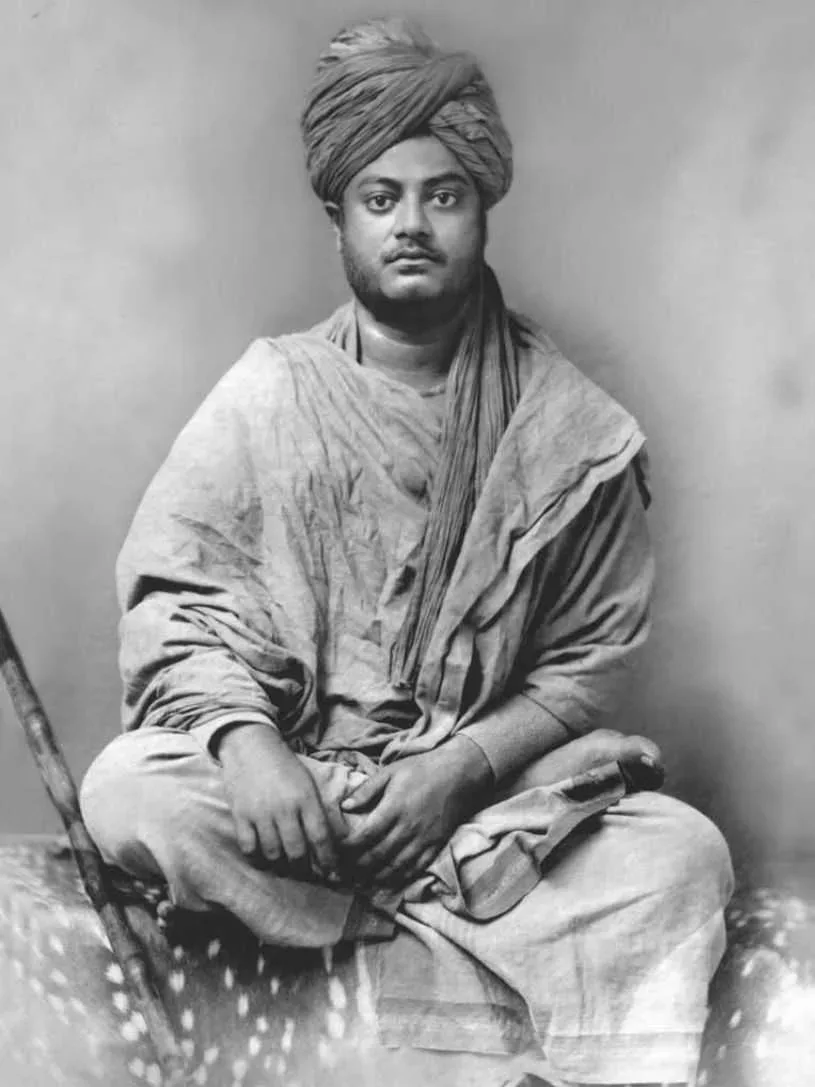
The extraordinary journey of Swami Vivekananda began with his birth as Narendranath Datta on January 12, 1863, in Kolkata (formerly Calcutta), India. He emerged from an affluent Bengali family where his father worked as a successful attorney and his mother was renowned for her strong character and deep devotion, creating an environment that nurtured both intellectual curiosity and spiritual sensitivity.
He received a comprehensive education in both Western and Indian philosophy, excelling at the Metropolitan Institution and Presidency College in Kolkata. During his youth, he showed diverse interests in music, gymnastics, and spiritual studies, while being profoundly influenced by the progressive Brahmo Samaj movement that sought to reform Hindu practices.
His life was transformed through his relationship with Sri Ramakrishna, the great mystic who became his guru and spiritual guide. This connection would eventually propel him to towering global prominence when he introduced India's profound Vedantic philosophy to the Western world through his iconic speeches at the Parliament of the World's Religions in Chicago in 1893.
Core Teachings: The Divinity Within All Beings
Swami Vivekananda's teachings are deeply rooted in Vedanta philosophy, emphasizing three fundamental principles that revolutionized spiritual understanding: the inherent divinity of every soul, the fundamental oneness of all existence, and the profound principle of religious pluralism that honors all sincere spiritual paths.
He passionately advocated for self-realization and spiritual awakening, but uniquely emphasized that these must be coupled with selfless service to humanity as a direct and powerful path to spiritual growth. His famous declaration "Jiva is Shiva" (serving others is serving God) became a cornerstone of practical spirituality that continues to inspire millions.
He played a pivotal role in popularizing Karma Yoga (the path of selfless action) alongside traditional Bhakti (devotion) and Jnana Yoga (knowledge), demonstrating how spiritual principles could be applied to improve both individual lives and society as a whole.
He consistently stressed the paramount importance of strength, character-building, and a practical application of Vedanta adapted for modern life rather than withdrawal from worldly responsibilities. In 1897, he founded the Ramakrishna Mission with the revolutionary dual aim of combining spiritual work with impactful social service, creating a model that influenced countless humanitarian organizations.
A Special Bond with French Culture
Swami Vivekananda developed particularly meaningful connections with French-speaking communities during his extensive world travels. He made significant visits to France, most notably attending the 1900 Paris Exposition Universelle, where he had the opportunity to engage directly with French intellectuals and spiritual seekers.
During his time in Paris, he delivered insightful lectures and gave an eloquent speech in fluent French, demonstrating his remarkable ability to discuss complex philosophical concepts in the language with both precision and passion. He also granted a notable interview in French to the respected newspaper La Liberté in September 1900, reaching a broad French readership.
He forged important and lasting contacts with French intellectuals and spiritual seekers, even initiating some French disciples, including Marie Louise, who later became Swami Abhayananda, representing one of the first Western women to be formally initiated into the Ramakrishna tradition.
The Centre Vedantique Ramakrishna was established in Paris in 1937 and later relocated to Gretz, near Paris, becoming a vital and enduring part of the global Ramakrishna Mission network. This center consistently hosts worship services, meditation sessions, educational classes, Sanskrit lessons, spiritual retreats, comprehensive seminars, and meaningful interfaith meetings, all accessible to the French-speaking community.
An Enduring Message of Universal Brotherhood
Extensive and carefully prepared translations of Swami Vivekananda's writings, lectures, and philosophical works are readily available in French, making his profound insights accessible to contemporary French readers. French editions of "The Complete Works of Swami Vivekananda" have been widely published and distributed, along with the regular periodical "Vedanta," published by the Ramakrishna Mission center in France.
His classic speeches and lectures, including those delivered at the historic Chicago Parliament and in Paris, are frequently referenced, republished, and studied in French spiritual circles, continuing to inspire new generations of seekers.
Regular spiritual retreats, comprehensive Vedanta seminars, and vibrant cultural programs consistently take place at the Gretz center near Paris and other affiliated Ramakrishna centers throughout France. Notably, the first European Vedanta Summit was held in August 2024 at the Ramakrishna Vedanta Centre in Gretz, bringing together spiritual seekers from across Europe.
Prominent French disciples such as Marie Louise (Swami Abhayananda), who was personally initiated by Vivekananda, established an important precedent for Western engagement with his teachings. The French-speaking following remains significant and intellectually engaged, sustained by the active Ramakrishna Mission and its affiliated centers.
Active French social media accounts dedicated to Swami Vivekananda's teachings exist, and the vibrant Vedanta community in France participates enthusiastically in spiritual events, educational programs, and dynamic online discussions. The Centre Vedantique Ramakrishna website (www.centre-vedantique.fr) and dedicated French YouTube channels continue to provide extensive resources, ensuring his timeless message of universal spirituality, personal empowerment, and selfless service resonates and endures among French-speaking communities worldwide.
The Mother (Mirra Alfassa) - Divine Feminine Consciousness
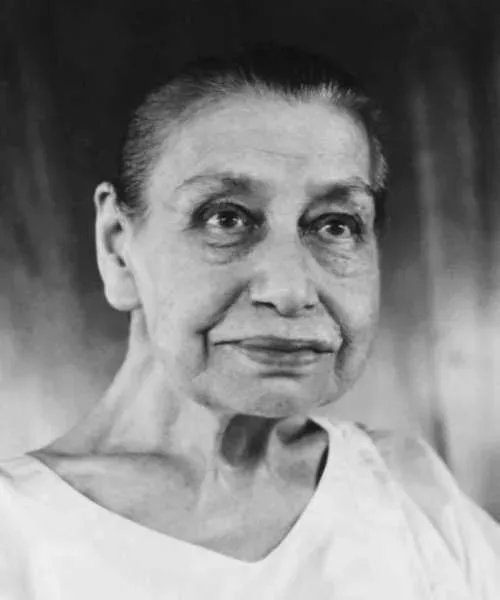
The remarkable spiritual journey of The Mother began with her birth as Blanche Rachel Mirra Alfassa on February 21, 1878, in Paris, France. Born into a bourgeois Sephardi Jewish family with a Turkish father and an Egyptian mother, she grew up during one of Paris's most culturally rich and intellectually vibrant eras.
From her earliest years, she exhibited profound spiritual sensitivity and extraordinary experiences that set her apart from her contemporaries. Her spiritual quest began in her youth when she pursued serious studies in occultism in Algeria with Max Théon, a respected teacher of esoteric traditions, gaining deep insights into consciousness and spiritual transformation.
Returning to Paris, she led spiritual seeker groups, attracting individuals drawn to her remarkable spiritual presence and wisdom. Her life took a momentous turn when she eventually traveled to India and met Sri Aurobindo, who immediately recognized her as "The Mother" and as a living embodiment of the Divine Feminine Shakti, the creative power of the universe.
Core Teachings: Integral Transformation and Evolution
The Mother emerged as a foundational figure in Integral Yoga philosophy, which she co-created and developed with Sri Aurobindo into a comprehensive system for human transformation. Her teachings emphasized inner transformation that goes far beyond personal liberation to encompass the evolution of human consciousness itself.
She stressed the continuous evolution of consciousness beyond the current limitations of the mind toward a higher, supramental level of awareness that could eventually transform not just individuals but humanity as a whole. Her vision encompassed the collective spiritual evolution of humanity rather than individual escape from worldly concerns.
She taught the paramount importance of self-discovery, achieving harmony between spiritual and material life, realizing fundamental oneness, and actively participating in what she termed "divine evolution." Rather than seeking merely to escape suffering, her approach emphasized conscious participation in the transformation of life on Earth.
Her profound teachings were primarily expressed through extensive writings and intimate recorded conversations with disciples, compiled into monumental volumes such as "Mother's Agenda" and "Questions and Answers," which provide detailed insights into consciousness, spiritual practice, and human potential.
A Natural Connection with French Spirituality
As someone born and raised in France, The Mother possessed an innate cultural and linguistic connection to French seekers that proved invaluable in bridging Eastern and Western spiritual understanding. Her early and most influential spiritual work came through her profound collaboration with Sri Aurobindo, whose works she helped translate and publish in French, making them accessible to French-speaking audiences.
After her transformative visits and extended stays in India, including her permanent residence in Pondicherry, she remained a crucial figure in spiritual outreach, particularly to French-speaking communities worldwide. She diligently maintained her French language teachings and discussions even after Sri Aurobindo's passing, ensuring continuity for her French followers.
The Sri Aurobindo Ashram in Pondicherry, India, which she founded and meticulously developed over decades, stands as the principal center and continues to draw French-speaking devotees from around the globe. The ashram maintains strong French cultural elements and offers programs in French.
She also conceived and established the experimental township of Auroville in 1968 near Pondicherry, a groundbreaking project of global significance dedicated to human unity that includes many French-speaking members and attracts thousands of French visitors annually.
A Living Legacy in French and Beyond
The Mother's major works, including the monumental 13-volume "Mother's Agenda" (a detailed record of her life and spiritual experiences) and the comprehensive "Questions and Answers" collections, were originally recorded in French, making them immediately accessible to French-speaking seekers worldwide.
Many comprehensive translations of her writings, talks, prayers, and essays remain widely available from the Ashram Press and associated publishers, ensuring her teachings continue to reach new generations of French readers seeking authentic spiritual guidance.
While her primary spiritual work was centered in India, French-speaking spiritual communities consistently organize retreats, satsangs, and festivals based on her transformative teachings. These events often focus on practical applications of Integral Yoga and conscious evolution.
Auroville itself continues to serve as a vibrant hub attracting visitors and spiritual seekers globally, including a substantial number of French-speaking participants who come to experience her vision of human unity in practical application. The Mother's French heritage has served as an invaluable bridge between Eastern and Western spiritual thought and practice.
There exists a significant and committed French-speaking community deeply associated with both the Sri Aurobindo Ashram and Auroville, where French remains one of the main languages of instruction and dissemination within the ashram and its related international centers.
Official Sri Aurobindo Ashram websites and dedicated French YouTube channels provide extensive French content, including recordings of The Mother speaking in French, ensuring her messages of integral transformation and conscious evolution continue to inspire a vibrant and growing Francophone spiritual community seeking practical ways to participate in human evolution.
Conclusion: A Timeless Bridge of Wisdom
The remarkable spiritual journeys of these 15 extraordinary Indian gurus illuminate a profound and enduring connection with French-speaking communities that continues to flourish worldwide. Their teachings, deeply rooted in ancient wisdom yet strikingly relevant for contemporary life, have transcended geographical boundaries with remarkable grace, touching countless lives across France, Belgium, Quebec, Switzerland, and beyond.
From Amma's universal embraces that convey love without words to Maharishi Mahesh Yogi's systematic Transcendental Meditation, from Ramana Maharshi's profound self-enquiry to Sri Aurobindo's revolutionary Integral Yoga, each guru has offered unique and transformative pathways to inner growth, lasting peace, and authentic self-realization.
Their legacies extend far beyond their physical presence, continuing to thrive through dedicated ashrams, vibrant spiritual centers, extensive libraries of translated literature, and active online communities that span continents. They have served as cultural bridges of the highest order, fostering deeper understanding and genuine appreciation for India's rich philosophical traditions throughout the Francophone world.
What makes their influence particularly remarkable is not merely the depth of their wisdom, but their ability to make ancient truths immediately accessible and practically applicable to contemporary seekers. Whether through Osho's dynamic meditations designed for modern minds, Neem Karoli Baba's simple message of "Love Everyone, Serve Everyone," or The Mother's vision of conscious evolution, these masters have demonstrated that spiritual awakening is not an abstract concept but a lived reality available to sincere seekers everywhere.
The French-speaking communities have embraced these teachings with particular enthusiasm, perhaps recognizing in them the universal principles that transcend cultural and religious boundaries. From the bustling meditation centers in Paris to the peaceful retreat facilities in Quebec, from the philosophical study groups in Belgium to the service projects in Switzerland, the practical application of these teachings continues to create positive transformation in individuals and communities alike.
For those drawn to explore these timeless teachings further, the path forward remains open and welcoming. Each of these spiritual masters has left behind not only profound philosophical insights but practical methods for inner development that can be integrated into daily life. Whether one is drawn to the devotional practices inspired by Sathya Sai Baba, the breath-based techniques of Sri Sri Ravi Shankar, or the integrated yoga approach of Swami Sivananda, authentic guidance remains available through the continuing work of their dedicated students and institutions.
The wisdom of these remarkable beings continues to demonstrate the eternal truth that genuine spirituality knows no boundaries of nationality, language, or culture. Their teachings remind us that the quest for inner peace, authentic love, and true wisdom represents our shared human heritage, available to all who approach with sincerity and openness.
As we move forward in an increasingly interconnected world, the messages of these Indian spiritual masters remain more relevant than ever. Their emphasis on universal love, selfless service, inner transformation, and the recognition of our fundamental unity offers hope and practical guidance for addressing both personal challenges and global concerns.
The enduring influence of these 15 spiritual luminaries among French-speaking communities stands as a beautiful testament to the power of authentic wisdom to transcend all barriers and touch the depths of the human heart. Their legacy continues to inspire millions toward a more mindful, compassionate, and harmonious way of living, demonstrating the timeless power of genuine spirituality to unite and uplift humanity across all borders and differences.