About this article
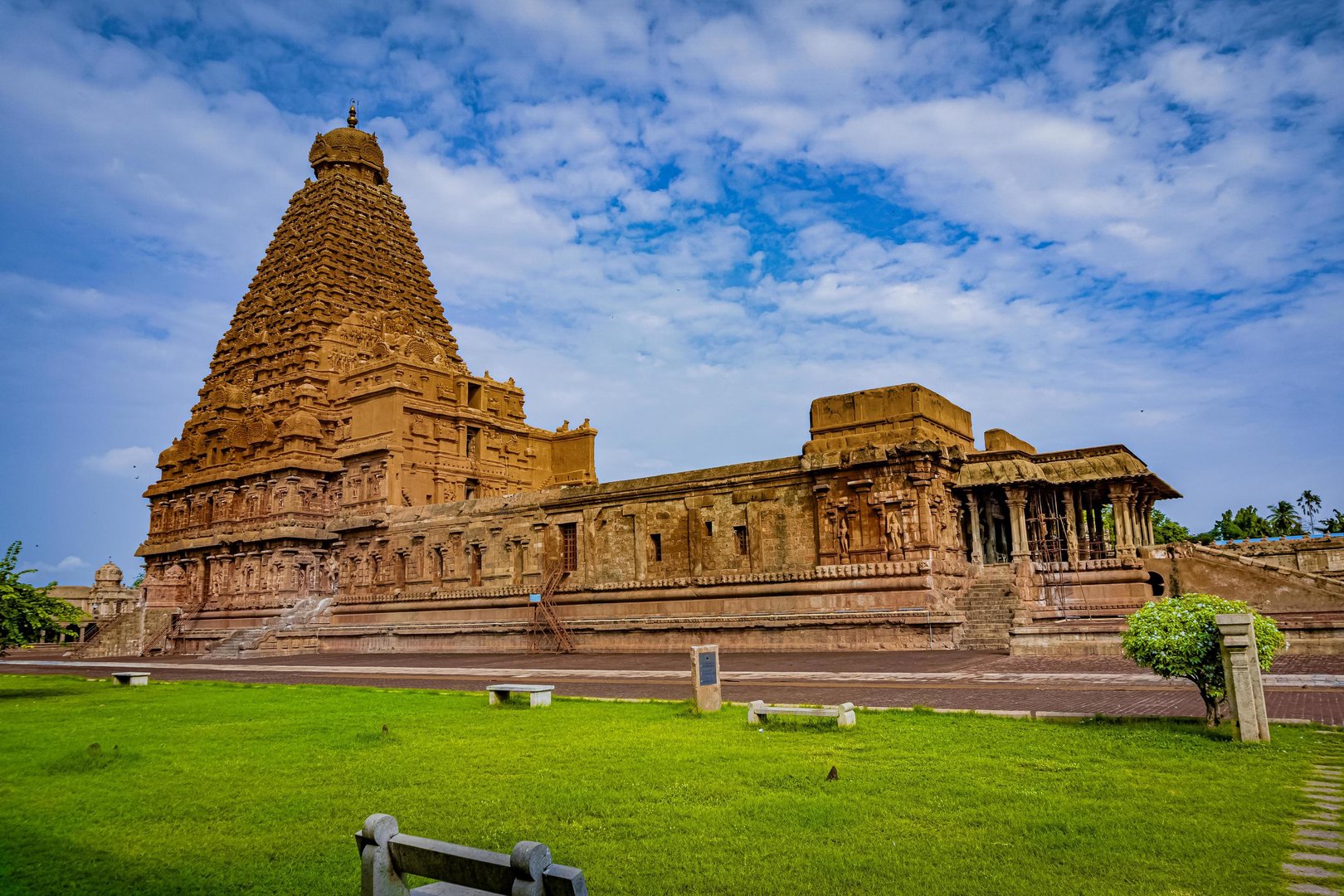
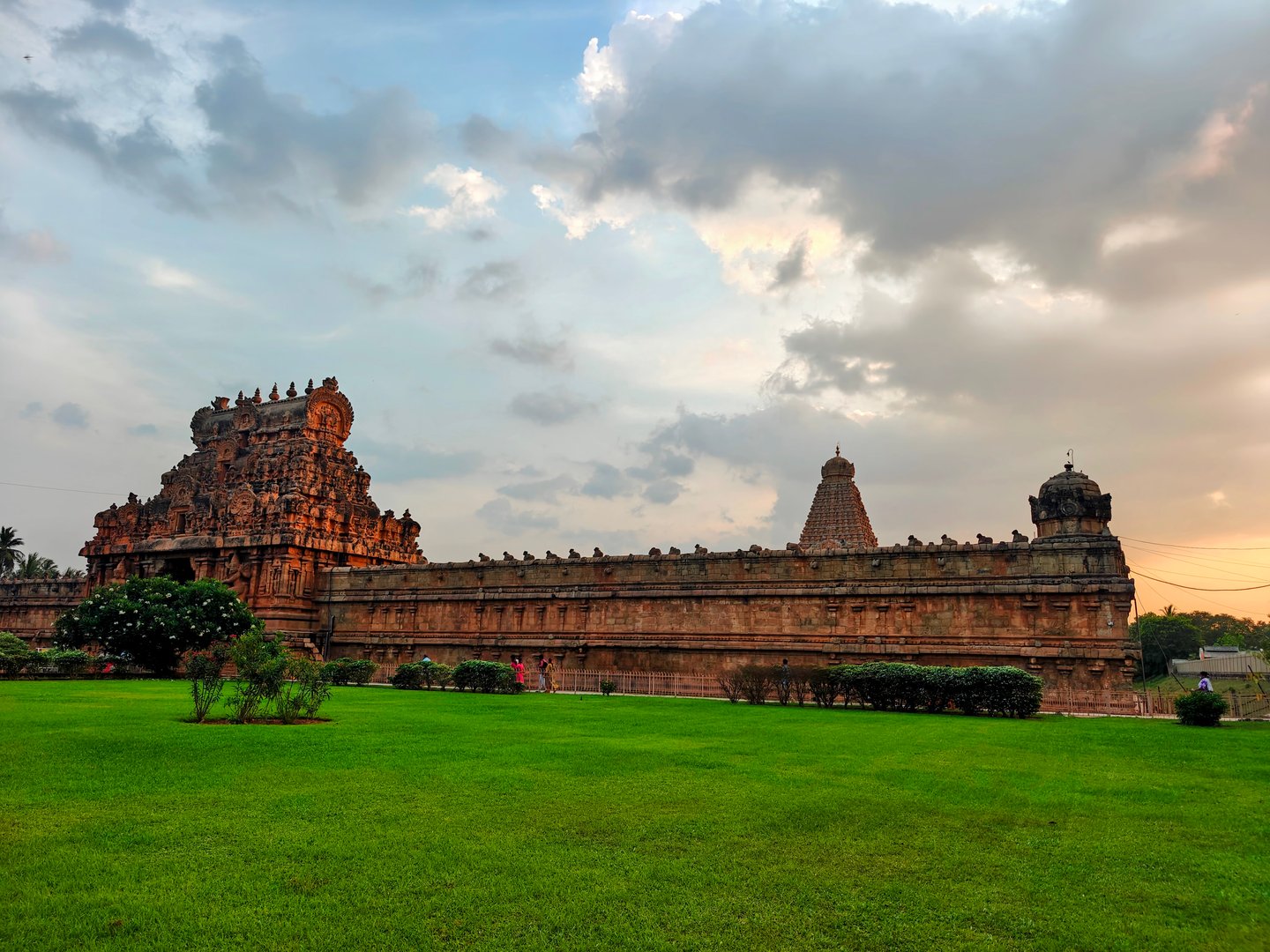
Standing in the sun-drenched courtyard of the Brihadisvara Temple in Thanjavur, you look up at a tower of granite that rises 66 metres into the Tamil Nadu sky — and you start doing uncomfortable arithmetic. This was built in 1010 CE. Without cranes. Without steel. Without mortar. With blocks of stone hauled over 50 kilometres, stacked to a height no other temple on earth could match at the time, and crowned with a single capstone weighing 80 tonnes. The scale of the ambition alone stops you cold.
This is the Brihadisvara Temple — also called the Big Temple, the Great Temple of Thanjavur, or Peruvudaiyar Kovil — and it is one of the most extraordinary things human hands have ever constructed. A UNESCO World Heritage Site since 1987, it is the crowning jewel of the Great Living Chola Temples, and one of the most under-visited wonders in the world for international travellers.
“The temple is not just a place of worship. It is a monument to ambition, devotion, and architectural genius.”
— On the Brihadisvara Temple complex
What’s remarkable is that this isn’t a ruin or a museum piece. It is a living temple — active worship, ringing bells, the scent of jasmine and incense, bare feet on ancient granite. History here is not behind glass. You walk inside it.
The Chola Empire & the Making of a Masterpiece
The Cholas were, for a time, the mightiest rulers of South Asia. Their reach extended across South India, Sri Lanka, and deep into Southeast Asia — and yet the heart of their cultural ambition remained in Thanjavur, the rice-bowl city on the Cauvery delta.
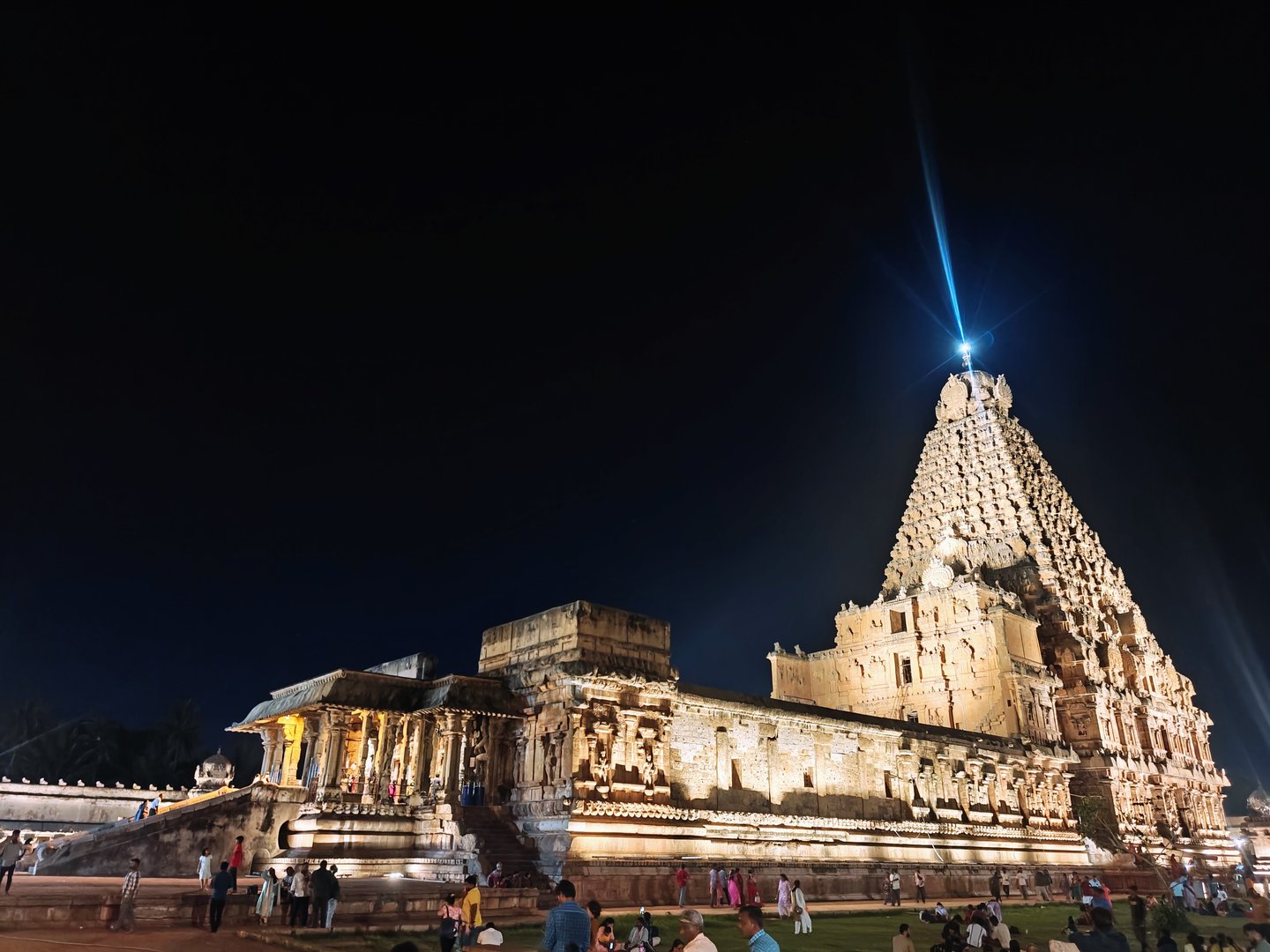
It was Raja Raja Chola I (985–1014 CE) who commissioned this temple as a cosmic statement. Dedicated to Lord Shiva in the form of a 3.66-metre linga named Rajarajesvaramudayar after the king himself, the Brihadisvara was designed to represent the Mahameru — the mythical mountain at the centre of the universe. Construction began in 1003 and was completed in just seven years: an engineering feat that historians still puzzle over.
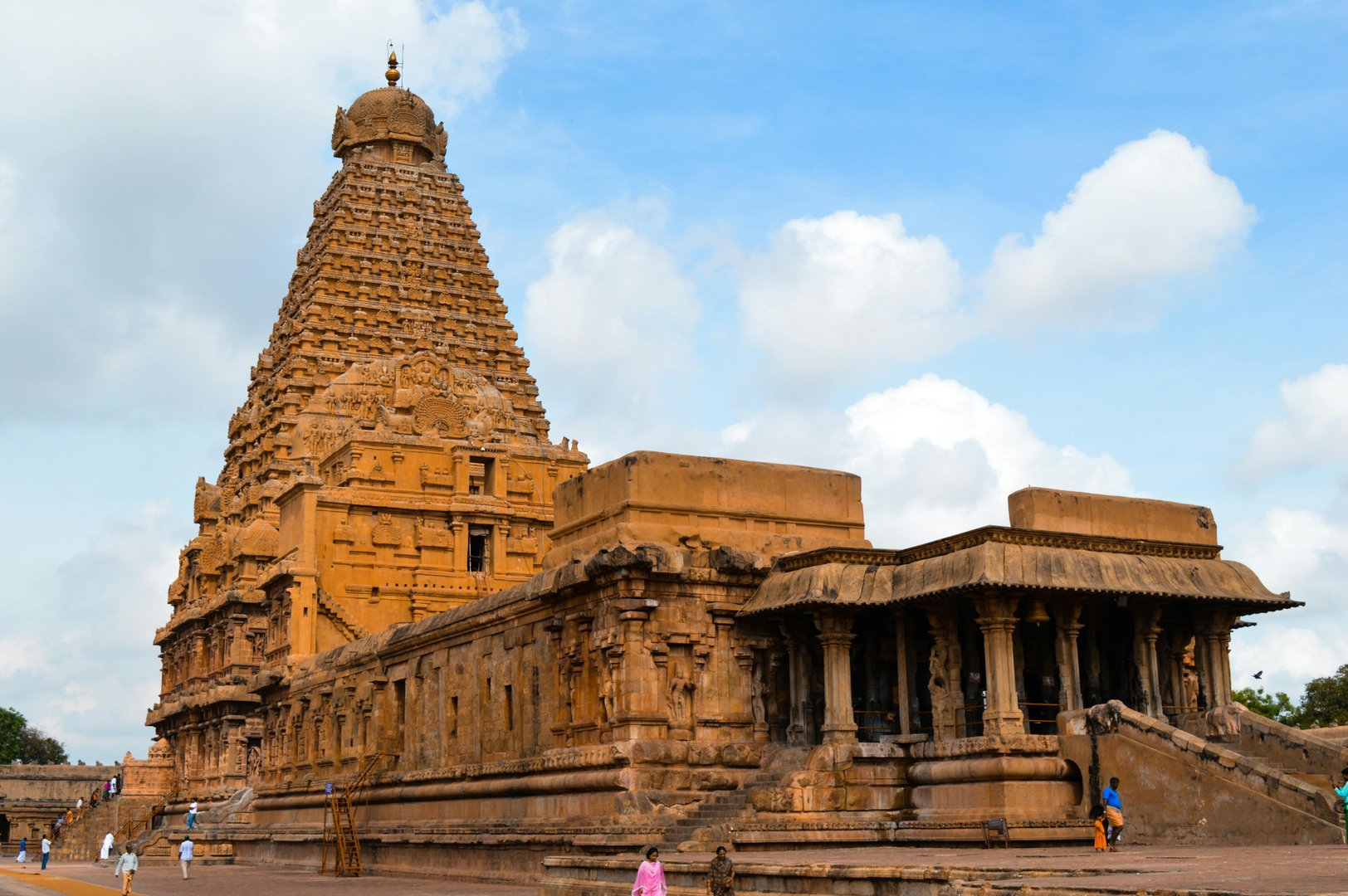
Built entirely of granite sourced from quarries 50 kilometres away, the temple uses no mortar. The stones are fitted together with extraordinary precision through a technique of interlocking joints. The vimana (temple tower) soars to 66 metres — tallest of its kind in the world — and is topped by an 80-tonne stone dome called the sikhara, consisting of eight individual granite pieces.
A Living Archive of Dynasties
After the Cholas, the temple passed through the hands of the Nayakas and Marathas, each dynasty adding their own layers. The Nayakas fortified the complex and added the colossal Nandi statue within. In 1675 CE, the Maratha ruler Shahji improved the palace and established the famous Saraswathi Mahal Library nearby. The British annexed Thanjavur in 1855 — yet the temple endured, maintained today by the Archaeological Survey of India.
The walls and plinth carry inscriptions of Chola, Pandya, Vijayanagara, Nayaka, and Maratha rulers — essentially a stone ledger of South Indian history. The annual income from land set aside for the temple was once recorded at 1,16,000 kalams of paddy. Nothing about this place is small.
Rajah Sri Rajaramrajah Saheb — senior prince and hereditary trustee of Tanjore Palace Devasthanams, overseeing 90 temples including the famous Sri Brahadeswara — threw open all these temples to Harijans as a purely voluntary act of reparation. Mahatma Gandhi, writing from Segaon, praised the act: it was, he wrote, a great and good thing that this Rajah Saheb had done, and he deserved the congratulations of all those who believed that untouchability was a blot on Hinduism. Signed: M.K. Gandhi, Segaon, 29.07.1939.
A bronze plaque bearing Gandhi’s words in English and Tamil stands at the temple entrance — a reminder that this sacred site carries not only spiritual but profound social and political history. International visitors often overlook it entirely. Don’t.
More Than Engineering
Every dimension of a temple like this one carries symbolic weight beyond its structural feat. The Garbhagriha marks the innermost center — the still point everything else is built around. The Shikhara (or Vimana, in Dravidian temples like this one) symbolizes the connecting axis between earth and cosmos. The Pradakshina path around the sanctum invites mindful, circular movement rather than a straight walk-through. Together, these elements are meant to guide you — deliberately — from outer distraction toward inner stillness, long before you understand a single carving's history.
What to See Inside the Complex
The Brihadisvara is not one building — it is a city within walls. Allow at least two to three hours for a thorough visit; a full morning if you want to move slowly and absorb details.
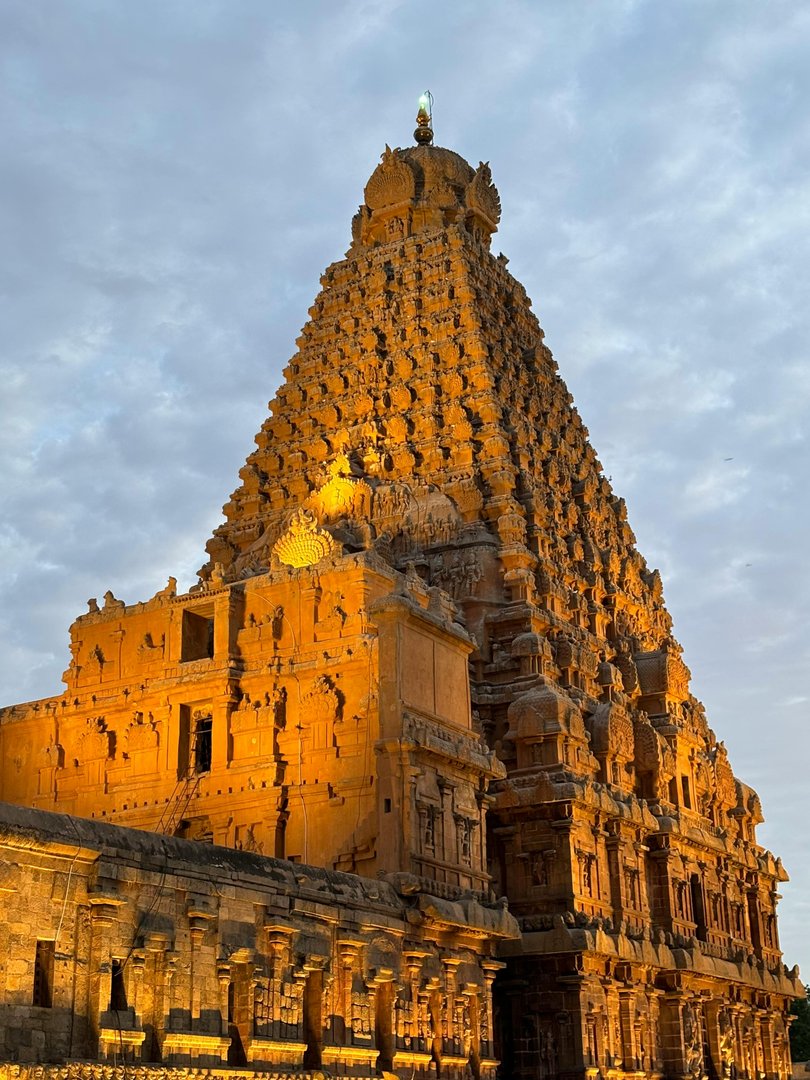
The 66-metre tower is the centrepiece — tallest temple tower of the Chola era. Observe how its shadow never falls on the ground at noon, a deliberate engineering achievement exploiting the base’s proportions.
One of the largest Nandi (sacred bull) statues in India, carved from a single rock, faces the main sanctum. Added by the Nayakas, it is a striking presence in the second enclosure.
The inner circumambulatory passageway (pradakshinapatha) contains exquisite Chola-era mural paintings — some of the oldest surviving examples of Dravidian painting in India.
The complex includes shrines for Chandikesvara, Amman, Subrahmanya, Ganesa, and Karuvur Devar, plus two mandapas for Nataraja and Nandi.
Over 400 inscriptions record royal endowments and land grants across multiple dynasties — a primary historical source for medieval South India studied by scholars worldwide.
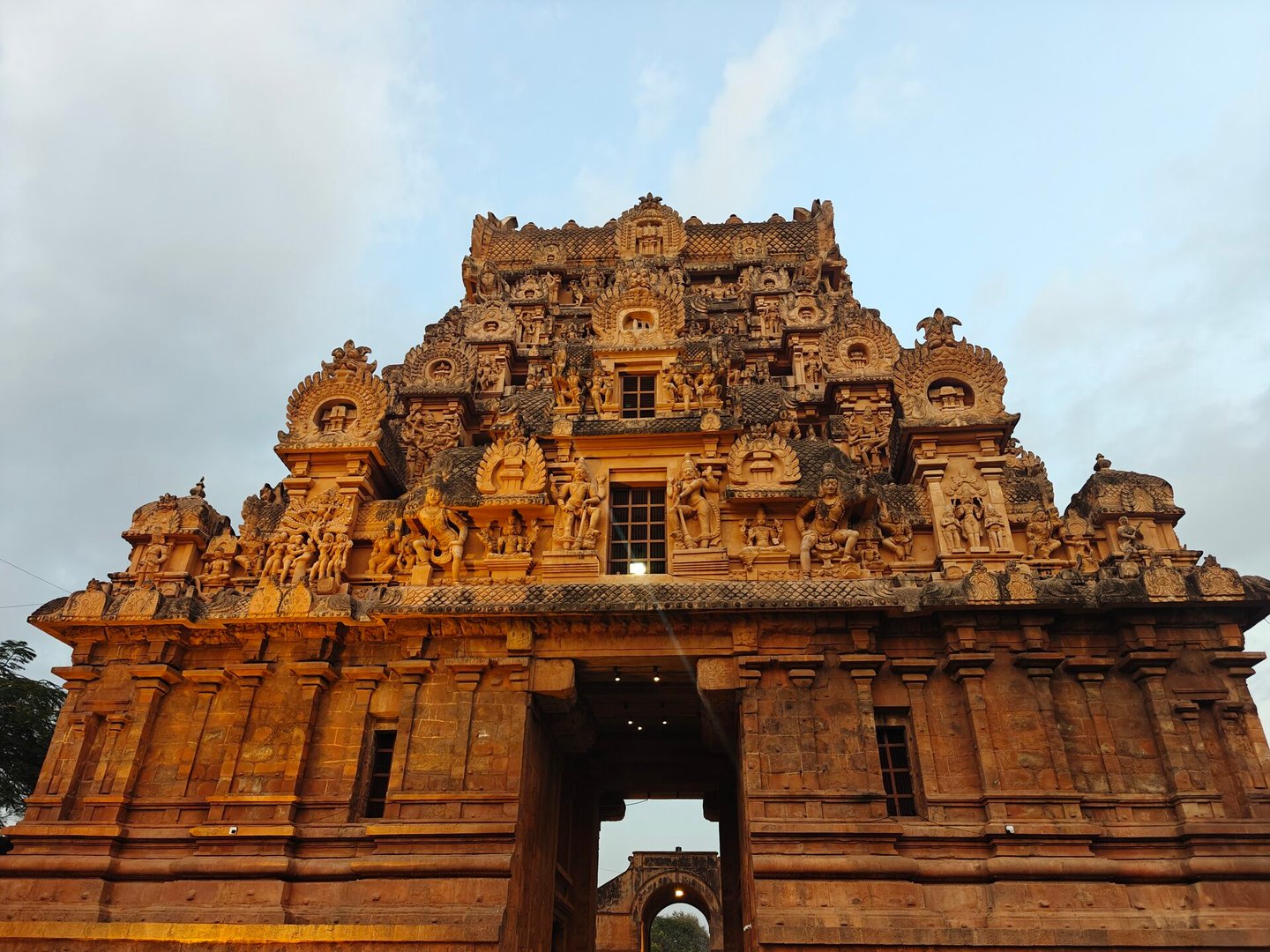
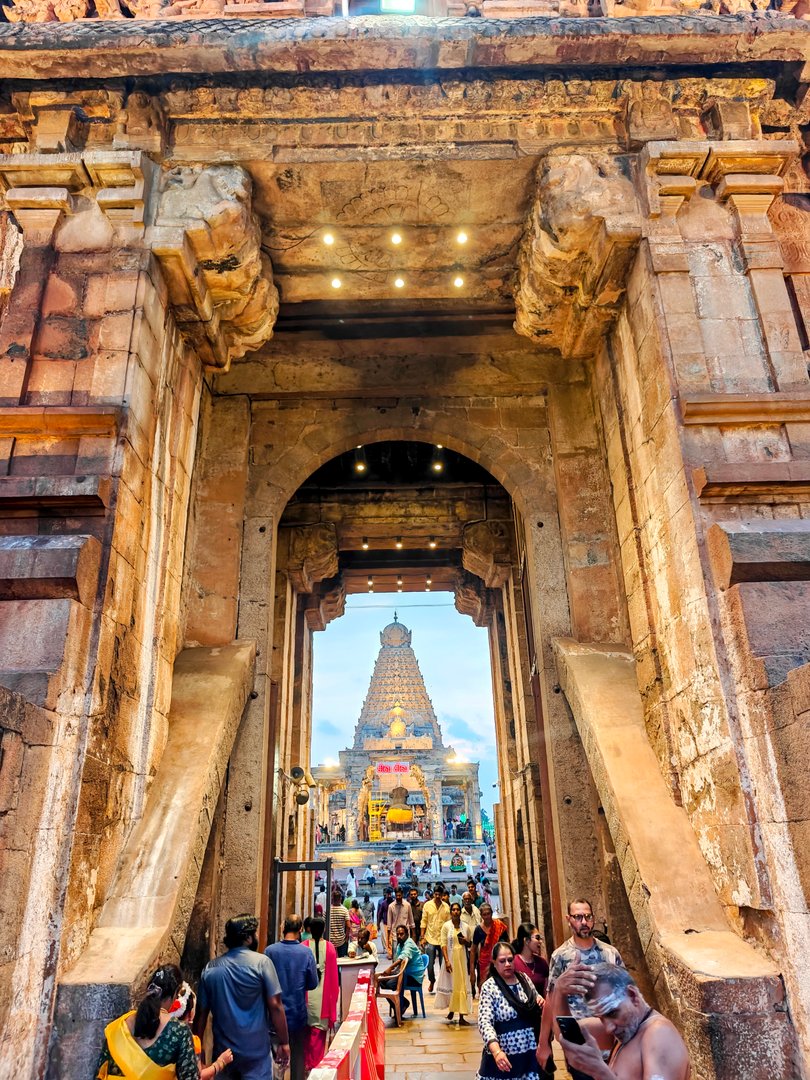
Two entrance towers — Rajarajan tiruvasal and Keralantaka — frame the outer wall. The arch above the entrance is of the Maratha period, showing layers of dynastic patronage.
Practical Guide for International Visitors
Beyond the Temple: Thanjavur as a Destination
Thanjavur rewards those who linger beyond the temple complex. The city is a living museum of South Indian culture — and remarkably few international itineraries give it the two to three days it deserves.
Thanjavur Royal Palace & Art Gallery — Maratha-era architecture housing a world-class collection of Chola bronzes
Saraswathi Mahal Library — One of Asia’s oldest libraries, with over 66,000 palm-leaf and paper manuscripts
Great Living Chola Temples day trip — Visit Gangaikonda Cholapuram and Airavatesvara Temple at Darasuram, all UNESCO-listed, on a single excursion
Tanjore Painting workshops — Watch artisans layer gold foil on classical devotional paintings; workshops accept visitors and offer pieces to purchase
Natyanjali Dance Festival — Held at Brihadisvara each February/March; classical Bharatanatyam performances in a thousand-year-old courtyard
Local cuisine — A traditional South Indian thali on a banana leaf, soft Thanjavur-style idlis, murukku, and filter coffee in the old town
Where Thanjavur Fits in a South India Itinerary
Thanjavur sits naturally between Chennai (350 km north), Madurai (190 km south), and Pondicherry (180 km northeast) — making it an ideal stop on a Tamil Nadu temple circuit. From Tiruchirappalli (55 km), connections to Rameswaram and Kanyakumari are easy. Most international visitors base themselves in Chennai or Bengaluru and take a two-day side trip; the more rewarding approach is to slow down and stay.
The Brihadisvara Temple is the kind of place that quietly recalibrates your sense of what humanity is capable of. International travellers who make the journey to Thanjavur consistently describe it as one of the most profound experiences in India — and one of the least expected. It is not yet on the must-see circuit the way the Taj Mahal is. That will change. Go now, while the courtyards are still quiet.
If you want a truly personal experience of Brihadisvara, reach out to Sekar — a Shiva devotee and expert guide with over two decades of experience walking these sacred corridors. He speaks English and brings a rare depth of knowledge that only genuine devotion and years of practice can offer.
Tell him Sabin from Smukti sent you.
📞 +91 98650 15261