About this article
Kanyakumari — known in ancient texts as Cape Comorin — stands at the very tip of the Indian subcontinent where the Arabian Sea, the Bay of Bengal, and the Indian Ocean meet. For international travelers, it is one of the most spiritually charged and visually dramatic destinations in all of South India, and one that rewards visitors who come prepared.
This guide covers every major attraction in Kanyakumari, Vivekanandapuram, and the surrounding region — with exact opening hours, practical logistics, and honest advice written specifically for western and international visitors making the journey to India's southernmost point.
Why International Travelers Come to Kanyakumari
Kanyakumari is not a typical beach destination. It is a place of profound spiritual significance in the Hindu tradition — home to the Devi Kanyakumari Temple, the Vivekananda Rock Memorial, and the Triveni Sangam where three sacred bodies of water converge. It is also the place where Swami Vivekananda meditated before traveling to Chicago in 1893 to introduce Vedanta philosophy to the western world.
What makes Kanyakumari genuinely extraordinary is the convergence — not just of three bodies of water but of three complete spiritual traditions. The goddess Kanyakumari holds the southern tip. Vivekananda meditated on the rock that now bears his name before sailing to America in 1893 to deliver the message of Vedanta to the West. Marunthuvazh Malai above the town is associated with Agasthiyar — the ancient Siddha sage said to be the father of Tamil language and medicine. The traditions overlap here in a way that is unique in India: Shakta, Vedanta, and Siddha — all present within walking distance of each other.
For western travelers on a spiritual circuit through South India — particularly those visiting Amritapuri Ashram — Kanyakumari makes a natural and deeply meaningful addition to the journey. The energy here is unlike anywhere else in India: ancient, elemental, and quietly overwhelming.
Kanyakumari is approximately 2.5 hours south of Amritapuri Ashram (Kollam) by road or train. Many international visitors to Amma's ashram add a 2-day trip to Kanyakumari either before or after their ashram stay. The two destinations complement each other naturally as part of a South India spiritual journey.
What to See in Vivekanandapuram
Vivekanandapuram is the campus of the Vivekananda Kendra — a spiritually oriented service organisation founded by Mananeeya Eknathji Ranade with 813 activity centres throughout India. It is both a pilgrimage site and a living institution dedicated to Swami Vivekananda's vision of service as worship.
The Vivekananda Kendra campus at Vivekanandapuram stretches across 101 acres and extends nearly one kilometre to the beach. Beyond the well-known attractions, the campus includes a nature park, meditation spaces, and quiet walking paths through palm groves overlooking the ocean — a serene contrast to the busier parts of Kanyakumari town.
What to See in Kanyakumari Town
The town of Kanyakumari itself is compact and walkable. The main cluster of attractions — the Devi Temple, the Vivekananda Rock Memorial, and the Thiruvalluvar Statue — are all within a short distance of each other near the confluence point. Plan your days carefully around the opening hours below to avoid missing entry windows.
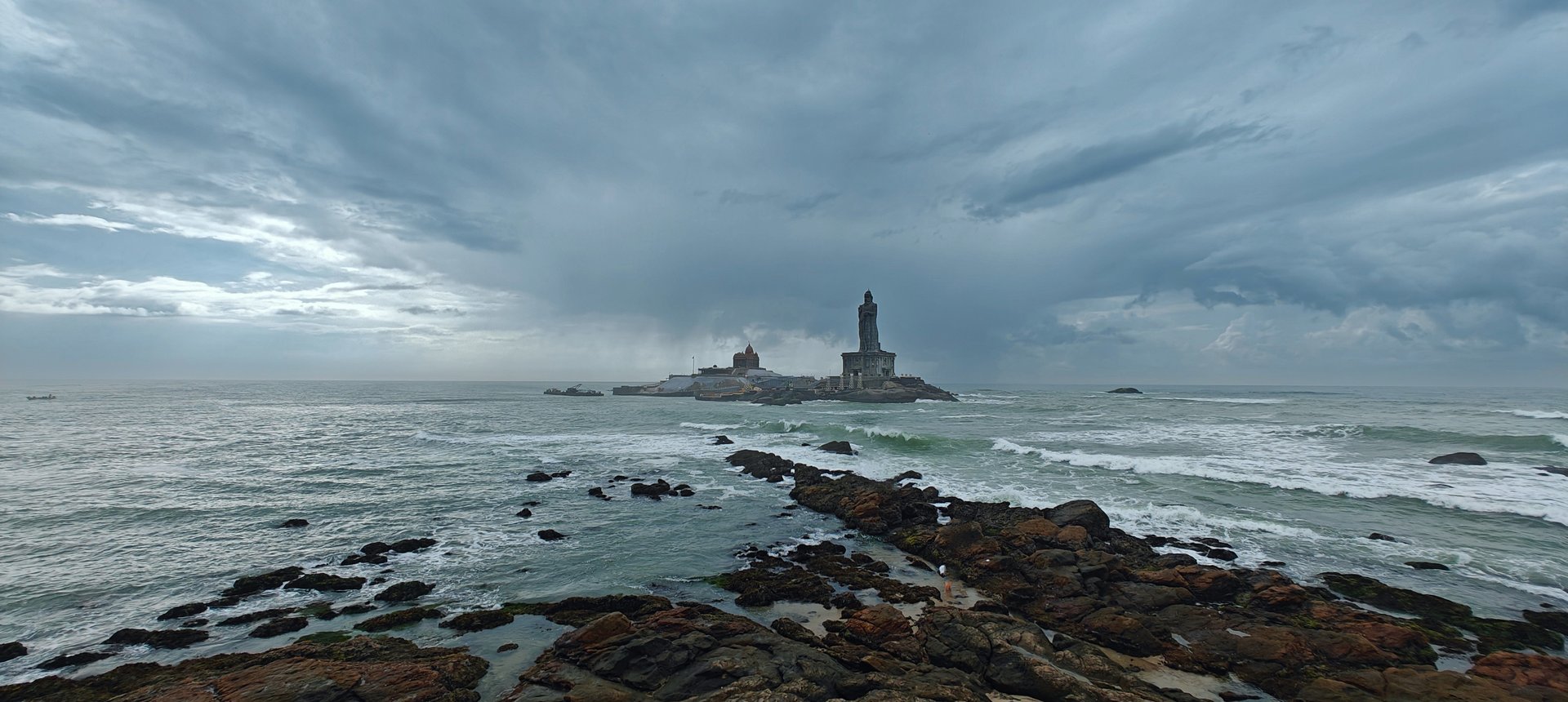
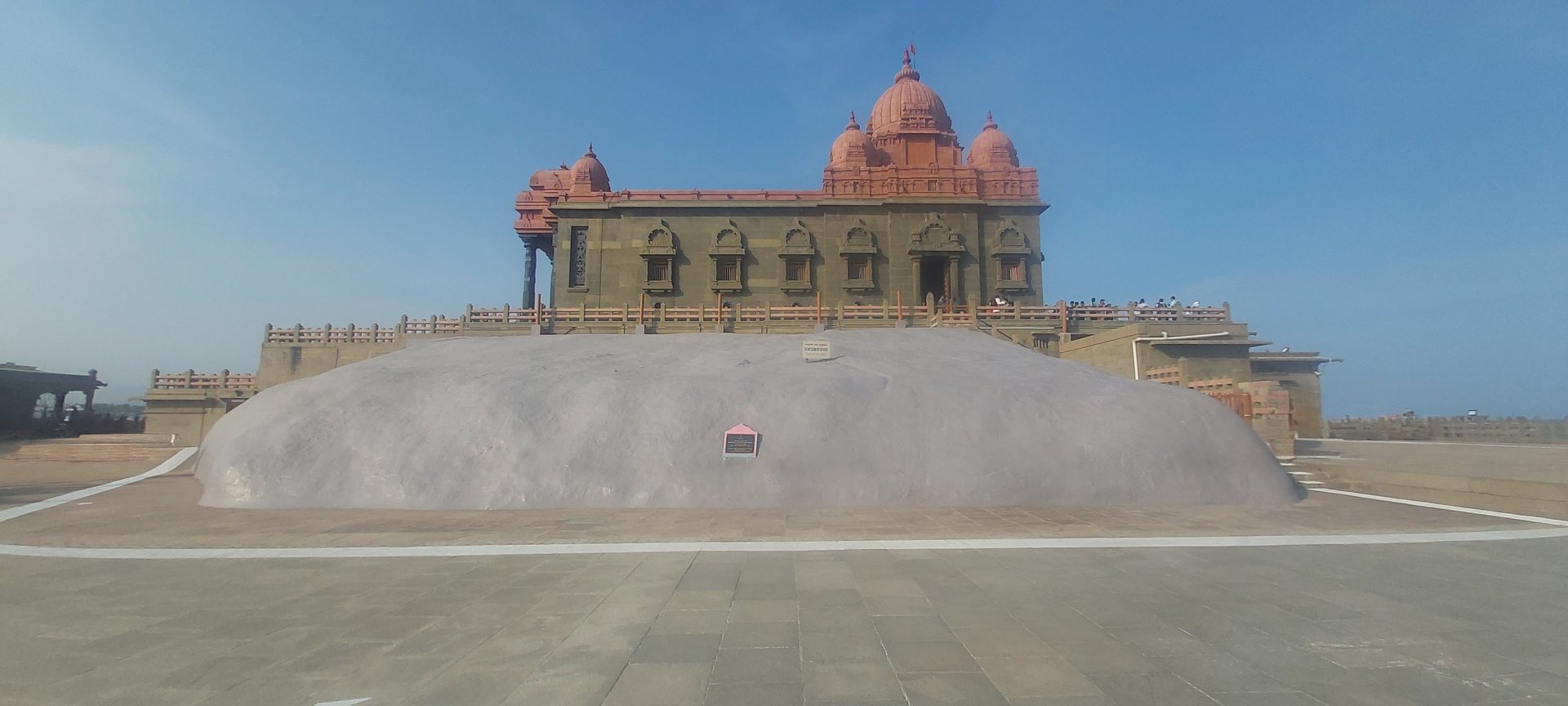
The Rock Memorial closes at 4:00pm and the last ferry back leaves before that. Arrive at the ferry ghat by 3:00pm at the latest to ensure you can visit. Queues for the ferry can be long during peak season (October to March) and on weekends. Early morning is the best time to visit — the light is extraordinary and crowds are thinner.
What to See Around Kanyakumari
The area around Kanyakumari holds several significant temples and historical sites that are well worth a half-day excursion. Most are within 30 to 45 minutes by road and are best visited by hiring a local auto-rickshaw or taxi for a half-day tour.
Padmanabhapuram Palace is consistently rated as one of the finest historical sites in South India and is frequently overlooked by travelers who focus only on the town. The palace is a masterpiece of traditional Kerala wood architecture with intricate carvings, sloping tiled roofs, and cool interior courtyards. It is closed on Mondays — plan accordingly. Entry fee is minimal.
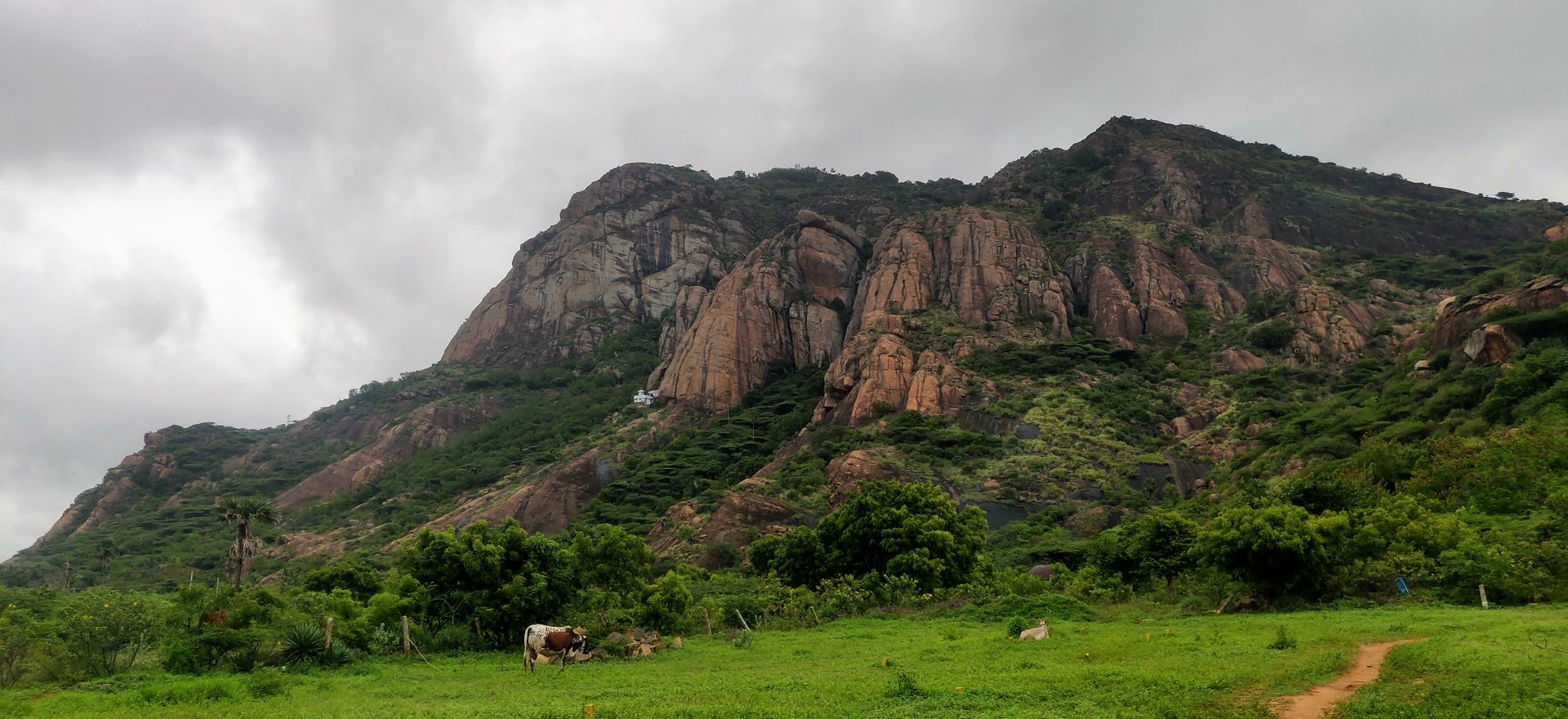
Marunthuvazh Malai — The Last Hill of India
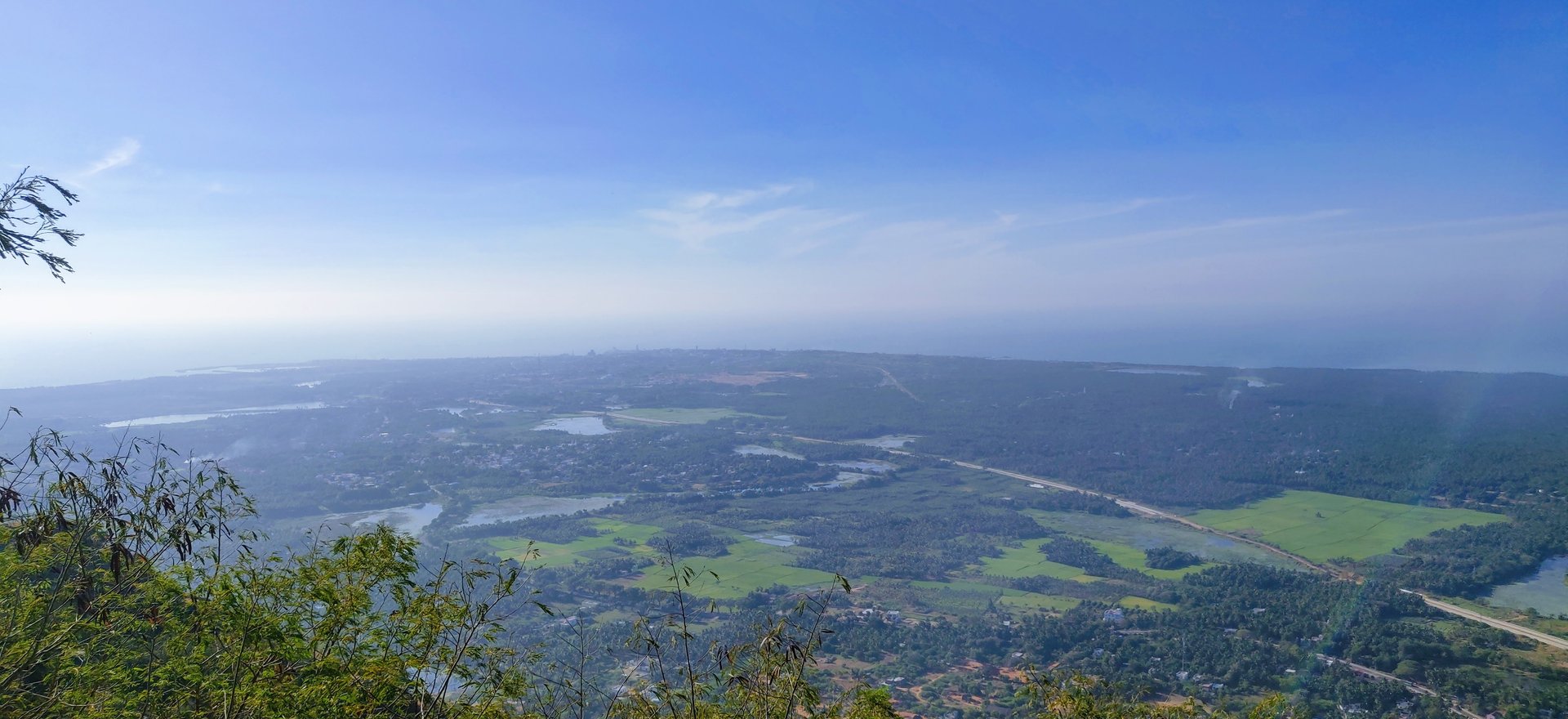
Situated 8 kilometres north of the southern tip, Marunthuvazh Malai — meaning Medicine Living Mountain — is the last hill before India meets the ocean. Hiking it rewards you with a panoramic bird’s-eye view of approximately 30% of Kanyakumari district — an extraordinary perspective that relatively few visitors make the effort to discover. The trail is accessible to most fitness levels and takes around 1.5 to 2 hours return. Go early morning for cooler conditions and the clearest views across the three oceans.
Vattakottai Fort — The Circular Fort by the Sea
Built by the Travancore kingdom in the 18th century, Vattakottai Fort takes its name — Circular Fort — from its distinctive round structure that provides panoramic views of the Arabian Sea. Constructed from local granite blocks, the fort served as both a defensive stronghold and a maritime signalling station controlling the sea trade routes at India’s southern tip. Visitors can walk through its well-preserved walls, bastions, and arched entrances, and explore the dramatic coastline immediately surrounding it.
Suggested 2-Day Itinerary for International Visitors
Day 1 — The Confluence and Vivekananda
5:30am — Sunrise at Triveni Sangam. The sunrise at the confluence of three oceans is one of the most celebrated natural spectacles in India. Arrive early.
6:00am — Visit Devi Kanyakumari Temple for the morning puja (4:30am opening — temple is active and atmospheric in the early hours).
8:00am — Ferry to Vivekananda Rock Memorial and Thiruvalluvar Statue. Arrive at the ghat by 7:45am to beat the queue.
10:30am — Wandering Monk Exhibition in town.
12:00pm — Lunch and rest during midday heat.
2:00pm — Gandhi Memorial and Kamaraj Memorial.
4:30pm — Devi Kanyakumari Temple evening session opens.
5:30pm — Sunset at Triveni Sangam or Vattakottai Fort.
On Chitra Pournami — the April full moon, around 6:30pm — you can stand at the Triveni Sangam and watch the sun set in the west while the full moon simultaneously rises in the east, appearing as a deep red fireball lifting from the ocean. This is one of the most extraordinary natural spectacles in South India. If your travel dates align, plan your entire Day 1 itinerary around being at the waterfront for this moment.
Day 2 — Vivekanandapuram and Day Trips
8:30am — Vivekananda Pictorial Exhibition and Gangotri exhibition at Vivekanandapuram.
10:00am — Bharat Gramodaya Darshan Park.
11:00am — Nalanda Library and Mananeeya Eknathji Samadhi.
12:30pm — Lunch.
2:00pm — Hire a taxi or auto for Suchindram Temple (30 min drive). Allow 1.5 hours at the temple.
4:30pm — Padmanabhapuram Palace (45 min drive — confirm it is not Monday).
Evening — Return to Kanyakumari for dinner and the evening ocean view.
Practical Information for International Visitors
Getting to Kanyakumari
By Train — Kanyakumari has its own railway station with direct connections to Chennai, Mumbai, Delhi, Trivandrum, and other major cities. The station is walkable from most hotels.
By Road from Trivandrum — approximately 90 minutes by taxi or bus (87 km).
By Road from Amritapuri Ashram (Kollam) — approximately 2.5 hours (150 km). Taxis available from the ashram gate.
By Road from Madurai — approximately 3.5 hours (230 km). A popular approach for travelers coming from the north via Tamil Nadu.
Nearest Airport — Trivandrum International Airport (TRV), approximately 90 minutes away.
Best Time to Visit
October to March is the best period for international visitors — the weather is cooler and drier, the seas are calmer for ferry crossings, and the light for sunrise and sunset photography is exceptional. April to June is very hot. July to September brings the southwest monsoon — the sea can be rough enough to close ferry services to the Rock Memorial.
Dress Code and Temple Etiquette
All temples in Kanyakumari require modest dress — shoulders and legs covered for both men and women. Remove shoes before entering any temple or sacred site. At the Devi Kanyakumari Temple and Suchindram Temple, non-Hindus are typically not permitted into the innermost sanctum but may visit the outer areas. Respectful behavior and appropriate clothing are essential throughout.
Start your days early — by 10am the heat and crowds build significantly. Carry cash as many smaller temples and stalls do not accept cards. Hire a local guide or knowledgeable auto driver for the day trip circuit around Kanyakumari — they add enormous context and save significant time. The Vivekananda Kendra campus at Vivekanandapuram is an extraordinary resource — pick up books on Swami Vivekananda and Indian philosophy at their bookshop before you leave.
Non-Hindus are generally permitted in the outer areas of the temple but not the innermost sanctum. Modest dress is required and shoes must be removed. The atmosphere in the outer courtyard is nonetheless deeply moving, especially during the early morning and evening puja sessions.
The Rock Memorial is reached by a short ferry ride from the main ferry ghat in Kanyakumari town. Buy your ferry ticket at the counter near the shore. The ferry runs from approximately 8:00am and the last entry to the memorial is typically around 3:30–4:00pm. The ferry also stops at the Thiruvalluvar Statue on the same island cluster.
Two full days is ideal for international visitors who want to see both the town sites and the surrounding temples including Suchindram and Padmanabhapuram Palace. One long day is possible if you focus only on the main town attractions, but you will feel rushed.
Yes — the sunrise at Kanyakumari is genuinely one of the most beautiful natural spectacles in India. Because the land juts out into the ocean on three sides, you can watch the sun rise directly from the sea in the east. On clear days, you can also watch the sun set into the sea in the west from the same general area — a phenomenon that draws thousands of visitors daily.
The Vivekananda Kendra is a spiritually oriented service organisation with 813 centres throughout India, based at Vivekanandapuram in Kanyakumari. They offer simple guesthouse accommodation on the campus for visitors who wish to stay in the Kendra environment. Contact them via vkendra.org for availability and booking.
Amritapuri Ashram (Kollam District, Kerala) is approximately 150 km north of Kanyakumari — about 2.5 hours by road or a direct train connection. Many international visitors to Amma's ashram make Kanyakumari a 2-day extension of their spiritual journey in South India.
Where to Eat in Kanyakumari
Several sections of this guide — including Marunthuvazh Malai, Vattakottai Fort, the Chitra Pournami phenomenon, and the dining recommendations — draw on first-hand local knowledge from Sabin, a Kanyakumari native with over two decades of exploring every corner of the district. Read more of his writing at sabinv.com.
The Kanyakumari Experience is a three-day native-guided tour with Sabin — born and raised in Kanyakumari — covering the Shakti Peetha, Vivekananda Rock, Marunthuvazh Malai, and the ancient Jain temples of the Western Ghats. View Kanyakumari Experience
The Sacred Confluence is a six-day journey from Kanyakumari northward through Padmanabhaswamy Temple, the Poovar backwaters, and the sacred cliff temples of Varkala — ending at Sivagiri Mutt, home of Sree Narayana Guru. View Sacred Confluence