About this article
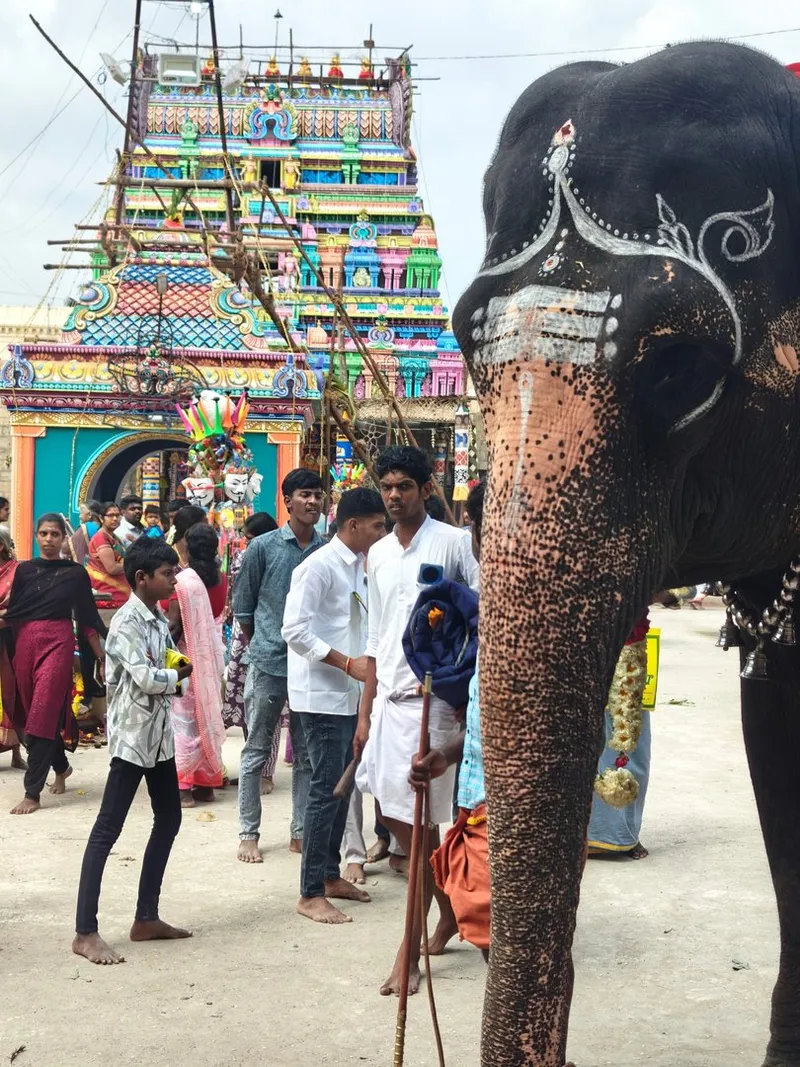
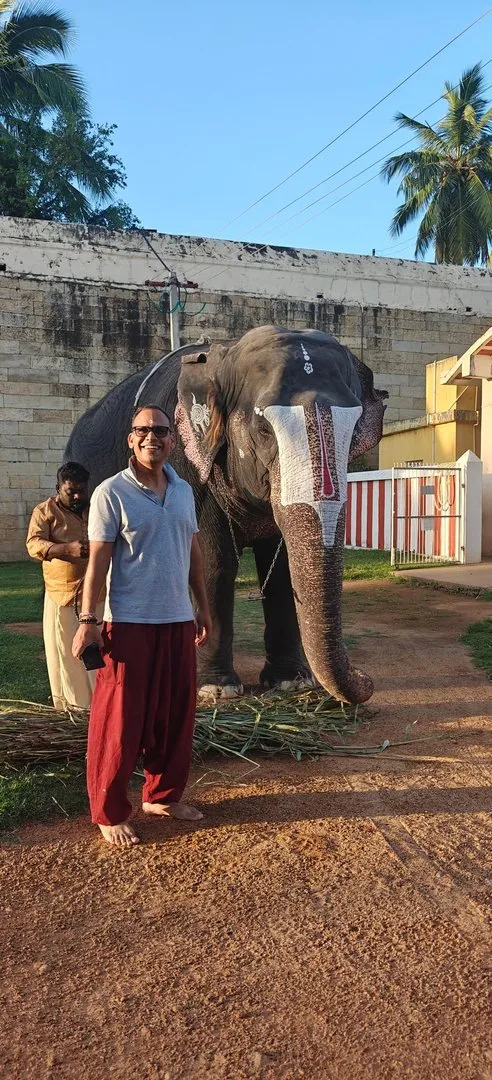
On any given morning in Tamil Nadu or Kerala, long before the city stirs, a temple elephant is already at work — bathed, adorned with kumkum and garlands, standing at the sanctum entrance as the first lamps are lit. For the uninitiated visitor, it can seem like spectacle. But for Hindus, the elephant's presence in a temple is not ornamental. It is theological.
Here is what the ancient texts and living traditions tell us about why the elephant — the Gaja — is one of the most sacred presences in Hindu worship.
1. The Elephant as the Divine Vehicle: More Than a Ride
In Hinduism, every deity has a vahana — a divine vehicle that is not merely transport but a theological statement about that deity's nature and power. Lord Indra, the king of the gods and the lord of rain, rides Airavata, the great white elephant born from the churning of the cosmic ocean (Samudra Manthan).
The Vishnu Purana describes Airavata emerging from the ocean as one of the fourteen divine treasures. The Rigveda itself references him as Indra's celestial companion. One of Airavata's very names means "the one who knits or binds the clouds" — an acknowledgment that the elephant and the rain are cosmically linked.
This is the mythological root of why, when a living elephant carries the deity in a temple procession, something deeply intentional is happening: the divine is riding the divine. The deity descends into the world aboard a creature that itself embodies cosmic power.
2. The Elephant and Water: An Ancient Science of Abundance
One of the most striking beliefs embedded in temple tradition is that worshipping an elephant near a water body brings water abundance. This might sound like folklore — but trace it back and it leads to the heart of Vedic cosmology.
Airavata's role in Puranic mythology is specifically hydrological. According to texts including the Harivamsa and the Vishnu Purana, he drew water from the underworld through his mighty trunk, pulverized it, and released it into the clouds so that Indra could bring rain to the earth. The elephant, in Hindu thought, is literally the bridge between the waters below and the rains above.
Ancient texts like the Brihat Samhita and Gaja Shastra — dedicated entirely to the study and welfare of elephants — describe ritual worship of elephants near temple tanks (theerthams) to ensure the sanctity and abundance of water. The belief encoded in temple practice: where the elephant is honored, the waters flourish.
3. The Fourfold Army and the Elephant's Role in Royal Dharma
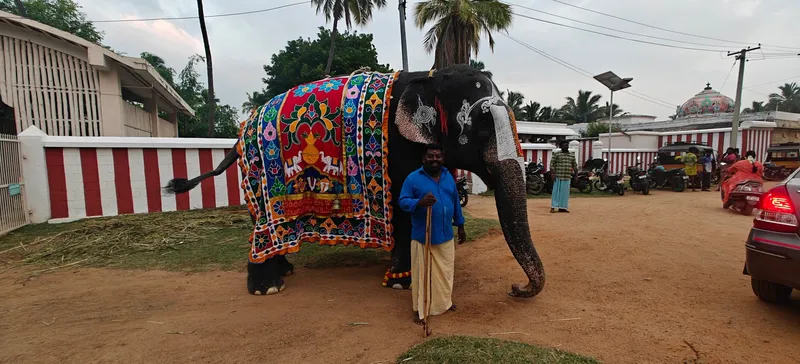
The Agni Purana records that kings performed special rites with elephants before setting out for war. The ancient Chaturangini army — the four-limbed military formation described in texts from the Arthashastra to the epics — had the elephant corps (Gaja Sena) as one of its four pillars, alongside chariots, cavalry, and infantry.
Tamil Sangam literature makes this even more vivid. The Purananuru, a 2,000-year-old anthology of Tamil poetry, describes the grandeur of war elephants with breathtaking precision. Tamil kings were known by epithets that referenced their elephant brigades — Palaanai Selkelzhu Kuttuvan, for instance, translates as "Kuttuvan, whose elephant brigade was like a cloud." The great Chola emperor Rajaraja I reportedly maintained 60,000 war elephants.
The elephant in the temple, then, carries this entire history of dharmic kingship. Its presence consecrates not just a procession but an idea: that righteous power — strength deployed in the service of the divine and the community — is worthy of veneration.
4. Avahana: Invoking the Divine in a Living Being
At the heart of Hindu ritual is avahana — the invocation of the divine into form. A priest performs avahana into a stone idol, a clay figure, a lamp flame, or a sacred river. In temple elephant worship, something more unusual and profound occurs: avahana is performed into a living, breathing, sentient being.
The Agama Shastras, the ancient scriptural foundation of South Indian temple worship, are explicit that temples are not just buildings but living spiritual ecosystems. The Agamas describe how each element of the temple — architecture, ritual, consecrated objects, and yes, animals — participates in creating a sacred field where the divine can be encountered.
When a temple elephant receives puja, garlands, and offerings, and when the deity's image is placed on its back, it is not theater. It is an act of avahana into nature itself — an assertion that the sacred is not confined to stone but permeates the living world.
5. The Elephant and Social Unity: The Community's Mirror
Perhaps the most sociologically profound role of the temple elephant — and one that is often missed by outside observers — is its function as a unifier of the community.
The Aitareya Brahmana, one of the oldest prose commentaries on the Rigveda, notes that possessing and venerating an elephant was a mark of a community's cohesion and shared identity. The Hindupedia's entry on Gaja echoes this: the elephant's awe-inspiring presence has historically drawn communities together in a way few other objects or rituals can.
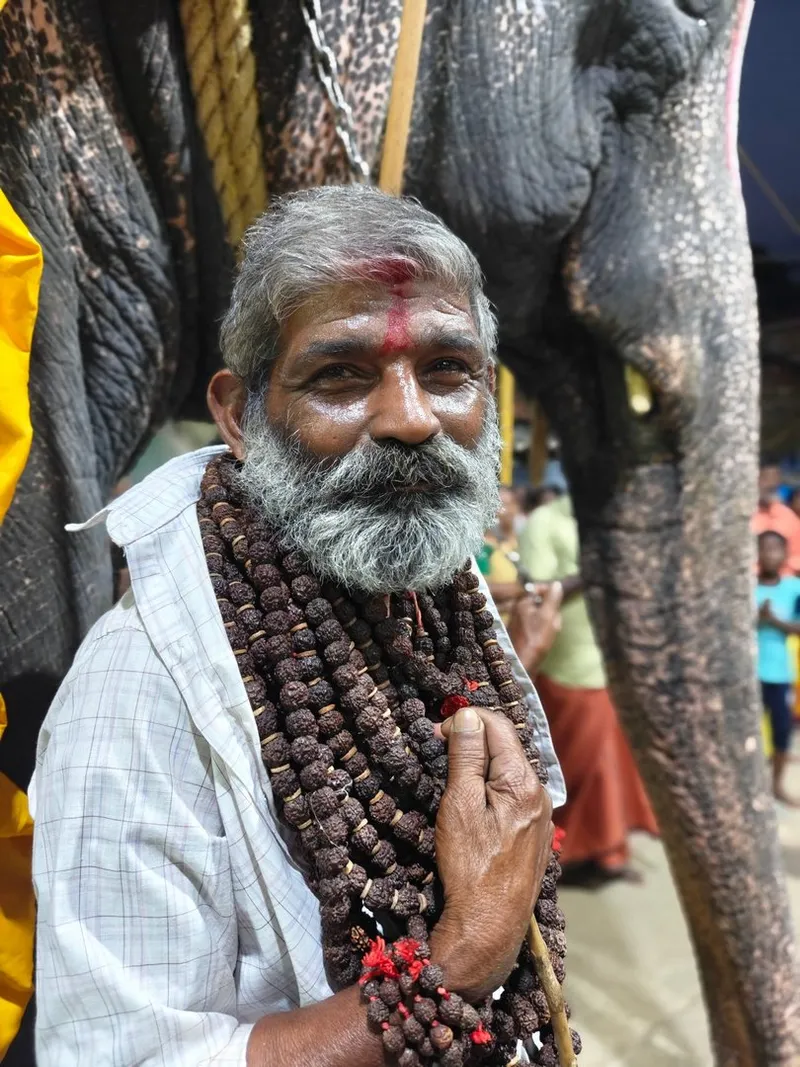
In practice, this plays out in Tamil Nadu and Kerala temples every day. The temple elephant's bathing, feeding, and festival appearances are community events. Hundreds gather not as separate devotees but as a single congregation orienting itself around a shared, living symbol. Ancient texts understood what modern social science confirms: shared ritual around a powerful, tangible center creates solidarity that transcends individual difference.
6. Gajalakshmi and Ganesha: The Elephant Encoded in Divinity Itself
You cannot speak of the elephant in Hindu temples without pausing at two figures who appear above almost every temple entrance.
Gajalakshmi — Lakshmi flanked by two elephants pouring water over her — is one of the most ancient motifs in Indian iconography, appearing in Buddhist, Jain, and Hindu traditions alike. The elephants here are not decorative; they invoke abundance, rain, and the consecration of divine feminine power.
Ganesha, the elephant-headed son of Shiva and Parvati, is the deity without whom no temple ritual begins. The Sanskrit word gaja contains within it a philosophical statement: ga represents the ultimate goal, ja the origin — the elephant head on Ganesha's shoulders signifies, as the Ganapati Atharvashirsa implies, the union of cosmic origin and cosmic destination. He is the remover of obstacles precisely because he embodies wholeness.
Every temple that keeps a living elephant, consciously or not, participates in this iconographic lineage stretching back to the Vedas.
The Elephant at the Threshold
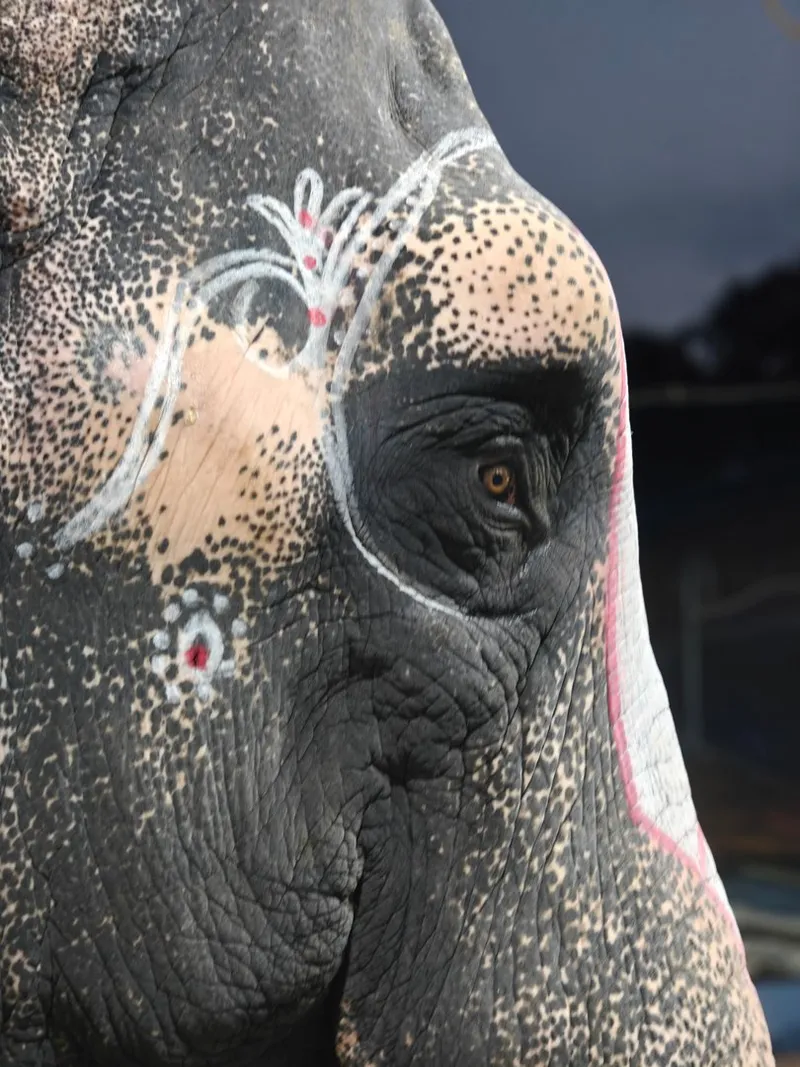
The next time you see a temple elephant — adorned in gold and silk, its forehead marked with patterns of white and red, swaying gently as priests conduct the morning ritual around it — you are witnessing something that has not changed in its essential meaning for over three thousand years.
It is there because the divine once rode it across the heavens. Because it once drew the rains from the underworld. Because kings consecrated their armies before it. Because a community needs a living center around which to gather and become, briefly, one.
The elephant does not merely stand in the temple. In the deepest sense of Hindu sacred thought, the temple stands around the elephant.
References: Rigveda; Vishnu Purana; Agni Purana; Harivamsa; Brihat Samhita; Gaja Shastra (Palakapya); Ganapati Atharvashirsa; Aitareya Brahmana; Shatapatha Brahmana; Agama Shastras; Purananuru (Tamil Sangam literature, c. 300 BCE – 300 CE)