About this article
For those on a spiritual journey—seeking a deeper connection with the Divine or a taste of India’s living wisdom—Tamil Nadu offers a sacred path through time. Among the country’s countless spiritual sites, the Nava Tirupathi temples shine as radiant jewels of bhakti, nestled along the banks of the holy Thamirabarani River. This is no ordinary temple tour. It is a pilgrimage into the heart of the Vaishnavaite tradition, where ancient poetry still echoes in stone halls, and the guru-disciple bond becomes a living force.
The Sacred Nine: What is Nava Tirupathi?
“Nava Tirupathi” means “Nine Sacred Abodes”—a cluster of nine ancient Divya Desams (Vaishnava holy shrines) located near Tirunelveli, South India. These temples are deeply revered not only for their antiquity and Puranic significance but also for their connection to the great saint-poet Nammazhwar, whose bhakti compositions continue to guide devotees to this day.
Each of these temples is uniquely associated with one of the Navagrahas (nine celestial bodies in Hindu astrology), offering not just a tour of devotion but also of cosmic alignment.
The Nine Temples of Nava Tirupathi
Set across lush paddy fields and Tamil villages, the Nava Tirupathi temples include:
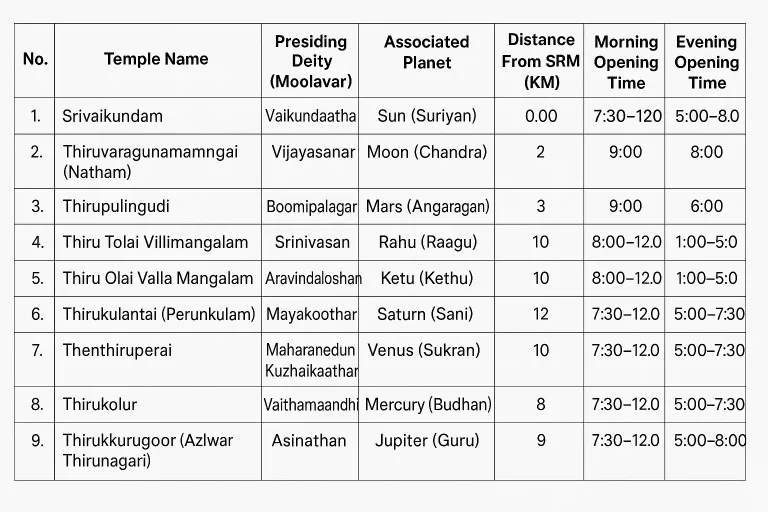
- Srivaikundam – Associated with Surya (Sun)
- Thiruvaragunamangai (Natham) – Associated with Chandra (Moon)
- Thirupulingudi – Associated with Budha (Mercury)
- Thirukolur – Associated with Angaraka (Mars)
- Thirukkurugoor (Azhwar Thirunagari) – Associated with Guru (Jupiter)
- Thirutholaivillimangalam – Associated with Rahu
- Thiruolaiyavallimangalam – Associated with Ketu
- Thenthiruperai – Associated with Sukra (Venus)
- Thirukkulanthai (Perunkulam) – Associated with Shani (Saturn)
1. Srivaikundam – The Abode of the Rising Sun
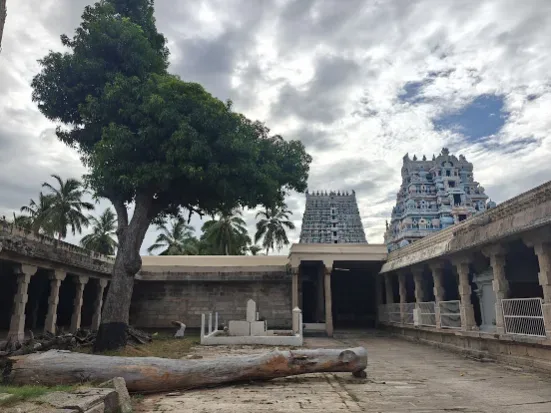
Srivaikundam is the foremost among the Nava Tirupathi shrines and is associated with Surya, the Sun God. The presiding deity here is Vaikundanatha Perumal, enshrined with regal serenity, alongside his consort Vaikundanayaki. This temple stands as a radiant symbol of divine protection and cosmic order. Puranic lore recounts that when Brahma’s celestial abode, Satyaloka, was submerged by deluge, Lord Vishnu appeared here to restore balance—transforming the site into a symbolic Vaikunta on Earth. Another local legend tells of Kaladusyan, a thief who encountered a mysterious Brahmin (Vishnu in disguise). Moved to repentance, Kaladusyan confessed his sins and was granted the grace of liberation—demonstrating the Lord's unconditional compassion. The temple is said to have witnessed the presence of Indra, Vayu, and Varuna, and follows the Pancharatra Agama tradition, preserving an ancient rhythm of worship. It’s a place where the first light of spiritual awakening begins, just as the sun heralds a new day.
2. Thiruvaragunamangai (Natham) – The Moonlit Path of Grace
Dedicated to Chandra, the Moon God, Thiruvaragunamangai radiates a soft and nurturing energy. The moolavar here is Vijayasanar Perumal, known for bestowing victory and peace. His consort, Varagunavalli Thayar, mirrors the gentle qualities of the moon — soothing, graceful, and pure. This temple’s lore centers around Rishi Romesa, who undertook severe penance to attain longevity. His daughter, a celestial nymph, was married to Chandra, and the couple received divine blessings from the Lord at this sacred site. The temple holds a significant place in the life of Nammazhwar, who sang Mangalasasanam here, infusing it with timeless devotion. With its tranquil atmosphere and lunar association, the temple invites seekers into a reflective space—perfect for those on a path of emotional healing and inner balance.
3. Thirupulingudi – Earth, Shadow, and the Restoration of Balance
Thirupulingudi is associated with Budha (Mercury) and hosts Boomipalagar Perumal as its central deity, symbolizing intelligence, communication, and grounding. The consort here is Pulingudivalli Thayar, also revered as Nilamagal Malarmangai, connected deeply to the Earth goddess. A vivid legend describes how Bhumadevi, feeling overlooked during a moment of divine leisure along the Thamirabarani River, triggered the Lord’s brief cosmic withdrawal, plunging the world into darkness. The Devas’ prayers led to Perumal’s return, bringing light and fertility back to the Earth. Rishi Indra, having killed a deer unintentionally, was also granted relief from his karmic burden here. This temple is noted for its Palmyra tree—a sacred tree not just symbolically but historically rooted in the Tamil landscape. The stories here revolve around restoration—of Earth, of balance, and of clarity.
4. Thirukolur – Of Mars, Wealth, and Devotion
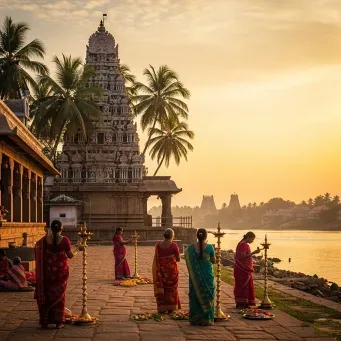
This Mars-associated temple (linked to Angaraka) is a place of dynamic transformation. The presiding deity, Vaithamaandhi Perumal, is flanked by Kumuthavalli Thayar, and the temple is steeped in themes of redemption and spiritual riches. A key tale is that of Kubera, the god of wealth, who lost everything due to a curse from Shiva and Uma. At Thirukolur, his sincere worship restored his fortunes—reminding devotees that true wealth lies in divine connection. Sage Bharadwaja and his ten children are also said to have lived here, immersed in the sacred vibrations. Most significantly, this is the birthplace of Madhurakavi Azhwar, whose unwavering devotion to his guru Nammazhwar became a path to liberation. The Kubera Theertham pond in the temple grounds is believed to hold purifying and wish-fulfilling powers. This is a sacred site for those walking the path of karma purification and guru-bhakti.
5. Thirukkurugoor (Azhwar Thirunagari) – The Guru’s Sanctuary
This temple, linked to Guru (Jupiter), is one of the spiritual gems of Vaishnavism, celebrated as the birthplace of Nammazhwar, one of the twelve Azhwars and the towering voice of Tamil devotional mysticism. The deity here is Asinatha Perumal, with his consort Kumuthavalli, also known as Aadhinatha Valli. The temple’s lore is rich with significance: Brahma performed penance here to initiate creation; a conch gained moksha, leading the place to be called Gurukoor; and a young boy, Mandhan, once apathetic toward the Vedas, was transformed through the Lord’s grace. It is here that Nathamuni, guided mystically by Nammazhwar, rediscovered the Divya Prabandham, preserving a priceless spiritual heritage. A statue of Nammazhwar, installed by Madhurakavi Azhwar himself using water from the Thamirabarani, pulses with devotion. This temple is not just a shrine—it is a living university of Bhakti Yoga.
6. Thirukulantai (Perunkulam) – The Dance of Illusion and Saturn’s Grace
Associated with Sani (Saturn), Thirukulantai houses Mayakoothar Perumal, who performs the divine dance (Koothu) — a symbol of cosmic play. The consort here is Kulanthai Thayar, evoking maternal love and compassion. While the puranic stories here are less elaborate, it is believed that Nammazhwar visited and sang praises of this temple. Saturn is a planet of karma, patience, and endurance, and this temple’s energy resonates with detachment and purification. Pilgrims seeking relief from long-standing karmic patterns or facing Saturn's challenges in their life often include this temple in their pilgrimage for solace and transformation.
7. Thiru Tolai Villi Mangalam (South) – The Temple of Rahu’s Redemption
One of the twin Errattai Tirupathi shrines, this temple is associated with Rahu, the shadow planet linked with illusion, ambition, and transformation. The deity Srinivasa Perumal blesses seekers with clarity and higher vision, while Alamelumangai Thayar brings grace and balance. A fascinating lore tells of a rishi named Athreyasu Brabar, who selected a bow and weighing scale, both of which mystically transformed into human forms—male and female. Cursed by Kubera, they regained heavenly ascent through devotion and service to the Lord. The temple speaks of the redemption of worldly attachments, making it a vital stop for those navigating spiritual illusion or seeking deeper truths beneath the surface of life.
8. Thiru Olai Valla Mangalam (North) – The Temple of Ketu’s Wisdom
This northern twin of the Errattai Tirupathi pair corresponds to Ketu, a planet representing detachment, spirituality, and transcendence. The presiding deity here is Aravindalochanan, also known as Devapiran, and his consort is Karunthankanni Nachiyar. The legend here continues from Subrabar Rishi’s Yagna. When Perumal requested flowers from a specific pond, Subrabar confessed that he had lost all sense of self during the ritual — an act of pure surrender. This temple is a shrine of mystical devotion, with appearances from Indra, Vayu, and Varuna, and a sacred theertham (pond) beside the Thamirabarani. Ideal for seekers on the threshold of ego transcendence, this temple represents the soul’s step beyond karma into liberation.
9. Thenthiruperai – Venus, Love, and Divine Feminine
Representing Sukra (Venus), Thenthiruperai is a temple of beauty, desire, and divine femininity. The deity here is Maharanedunkuzhaikathar, paired with Kuzhaikaathu Valli Thayar, a form of Perai Nachiyar. The temple’s myth speaks of Perumal’s wish to marry Brahma’s daughter and another tale of a Brahmin boy who lost his identity, prompting the Lord to take the form of a Brahmin and bless a king. A Chola king is also credited with building the temple after penance here. The temple’s Sukkira Puskarani pond is famed for its aesthetic beauty and purifying power. The Thenkalai tradition observed here celebrates emotional devotion and surrender. Thenthiruperai is ideal for seekers cultivating bhakti through love, art, and divine beauty.
The Nava Tirupathi temples stand as profound testaments to Vaishnava devotion and rich spiritual heritage in South India. This cluster of nine sacred abodes, primarily nestled along the Thamirabarani river, are not merely temples but vibrant centers of faith, each infused with unique puranic lore and spiritual significance. Their inclusion among the 108 Divya Desams, coupled with the glorification through hymns (Mangalasasanam) by Swami Sri Nammazhwar, underscores their immense sanctity and importance in the Sri Vaishnava tradition.
From Srivaikundam, associated with the Sun, to Thirukkurugoor, the birthplace of Nammazhwar himself, these temples offer devotees a journey through ancient tales of divine intervention, penance, and the restoration of dharma. The unique planetary associations with each temple further enrich their spiritual allure, providing a holistic pilgrimage experience. Visiting these Nava Tirupathi temples is more than just a tour; it's an immersive spiritual experience that connects pilgrims with centuries of devotion, the enduring presence of Lord Vishnu, and the profound legacy of the Azhwars.
The Nava Tirupathi forms part of Smukti's Footsteps of the Golden Avatar tour — a 14-day pilgrimage following Chaitanya Mahaprabhu's South India yatra through Srirangam, the Nava Tirupathi, Kanyakumari, Padmanabhaswamy, and Varkala. For ISKCON devotees and Vaishnava pilgrims seeking to walk the exact route that Chaitanya walked five centuries ago.
The Nava Tirupathi circuit is part of Smukti's 14-day South India Vaishnava pilgrimage. View Footsteps of the Golden Avatar — Designed for ISKCON devotees and Vaishnava pilgrims seeking to walk the exact route that Chaitanya Mahaprabhu walked five centuries ago.