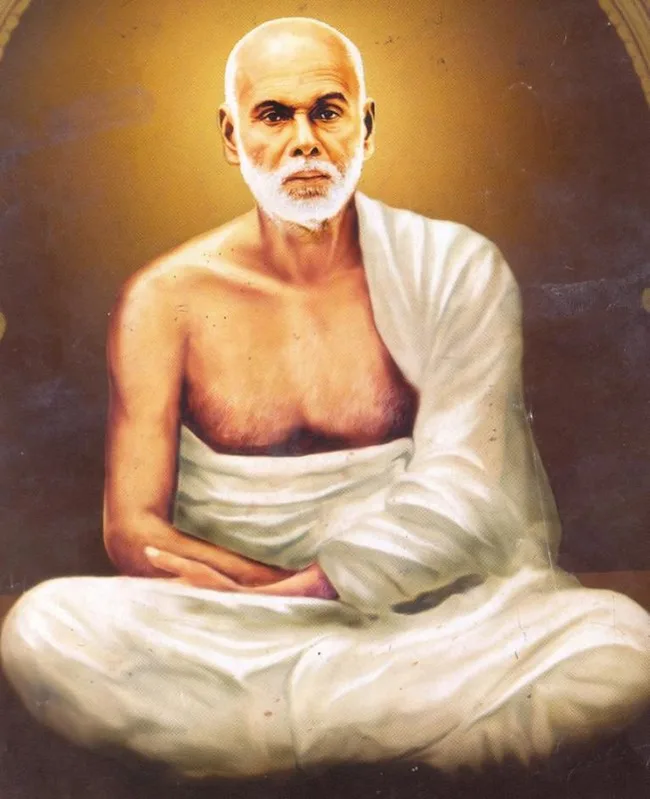
Sree Narayana Guru
Sivagiri, Varkala · with Sunil
Who is yoga for?
Read more
“One caste, one religion, one God for humankind” and verses from his Atmopadesa Satakam as class reflections.
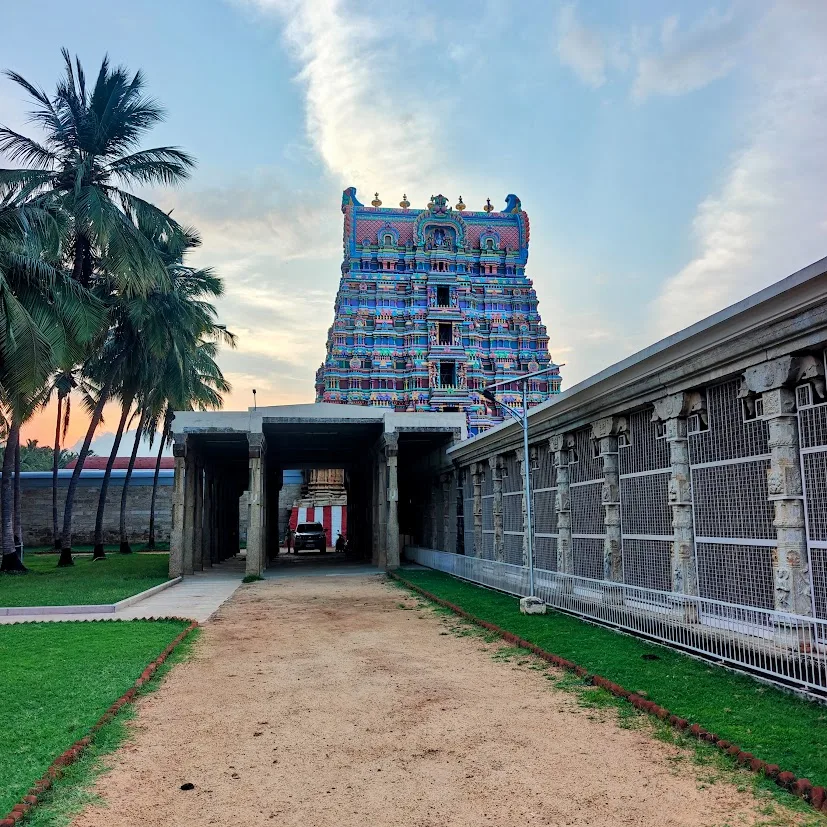
Smukti Vidyā
8-day yoga teacher immersion in South India
Applications are read by our guides. Seats are limited. A conversation comes before any offer of a place.
Your training gave you the poses. It probably did not give you the rest: the practice behind the teaching, the teachers who shaped the tradition, the question of what a yoga teacher is for. For eight days, from Varkala to Kanyakumari, you will go to the great ones of the southern tip — Narayana Guru, the Devi, Vivekananda, Ayya Vaikundar, Thirukkurungudi Nambi — and learn each teaching in the place where it was lived, from people who live it today. Mornings are practice, and you leave with a sadhana designed for you. Evenings turn each day into something you can bring to your own students. You will come as a student. You will go home a teacher.
Yoga was not made for fitness. Patanjali defines it as the stilling of the mind: yogaś citta-vṛtti-nirodhaḥ (Yoga Sutras 1.2). For centuries the practice was mostly meditation and breath; in the Sutras, āsana is simply a steady, comfortable seat. When the hatha texts added postures, they said why: the Hatha Yoga Pradipika teaches hatha "solely for the sake of raja yoga" (1.2). The body is prepared so the mind can go still. The health benefits are real. They were never the point. This program takes you to the people and places that still hold yoga's original aim.
uttiṣṭhata jāgrata prāpya varān nibodhata — “Arise, awake, find out the great ones and learn from them” (Katha Upanishad 1.3.14). At Kanyakumari, the symbol is the spine: the base of India becomes a place to return to the practice behind your teaching.
The eight days fall in uttarāyaṇa, the sun's northward course, and end on the new moon of 6 February.
The teachers are the great ones of the southern tip. Each day answers one question every yoga teacher faces, with someone from that tradition.
Sivagiri, Varkala · with Sunil
Who is yoga for?
“One caste, one religion, one God for humankind” and verses from his Atmopadesa Satakam as class reflections.
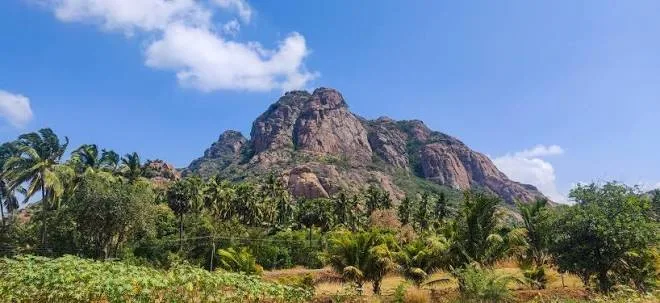
Near Kanyakumari
Where does a teacher's authority come from?
Tapas, on the hill where Narayana Guru practised and attained realisation in a cave.
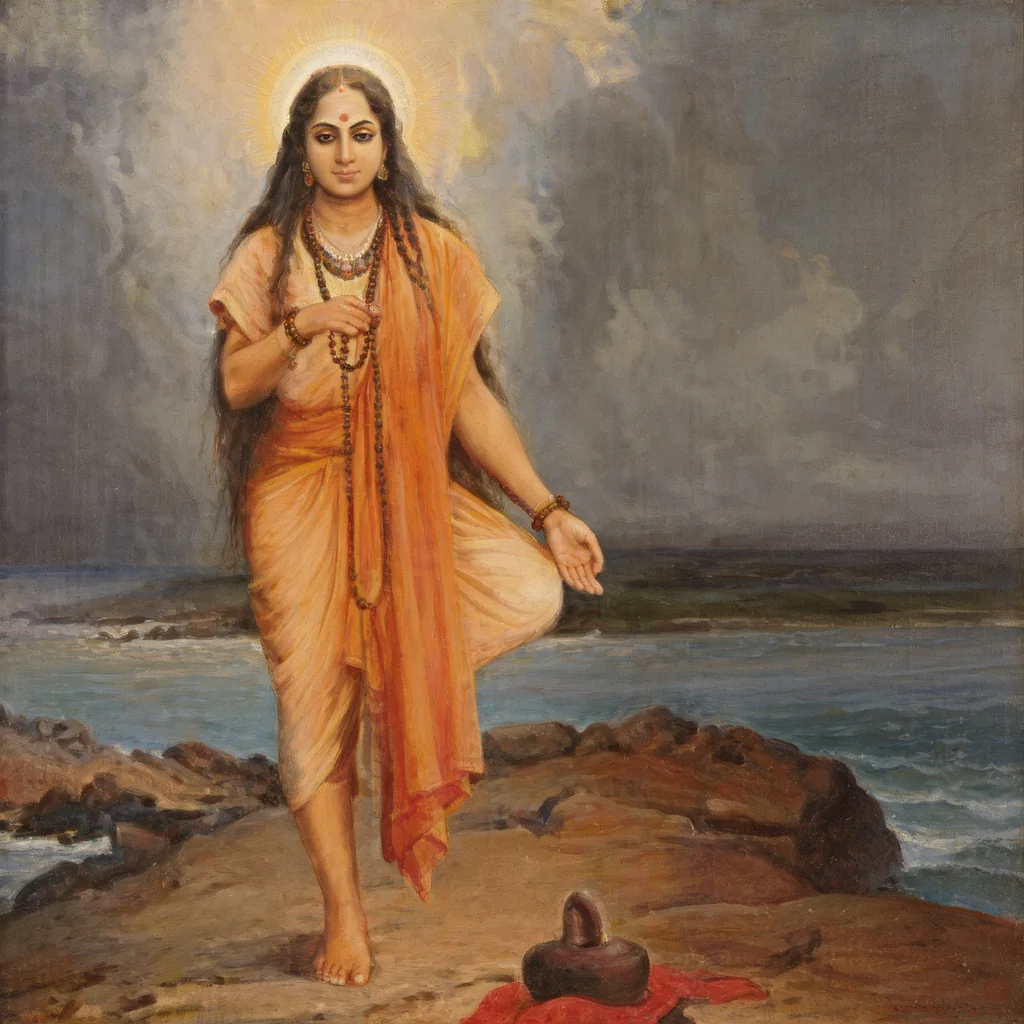
Kanyakumari
What am I awakening when I teach?
Shakti at the base of the spine, linked to the morning practice.
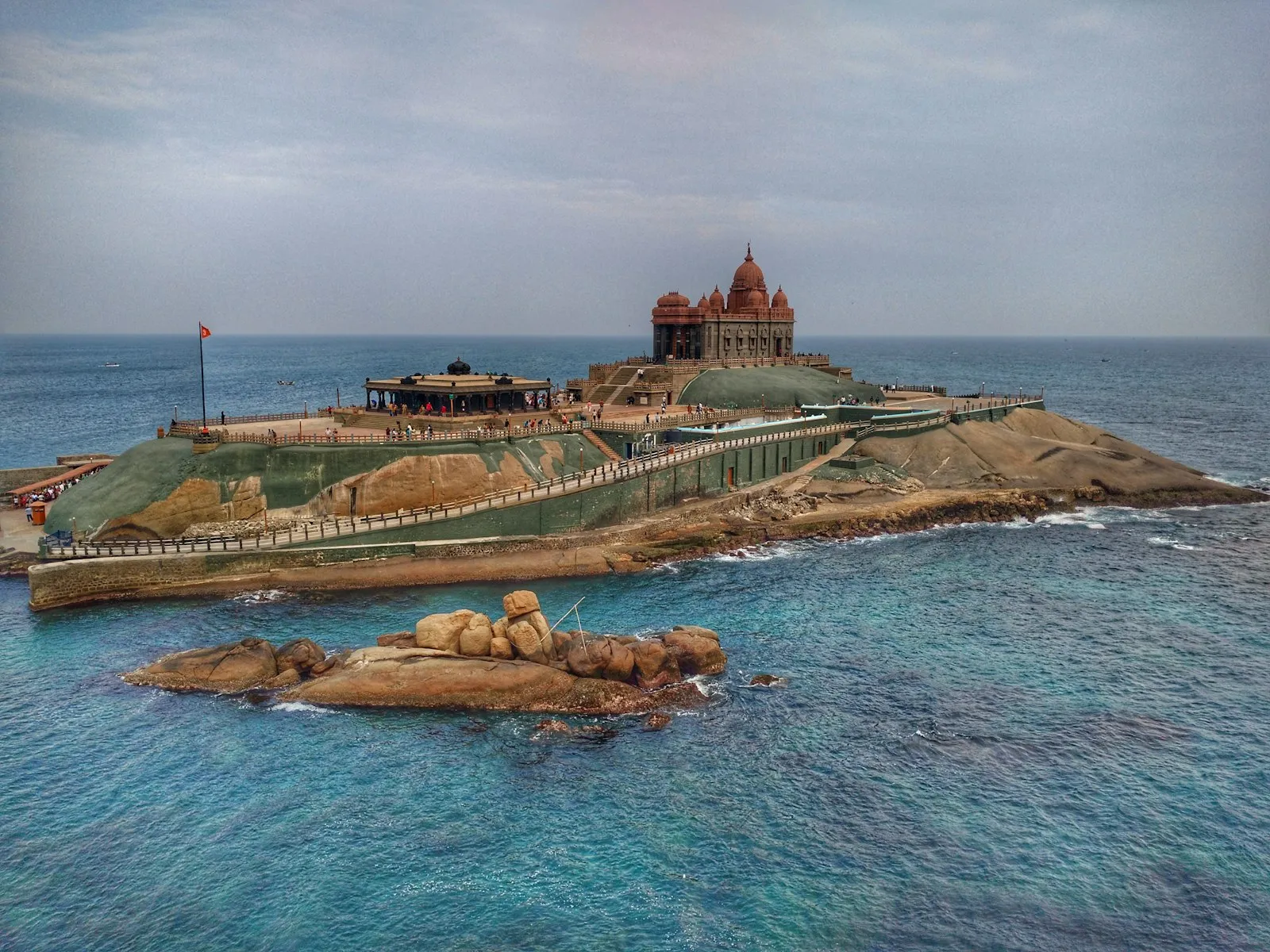
Vivekananda Rock
How does realisation become action?
Arise, awake: practice that turns into service and character.
Vivekananda Kendra
What is my dharma as a yoga teacher today?
Your own written teaching dharma.
Swamithoppe
Can devotion change a society?
Devotion as dignity: a spiritual movement that was also a social reform.
Thirukkurungudi
Who is my teacher?
The Lord who took the place of a disciple to receive initiation from Ramanuja, and the story of Nampaduvan.
Vivekananda Kendra
How does my practice serve?
A morning of seva in rural development work.
Your teachers open the way to the great ones of the southern tip. Each has spent decades in the traditions you will meet.
Program lead
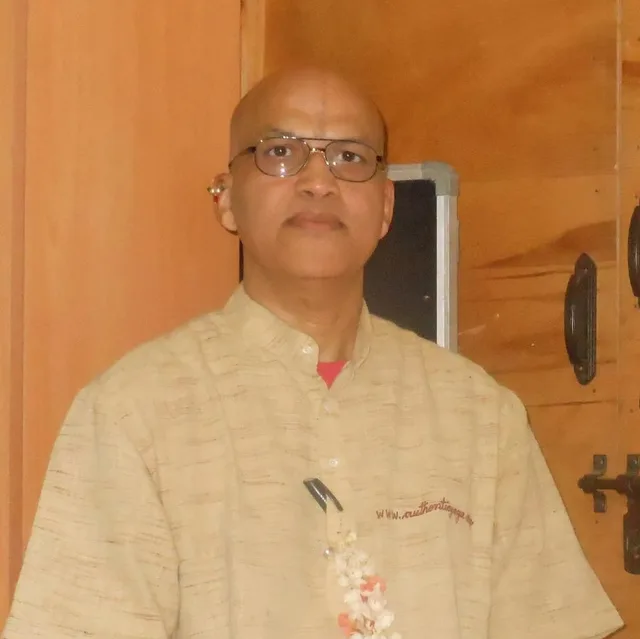
Adhiyoga, Mararikulam
Morning practice, technical teaching, your personal sadhana
Dr. Neel Kulkarni grew up in a yogic household, immersed in Sanskrit, chanting, philosophy and yogic tradition from childhood. Though he went on to study aerospace engineering, yoga remained his calling. In 1998, in the USA, he founded Adhiyoga, an Authentic Yoga System that brings together classical yoga, modern health science, psychology, the arts and related disciplines.
He documented the system in his book Adhiyoga, which earned him an honorary doctorate. His later book, Patanjali Code, is a reworking of Patanjali's Yoga Sutras designed to make them easier to study systematically, and it received the Dr. Radhakrishnan Award for Educational Excellence. In 2023 he was awarded a Doctor of Literature (D.Litt.) for his scholarship. He has also made an extensive study of Swami Vivekananda.
Over his career he has taught more than 50,000 students and certified over 1,000 yoga teachers. His school's focus is training teachers who grasp the essence of yoga and can adapt their teaching to each student.
Local hosts and guides will accompany the group and help you meet each place with care. Individual profiles will be added when their photos and biographies are ready.
Experienced teachers who want to be students again are welcome too.
Designed for international yoga teachers. Indian nationals are equally welcome to apply.
Two online sessions after the program, to bring what you learned into your teaching and your life.
Four live sessions on Wednesdays, 6–27 January 2027: the Sanskrit you will hear, one text, and the stories of the places, so you arrive knowing why each temple is there. Recordings for anyone who cannot join live.
Eight days across two states, from the Kerala coast to the southern tip of India and inland to Thirukkurungudi. Two bases, so you unpack only twice.
Days 1 and 8 · Arrival / departure
Arrival and departure airport in Kerala. Exact meeting details will be shared before travel.
Days 1–2 · 2 nights
Our first base in Kerala. This pin marks the town, not the accommodation.
Day 2
Sree Narayana Guru's tradition at Sivagiri Mutt, with Sunil.
Day 3
The hill associated with Narayana Guru's tapas, on the way to Kanyakumari. The pin marks the hill, not a trail entrance.
Days 3–8 · 5 nights
Our second base in Tamil Nadu, at India's southern tip. This pin marks the town, not the accommodation.
Day 4
Vivekananda Rock Memorial, offshore from Kanyakumari. The map line is not a road or ferry route.
Day 5
Swamithoppe Pathi, centre of the Ayya Vaikundar tradition.
Day 6
A visit to Thirukkurungudi and its Vaishnava Nambi tradition, returning to Kanyakumari.
Main journey: Thiruvananthapuram airport (TRV) → Varkala → Sivagiri, Varkala → Maruthuvazh Malai → Kanyakumari
Day trip: Kanyakumari → Vivekananda Rock → Kanyakumari
Day trip: Kanyakumari → Swamithoppe → Kanyakumari
Day trip: Kanyakumari → Thirukkurungudi → Kanyakumari
Departure: Kanyakumari → Thiruvananthapuram airport (TRV)
Pins mark approximate towns and sites, not hotels or meeting points. Lines show the itinerary, not exact roads, trails or ferry crossings.
The schedule may shift with temple timings and weather. We stay in two bases and visit no more than two sacred sites a day.
Two nights in Varkala, then five in Kanyakumari. Twin-share rooms are included in the programme fee; a single room is €200 extra. Property names and room details will be shared during your application call.
€800 per person, twin share. Applying is free; payment is requested separately only after review, a call and acceptance.
€800 per person, twin share · Single room +€200 · About €100 a day, all-inclusive
12 places · by application
No payment to apply. A 20% deposit (€160) is asked only if you are offered a place.
Apply Cancellation policyA free 45-minute online session. Hear how the eight days work, meet the people behind them, and ask anything. Can't join live? Sign up and we'll send you the recording.
We'll email you the date and time once it is confirmed.
Keep me informedCan't make it? Book a 15-minute call instead.
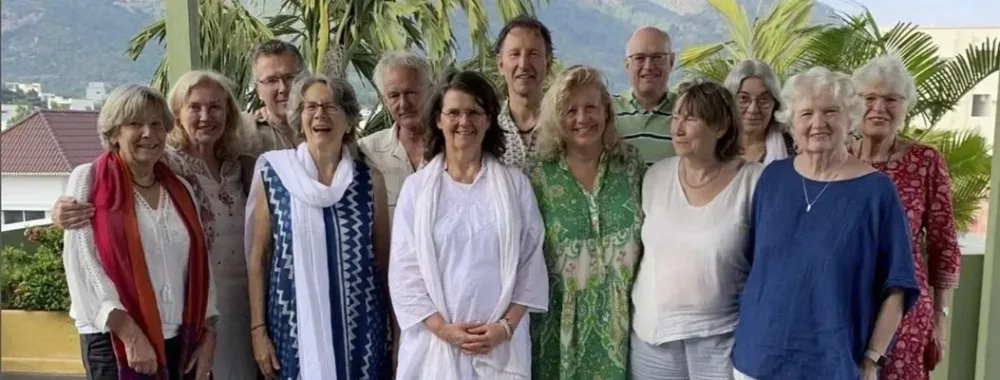
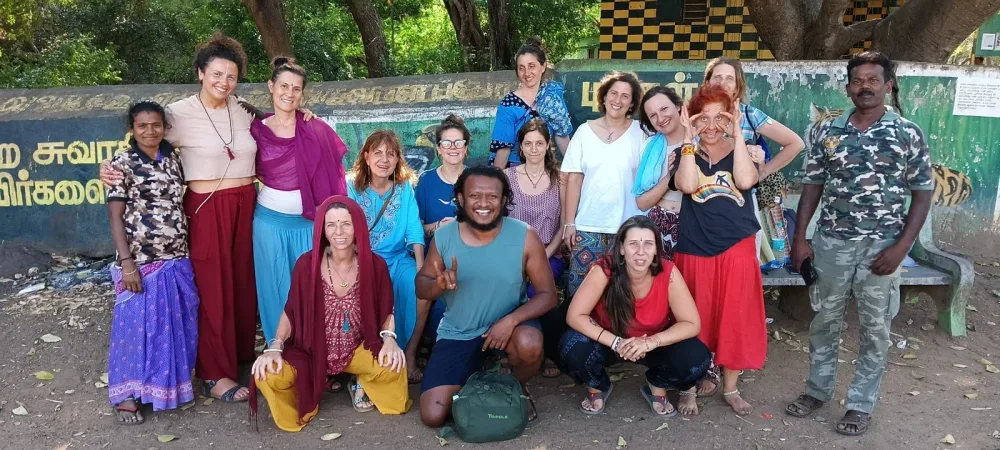
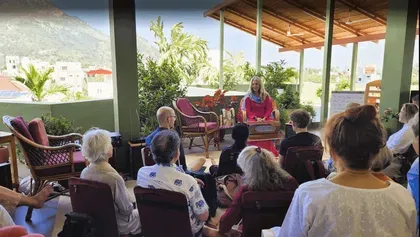
Tell us about your teaching and why you want to come.
Our guides read your application, your teaching background and your reasons for coming.
We read every application and talk with each applicant. Twelve places only.
After the conversation, we let you know whether we can offer you a place and share the programme details.
If you are offered a place, receive a separate payment link. A 20% deposit (€160) confirms your place; no payment is taken when you apply.
Graduates of our partner schools receive early access to applications.
Applications require JavaScript. Please enable JavaScript to complete the application form, or contact Smukti for help. Applying does not reserve or confirm a place.
Ask about applyingYes. It is designed for teachers with a 200-hour certificate who feel the tradition behind their teaching is missing. Experienced teachers who want to be students again are welcome too.
What you cannot reach from home: the places where these teachings were lived, people who still live them, a puja at Thirukkurungudi, seva with NARDEP, and a sadhana made for you in person.
It is a course: named teachers, contact hours, an application and one theme running through all eight days. We stay in two bases and visit no more than two sacred sites a day.
Yes. Participants of every background are welcome at all sessions and sites. We explain each place and its customs before you go in.
Yes. The programme is tailored for international guests, and Indian nationals are equally welcome to apply. Everyone follows the same application and review process. Applying is free; this is not a waiver of the programme fee.
Neel observes your practice early in the week, works with you one to one on day 7, and gives you your sadhana in writing on the last morning.
Yes, though it is not a technique course. Each evening you turn the day's teaching into something you can bring to a class, and you leave with a notebook of eight teachings and their stories.
No. The online preparation in January introduces the Sanskrit you will hear, one text and the stories of the places.
This is further study for teachers who already hold a 200-hour certificate. You receive a certificate of contact hours, not a new qualification. Yoga Alliance continuing-education status has not been confirmed. We will update this answer when Smukti confirms the status; the program currently promises a certificate of contact hours only.
Practice at sunrise, a teaching or visit in the morning, rest through the midday heat, a second visit or session in the late afternoon, and an evening circle.
The programme includes daily practice, temple visits on foot, and one early climb up Maruthuvazh Malai on a rocky path. Tell us about any health or mobility needs when you apply.
Thiruvananthapuram (TRV). We meet you there on 30 January; Varkala is about an hour away. On 6 February we drive you back to TRV, about 2.5 hours from Kanyakumari.
Late January to early February is the dry season at India's southern tip: days around 30–31°C, nights around 23–24°C, sea breezes and little rain. Middays are hot and humid, so climbs and temple walks happen early and late. Bring light cotton clothes, a hat, sunscreen and a shawl for early mornings by the sea. Wear loose, modest clothing that covers shoulders and knees. Some temples ask men to enter bare-chested and everyone to wear traditional dress; we brief you before each visit.
All accommodation for 7 nights, three meals a day with fresh fruit and juices, all transport from and to Thiruvananthapuram airport, all sessions, the puja, entry fees, and the online sessions before and after. Flights, visa and insurance are not included.
Apply on this page. We read every application, arrange a short call, and if it is a fit, send a link to pay the €160 deposit. Applying does not reserve or confirm a place.
Four online preparation sessions in January and two integration sessions after you return.
We can run this immersion for your graduates as a continuing-education module, on your dates.
Talk to usJoin our newsletter for journeys, stories and updates.