About this article
Most travelers see Mumbai as a place to land, sleep off jet lag and leave. That's a missed opportunity. India's busiest city takes its name from a goddess, Mumba Devi, and within a few kilometres you'll find a Ganesha temple visited by millions, a Sufi shrine floating in the sea, an ancient tank said to be created by an arrow, and one of the world's largest meditation domes.
Few places show India's unity in diversity as clearly. Hindus, Muslims, Christians, Jains, Parsis and Buddhists have prayed side by side here for centuries. If you're starting a spiritual journey in India, Mumbai is a gentle and fascinating first step.
What It Feels Like to Land in Mumbai
For many of the travelers on our IndiaCalling podcast, Mumbai was where India began, and the first moments stayed with them.
A Swiss traveler flew in on a one-way ticket during the pandemic and had a panic attack on her layover. She repeated affirmations the whole flight. The moment she stepped onto Indian soil in Mumbai, the fear lifted.
"Something happened. I don't know what, but I felt so safe. I felt as if I was in a steel bubble around me."
A New Zealander landed at Mumbai airport at four in the morning in 1986, having never left his country before. It shook him to his roots, he says, but his reaction was to start buzzing with excitement, and he felt held. He has now spent more than three decades in India.
A Romanian mother arrived with her five-year-old son and took a taxi straight to the train station, bound for Goa. First came the heat and humidity. Then, from the taxi window, the city felt like a movie she was watching rather than acting in: life simply flowing past.
A Dutch traveler who married into a Mumbai Jain family recommends the city as the easiest first stop. She finds it more familiar to Westerners than other big Indian cities, and says she feels safe walking its streets even at night.
Mumbai's Sacred Sites
Site Area Tradition Best for
Shree Siddhivinayak Temple
Prabhadevi Hindu (Ganesha) Experiencing mass devotion
Mumba Devi Temple Bhuleshwar Hindu (Devi) The city's namesake goddess
Mahalakshmi Temple Breach Candy
Hindu (Devi) Navratri celebrations
Banganga Tank & Walkeshwar
Malabar Hill Hindu Quiet reflection, old Mumbai
Babulnath Temple Girgaon Hindu (Shiva) Hilltop Shiva worship
Haji Ali Dargah Worli Sufi Islam Sunset, qawwali, sea walk
Mount Mary Basilica Bandra Catholic Interfaith pilgrimage
ISKCON Juhu Juhu Hindu (Krishna, Bhakti)
Kirtan and evening aarti
Global Vipassana Pagoda
Gorai Buddhist Meditation
Elephanta Caves Island, by ferry
Hindu (Shiva) Ancient rock-cut art
Kanheri Caves Borivali Buddhist Monastic caves in a forest
Shree Siddhivinayak Temple
Mumbai's most beloved Ganesha temple, built in 1801, draws devotees from film stars to street vendors. Ganesha is the remover of obstacles, so many people visit before a new beginning. It makes a meaningful first stop on your India journey. Tuesdays are Ganesha's day and bring huge queues, so visit on another weekday morning if you want space.
Mumba Devi Temple
The goddess who gave Mumbai its name sits in the crowded bazaar district of Bhuleshwar. This is an intimate, local temple rather than a showpiece, and a wonderful window into daily worship.
Mahalakshmi Temple
Dedicated to the goddess of abundance, this seaside temple is busiest during Navratri, the nine-night festival of the Divine Mother. Combine it with Haji Ali, a short walk away.
Banganga Tank and Walkeshwar Temple
Hidden among Malabar Hill's high-rises is a spring-fed tank that stays fresh just metres from the Arabian Sea. Legend says Lord Rama, searching for Sita, grew thirsty, and his brother Lakshmana shot an arrow into the ground to release a stream of the Ganges. The tank was first built in 1127 and rebuilt in 1715. During Dev Diwali in November, thousands gather to sing and float lamps around the tank. It is the quietest spiritual space in the city.
Babulnath Temple
A hilltop Shiva temple overlooking the city, with a steep climb (or a lift) up to the shrine. Monday is Shiva's day and Mahashivratri is its biggest festival.
Haji Ali Dargah
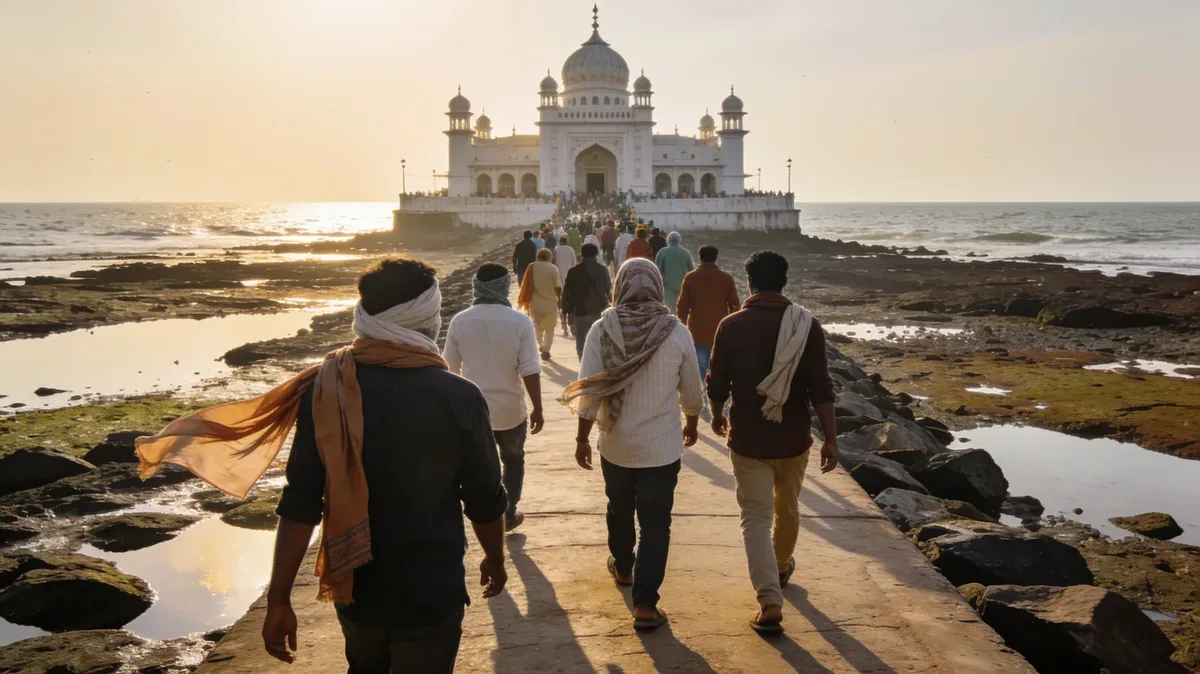
The tomb of the 15th-century Sufi saint Haji Ali sits on an islet in the sea, reached by a narrow causeway that floods at high tide. Check tide times before you go. Cover your head, dress modestly, and try to catch the qawwali (Sufi devotional music) sung in the courtyard. People of all faiths visit.
Mount Mary Basilica, Bandra
A hilltop church where Hindus, Muslims and Christians all come to pray to Mother Mary. The week-long Bandra Fair begins on the Sunday after 8 September, her feast day, and fills the hill with pilgrims.
This mixing of faiths is what struck a Slovenian guest most about India. She noticed that people really accept each other's religions, sometimes even within one home, where a husband and wife follow different faiths under the same roof.
ISKCON Juhu
For seekers drawn to Bhakti (devotion), the Radha Rasbihari temple at Juhu is a joyful introduction to kirtan. Come for the evening aarti, then eat at the temple's vegetarian restaurant.
Global Vipassana Pagoda
This golden pagoda at Gorai holds what it calls the world's largest stone dome built without supporting pillars, with relics of the Buddha enshrined since 2006. Entry is free, open daily from 9am to 7pm, and international visitors must carry ID. You can join a free 10-minute Anapana meditation for visitors. Dress modestly (knees and shoulders covered) and switch off your phone during meditation (source).
Elephanta and Kanheri Caves
A ferry from the Gateway of India takes you to Elephanta Island, a UNESCO World Heritage Site whose cave temple holds a monumental three-faced Shiva carving. In the north of the city, the Kanheri Caves are a complex of Buddhist monastic caves inside Sanjay Gandhi National Park, once home to monks for centuries. Both close one day a week, so check before you go.
For Advaita seekers
The great teacher Nisargadatta Maharaj gave the talks that became the classic I Am That from his small home in Khetwadi, south Mumbai. There is no monument to visit, but many Vedanta students walk the neighbourhood as a quiet homage.
Ashrams and Retreats Around Mumbai
Some of Maharashtra's most important spiritual centres sit within a few hours of the city. They make Mumbai an ideal base for a short retreat before or after a longer journey.
Place Distance from Mumbai
Tradition What to expect
Ganeshpuri ~80 km north Nityananda, Siddha Yoga
Samadhi shrine open to pilgrims; ashram by application
Place Distance from Mumbai
Tradition What to expect
Dhamma Giri, Igatpuri
~136 km north-east
Vipassana (S.N. Goenka)
10-day silent residential courses, donation-based
Kaivalyadhama, Lonavala
~95 km south-east
Yoga, Ayurveda, naturopathy
Residential wellness programmes and yoga courses
The Yoga Institute, Santacruz
In the city Classical yoga Classes, health camps, teacher training
Ganeshpuri
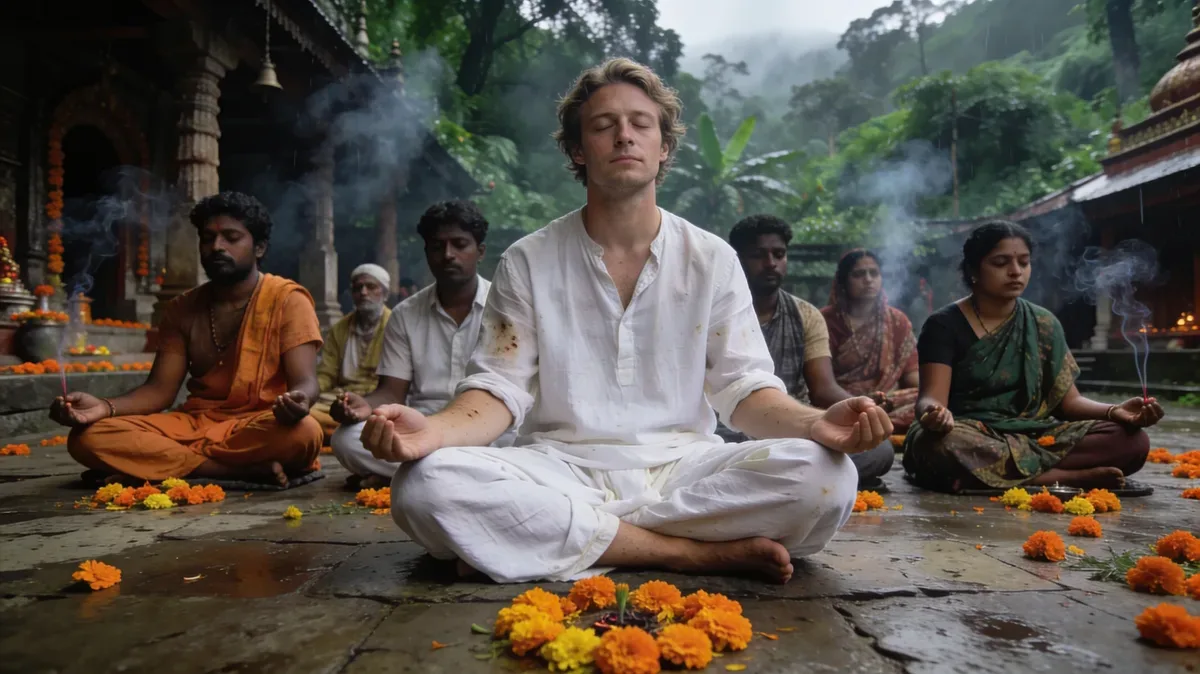
This small village in the Tansa Valley was home to the great saint Bhagavan Nityananda from 1936 until his mahasamadhi in 1961. His samadhi shrine is the heart of the village and draws pilgrims all year, with the biggest crowds at Guru Purnima (source).
Ganeshpuri is also home to Gurudev Siddha Peeth, the first Siddha Yoga ashram, associated with Swami Muktananda and Gurumayi Chidvilasananda. It is not open to casual walk-ins: you apply in advance to attend a retreat or offer seva (source). Nearby, the Vajreshwari Devi temple and the area's natural hot springs are often part of the same visit.
Dhamma Giri, Igatpuri
The Vipassana International Academy is one of the world's largest meditation centres. It runs 10-day silent residential courses throughout the year. Courses are entirely donation-based, and only people who have completed a course may donate. You must apply online in advance, and courses fill quickly (source). If Mumbai's Global Vipassana Pagoda sparks your interest, this is where to go deeper.
Kaivalyadhama, Lonavala
Founded in 1924 by Swami Kuvalayananda, Kaivalyadhama is among the oldest institutes for the scientific study of yoga. Set in the hills on the way to Pune, it runs residential programmes combining yoga, Ayurveda and naturopathy (source).
The Yoga Institute, Santacruz
If you can't leave the city, you don't need to. Founded in 1918 by Shri Yogendra, The Yoga Institute describes itself as the oldest organised yoga centre in the world. It offers classes, therapeutic health camps and teacher training in north Mumbai (source).
Further afield
Shirdi, home of Sai Baba's samadhi, is a long day trip or an overnight stay from Mumbai, and one of India's most visited pilgrimage towns.
Suggested Routes
One day in south Mumbai
Early morning: Siddhivinayak Temple, before the crowds.
Mid-morning: Mahalakshmi Temple, then walk to Haji Ali Dargah (time it with low tide).
Lunch: a vegetarian thali nearby.
Afternoon: Banganga Tank and Walkeshwar, then Babulnath Temple.
Evening: Mumba Devi Temple and the Bhuleshwar bazaar, or a sunset walk on Marine Drive.
A second day for seekers
Morning: ferry to Elephanta Caves from the Gateway of India.
Afternoon: the Global Vipassana Pagoda for a short meditation.
Evening: kirtan and aarti at ISKCON Juhu, or Mount Mary Basilica at sunset.
Mumbai traffic is slow. Group sites by area and give yourself more time than the map suggests.
Street Food on the Pilgrim Trail
Mumbai's street food is part of the experience, and much of it is vegetarian.
Vada pav: a spiced potato fritter in a soft bun, Mumbai's everyday meal.
Pav bhaji: mashed vegetable curry with buttered buns. Traditional versions skip the extra cheese.
Misal pav: a spicy sprouted-lentil curry with bread. A traveler in a popular Mumbai vlog asked for "dessert" and was served this. In India, ask for something sweet instead.
Modak: Ganesha's favourite sweet, especially around Ganesh Chaturthi.
Eat with your right hand, as locals do. Here's how to eat with your hands in India. Choose busy stalls where food is cooked fresh, and see our guide on how to avoid getting sick in India.
When to Visit
November to February: the most comfortable weather, and Dev Diwali at Banganga.
Ganesh Chaturthi (August or September): the city's greatest festival, with ten days of processions and giant Ganesha idols. Unforgettable, but very crowded.
June to September: heavy monsoon rains can flood roads and disrupt ferries.
Practical Tips
Dress: cover shoulders and knees at every sacred site. Carry a scarf to cover your head at Haji Ali.
Shoes: you'll remove them at most temples. Wear slip-ons and carry socks for hot stone floors.
Getting around: use app-based cabs or auto-rickshaws in the suburbs. Local trains are fast but avoid them at rush hour. Our India transportation guide has more.
Photography: many shrines prohibit photos inside. Ask first, and never photograph people praying without permission.
Crowds: go early, keep valuables close, and expect jostling in queues. It's devotion, not rudeness.
Two more tips from travelers who know the city:
Insist on the meter. Mumbai's auto-rickshaws and black-and-yellow taxis run on meters, unlike in many Indian cities. If the driver doesn't start it, ask him to. App cabs are also easy to book.
Ease in gently. An Australian guest's advice for any first trip is to go gently at first. Don't pack your first two days with sites. Let your body and senses adjust.
Where to Go Next
Mumbai is a natural starting point for deeper journeys. Short flights connect it to the temple towns of the south and the Himalayan foothills.
South India: Smukti's Tamil Nadu & Kerala Spiritual Tour includes departures from Mumbai, or join our flagship Spiritual Journey through Southern India.
The Himalayas: fly north for the Himalayan Spiritual Journey to Kedarnath and Rishikesh.
Buddhist heartland: continue from Mumbai's pagoda to Bodh Gaya on the Buddha Circuit tour.
Our podcast guests took many routes onward from Mumbai: by train south to Goa, by train north-east to Varanasi, or slowly down the coast through Hampi and Goa to Kerala. One guest's warning is worth repeating: people who stay only in a five-star hotel on a Mumbai business trip often leave thinking they've seen India. They haven't. As a British guest puts it, India isn't just the big cities you see on TV; it also has some deeply quiet places.
FAQ
Is Mumbai worth visiting for spiritual travelers? Yes. In one or two days you can experience Hindu, Sufi, Christian and Buddhist sacred sites, all living and active.
Can non-Hindus visit Siddhivinayak Temple? Yes. Visitors of all faiths are welcome. Dress modestly and follow the queue.
Can I meditate at the Global Vipassana Pagoda without a course? Yes. Visitors can join a free 10-minute Anapana session. The main dome is reserved for experienced Vipassana meditators.
How many days do I need? One full day covers south Mumbai's main sites. Add a second day for Elephanta, the pagoda and ISKCON.
Sources
Global Vipassana Pagoda, official site: hours, entry, meditation, dress code
Banganga Tank, Wikipedia: legend, construction dates, Dev Diwali
Ganeshpuri, Nityananda: The Living Tradition: distance, Nityananda's years there, samadhi shrine
Gurudev Siddha Peeth, Siddha Yoga: application-only visits
Dhamma Giri, Vipassana International Academy: distance, 10-day courses, donation basis
Kaivalyadhama, Wikipedia: founding, residential programmes
The Yoga Institute, Wikipedia: founding, programmes